How to Dress for a Black-Tie Wedding Without Looking Overdressed
Posted by Formal DressShops
Filed in Shopping 10 views
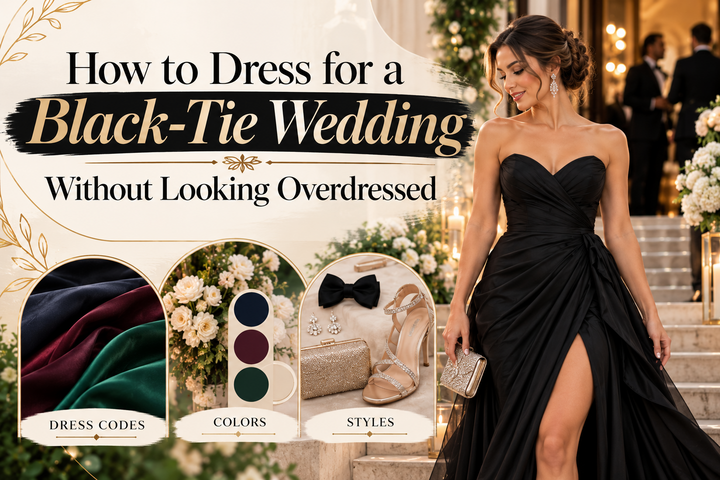
A black tie wedding sets the clearest dress code standard of any event most guests will attend and somehow still manages to generate more outfit anxiety than any other invitation.
Part of that anxiety is understandable. Black tie is formal by definition, which means the stakes of getting it wrong feel higher than at a casual gathering. But the other side of that coin overdressing, overembellishing, or arriving in a gown better suited to a film premiere than a wedding reception is equally real and equally common.
The goal isn't to find the most dramatic gown available. It's to arrive looking genuinely elegant and appropriate for the occasion without overshadowing the couple, misreading the room, or trying too hard in a way that becomes obvious by the end of the evening. That distinction between truly elegant and trying to be the most formal person in attendance is what this guide covers.
What Black Tie Actually Means for Women
Before choosing anything, it helps to have a clear, specific understanding of what this dress code is asking for.
Black tie communicates a formal evening event a level above cocktail and business formal, below white tie. For women, it calls for a floor-length evening gown or a formal cocktail dress in a sophisticated fabric. The emphasis is on genuine formality, not simply length or price.
This isn't a dress code that allows significant flexibility. A semi-formal dress, a casual midi, or anything that reads as your best professional outfit doesn't meet the standard. Black tie means the event has been planned and executed at a formal level, and the hosts are asking guests to match that level with their attire.
The flip side is equally important: black tie doesn't require the most embellished, the most dramatic, or the most visually complex gown in the room. A beautifully fitted, floor-length gown in a quality fabric, worn with confidence, meets every expectation of this dress code without requiring a sequined ball gown or a ten-pound beaded train.
Black Tie vs. Black Tie Optional: Understanding the Difference
These two phrases appear on invitations often enough that the distinction is worth covering clearly.
Black tie is a directive a formal gown is expected, and departing significantly from that expectation is noticeable.
Black tie optional is a genuine permission slip both a formal floor-length gown and an elevated cocktail dress or formal midi are equally appropriate. The "optional" modifies the full formal requirement, not the formality of the event itself. A casual dress or anything that reads as business-appropriate undershoots it as much as at a standard black-tie event.
A black tie optional dress in an elevated cocktail length knee to midi is a perfectly appropriate response to that specific code. For standard black-tie, the floor-length gown is the more reliable choice.
The Silhouette Question: Formal Without Being Excessive
Gown silhouette does significant work in determining whether a look reads as elegantly formal or excessive for the occasion.
Column and sheath gowns are among the most reliably elegant choices for black-tie weddings. Their clean, streamlined silhouette reads as genuinely formal without adding drama through volume, making them a strong choice for guests who want to look polished without commanding unusual attention.
A-line floor-length gowns are the most universally flattering formal option, offering enough structure to read as formal while remaining comfortable across a long evening of both ceremony and reception.
Fit-and-flare and soft mermaid gowns offer more shape and presence while still reading as appropriate for the occasion, particularly in refined fabrics without excessive embellishment.
Full ball gowns with dramatic volume sit at the upper end of the formality scale and require more careful consideration as a guest specifically. A dramatically full skirt can visually compete with the wedding party in photographs and draw a different kind of attention than a more streamlined silhouette would. This doesn't make ball gowns off-limits they're entirely appropriate for black-tie events but choosing a more refined, less voluminous silhouette tends to photograph more naturally in a crowd of guests.
Fabric Choices That Read as Genuinely Formal
The fabric of a gown does almost as much work as the silhouette in communicating genuine formality, and this is an area where it's worth spending real time before committing.
Satin particularly heavy or duchess satin reads as inherently formal, draping beautifully and holding structure across a long evening. It photographs cleanly and reads as intentional in a formal setting.
Velvet has become a defining fabric for formal evening wear, particularly for fall and winter black-tie events. Its richness and texture suit the evening aesthetic naturally while adding depth that photographs with real presence.
Crepe and structured crepe offer a more matte, refined alternative that reads as modern and sophisticated. Less reflective than satin but equally formal in construction, crepe suits contemporary formal aesthetics particularly well.
Chiffon and layered georgette work beautifully in floor-length silhouettes, offering movement and elegance that suit formal occasions without the weight of heavier fabrics.
Heavily embellished fabrics all-over sequins, dense beading are appropriate for black-tie but require the most care in terms of quantity. A fully embellished gown reads as appropriately formal; a gown with so much embellishment that it reads as theatrical rather than elegant has crossed into trying too hard. The distinction is subtle but visible.
Color Choices That Work and What to Avoid
Black tie wedding attire for guests opens up a genuinely rich color palette arguably richer than most occasions allow because the formal setting supports deeper, more sophisticated shades that would feel heavy at casual or semi-formal events.
Deep jewel tones are among the strongest choices for black-tie weddings: midnight blue, emerald, deep ruby, and rich amethyst all read as formal and elegant while photographing with real depth under event lighting.
Black remains one of the most reliable guest color choices sophisticated, universally appropriate, and rarely photographed as competing with anyone else's look. A well-chosen floor-length black gown reads as genuinely formal across virtually every black-tie wedding context.
Rich neutrals deep champagne, warm taupe, and soft gold work well for evening formal events, offering a softer alternative to jewel tones without crossing into any territory that could be confused with bridal shades.
The color to avoid above all others is white in every shade, including ivory, cream, very pale champagne, and anything that could read as white under wedding photography lighting. This rule is more absolute at a wedding than at any other formal event.
Very bright, attention-commanding colors bold neon, strong orange, highly saturated yellow carry the risk of drawing the eye in a way that feels slightly disconnected from the measured elegance a black-tie event calls for.
Embellishment: How Much Is Too Much as a Guest
This is one of the most common areas where black-tie guest dressing tips into overdone territory, and the principle is straightforward.
Embellishment appropriate for a black-tie event as a guest should complement the gown rather than define it. A gown with beautiful, refined beading at the bodice or a subtle all-over shimmer reads as formally elegant. A gown so heavily embellished that it becomes the most visually complex object in any room it enters has likely crossed into theatrical rather than formal.
The test is simple: does the embellishment make the gown look more refined and beautiful, or does it make the gown the first and only thing anyone looks at? The second outcome belongs on a red carpet. The first belongs at a black-tie wedding.
When browsing black tie wedding dresses as a guest, this principle of refined restraint in embellishment tends to produce the most successful, genuinely elegant results for an evening where the couple is the visual center of every photograph.
Accessories That Complete the Look Without Competing
Formal accessories work differently than casual ones they're the finishing layer that signals how well the whole look was considered, and getting them right matters more at a formal event than almost anywhere else.
Jewelry should be elegant and deliberate rather than maximalist. A single statement piece a refined necklace or a pair of drop earrings typically reads more elegantly than layering multiple pieces that compete with each other and with the gown. If the gown is embellished, keep jewelry minimal. If the gown is clean and simple, you have slightly more room for one elegant statement.
A formal clutch or evening bag in a complementary or neutral tone completes the look practically and visually. Metallics in silver or gold work as versatile neutral options alongside most gown colors.
Footwear at a black-tie event should match the formality of the gown. Strappy heeled sandals, elegant pumps, and classic heels all suit the occasion. The practical note: confirm the venue terrain before committing to a heel height, since outdoor or garden black-tie venues can make thin stilettos genuinely difficult to navigate.
Wraps and cover-ups, if needed for cooler temperatures between the ceremony and reception, should be as formal as the gown they're covering a silk wrap or a structured evening jacket rather than a casual knit or casual cardigan.
Common Mistakes at Black-Tie Weddings
Treating "formal" as permission for maximum drama. Formal means appropriate and polished, not the most visually overwhelming choice in the room. The distinction matters especially as a guest.
Choosing a gown based on the dress code without considering the specific venue and season. A floor-length velvet gown at a summer outdoor black-tie event meets the dress code and misses the practical reality of the setting. Formal doesn't override climate.
Wearing white, cream, or any shade close to bridal. At a wedding, this rule is non-negotiable regardless of how long the guest has owned the dress or how different it looks at home.
Over-accessorizing a heavily embellished gown. A gown with dramatic beading and a statement necklace, bold earrings, and a rhinestone clutch is doing too much simultaneously. Each element should support the others.
Skipping alterations. At a black-tie event specifically, fit is scrutinized. A gown that fits precisely reads as genuinely formal in a way that an imprecise fit doesn't, regardless of the gown's fabric or price.
FAQ: Black-Tie Wedding Guest Dressing
Q: Does a black-tie wedding require a floor-length gown?
For standard black-tie, a floor-length gown is the expected and most reliable choice. A black-tie optional invitation allows an elevated cocktail or formal midi as an equally appropriate alternative.
Q: Can I wear a black dress to a black-tie wedding?
Yes. A floor-length black gown reads as sophisticated and appropriate at a black-tie wedding. Despite the name, black-tie doesn't require guests to wear black it refers to the level of formality.
Q: Is it okay to wear a sequined gown to a black-tie wedding as a guest?
Yes, if the embellishment reads as elegant rather than theatrical. A subtly embellished or tastefully sequined gown is appropriate; a gown so heavily embellished it becomes the visual centerpiece of every photo has likely crossed a line.
Q: What is the difference between a black-tie wedding guest dress and a black-tie optional dress?
A black-tie guest dress is typically floor-length and formally constructed. A black-tie optional dress can be an elevated cocktail or formal midi length still polished and formal, but not required to be floor-length.
Q: Can I wear a ball gown to a black-tie wedding as a guest?
It's appropriate but worth considering carefully. A very dramatic, high-volume ball gown can occasionally feel like it competes visually with the wedding party. A more streamlined formal silhouette often photographs more naturally in a crowd of guests.
Q: What shoes work best for a black-tie wedding?
Strappy heeled sandals, elegant pumps, and classic heels all suit the formality. For outdoor or garden venues, confirm the terrain before committing to a thin stiletto, which can sink into soft ground.
Q: What colors are best for a black-tie wedding guest?
Deep jewel tones emerald, midnight blue, deep ruby along with classic black and rich neutrals work beautifully. Avoid white, ivory, cream, and any shade close to bridal white.
Q: How far in advance should I shop for a black-tie wedding guest dress?
At least four to six weeks before the event, allowing time for shipping and alterations. Formal gowns often require more significant tailoring than casual dresses factor that into your timeline.
Conclusion
Dressing for a black tie wedding as a guest comes down to understanding what genuine elegance looks like in a formal setting not the most dramatic option available, but a well-chosen, beautifully fitted gown in a quality fabric, worn with restrained, considered accessories.
Choose a floor-length silhouette in a formal fabric like satin, velvet, or crepe. Select a color in the jewel-tone or rich neutral family, avoiding white and anything close to bridal. Keep embellishment refined rather than theatrical, and match accessories to complement the gown rather than compete with it. Give yourself enough lead time for alterations, since precise fit is more visible at a formal event than almost anywhere else.
Black tie wedding attire as a guest should always make you feel elegant and appropriate for the room confident that you've read the dress code correctly and dressed with care for the occasion.
For a curated selection of black-tie wedding dresses and formal gowns for every occasion, visit Formaldressshops.