How Tatreez Became the World's Most Meaningful Embroidery
Posted by Kuvrd Keffiyeh
Filed in Shopping 677 views
Introduction
When Palestinian actress Saja Kilani walked the red carpet ahead of the 2026 Golden Globes, her gown did more than turn heads. The intricate stitching flowing across her dress carried generations of stories, and when she described it as "a language when words feel insufficient," she put words to what millions already knew. This was tatreez, not mere decoration, but a living cultural archive.
For those unfamiliar, this ancient craft represents one of the world's oldest and most profound needlework traditions. Each stitch carries meaning. Each motif tells a story. And today, from museum exhibitions in Baltimore to community workshops in London, this heritage form has emerged as arguably the most culturally significant embroidery tradition on the planet. What follows is the story of how stitches sewn by generations of Palestinian women became a global symbol of survival, resistance, and identity.
A Living Tradition Unlike Any Other
What makes this heritage craft stand apart from every other embroidery tradition in the world? The answer lies not in technique alone but in what the stitches represent. While many needlework traditions focus primarily on decoration, palestinian embroidery functions as something far deeper: a visual language encoding history, geography, and collective memory.
A 2025 Guardian-featured exhibition called it Palestine's most vital living tradition, emphasizing that it reflects both personal histories and collective resistance. This framing matters because it captures something essential. Every piece created carries layers of meaning that extend far beyond the fabric it adorns.
-
UNESCO recognizes its significance — designated as intangible cultural heritage, placing it alongside the world's most treasured living traditions
-
It preserves village identities — specific motifs historically identify exactly which region a woman came from
-
It documents displacement — post-1948, women in refugee camps blended village motifs to create new shared visual stories
As one curator of the 2025 heritage exhibition stated: "Palestinian embroidery and dress constitute a profound cultural inheritance demanding preservation, study, and ethical display."
Historical Roots of the Stitch
The origins of this meaningful craft stretch back centuries. Women traditionally stitched elaborate motifs onto their thobes, long embroidered dresses with designs that identified their specific village or region. These garments represented a woman's identity, marital status, and family heritage.
After 1948, everything changed. A Toronto-based tatreezer told CBC in 2025 that teaching this heritage helped her process loss and build community, noting that women in refugee camps blended village motifs to create shared stories of displacement. The tradition didn't disappear; it transformed, becoming a vessel for collective memory when physical homes were lost.
-
Village-specific motifs merged into new pan-Palestinian designs
-
Embroidery became a way to maintain cultural identity across generations
-
Women preserved regional knowledge through shared stitching circles
What the Patterns Actually Mean
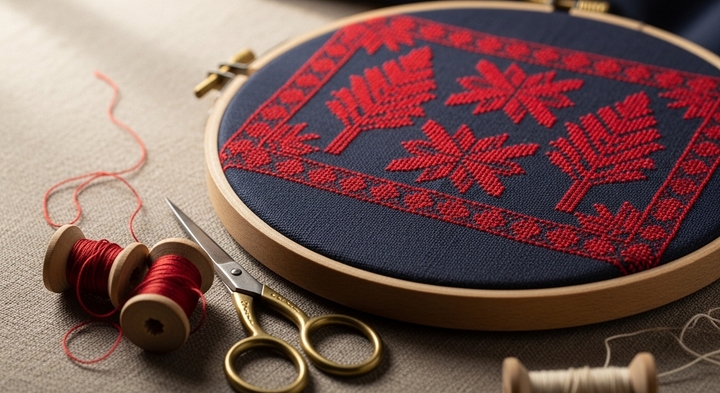
The motifs stitched into fabric are never random. tatreez patterns encode meaning that has been passed down through generations of women. Cypress trees represent resilience and connection to the land. Birds symbolize freedom and spiritual protection. Geometric stars point toward eternity and unity.
When tatreez appears on fabric, it carries intention. Each design choice reflects something meaningful to the maker or wearer. Artists working with these motifs in contemporary installations describe their work as documenting "survival patterns" of Palestinian history and resistance — a framing that captures how the ancient craft speaks directly to present realities.
-
Cypress trees — represent rootedness and connection to ancestral land
-
Birds — symbolize freedom, hope, and spiritual protection
-
Geometric stars — signify unity, eternity, and cosmic order
-
Floral vines — represent growth, life cycles, and continuity
Artists using these heritage motifs in installations describe their work as documenting the survival patterns of Palestinian history and resistance, transforming fabric into a historical record.
Global Recognition and Exhibitions
The world has taken notice. Major exhibitions now treat this heritage form with the seriousness it deserves, displaying embroidered garments as central artifacts of Palestinian history. The Tatreez Inheritance exhibition in Baltimore (2025) and the Survival Patterns art-and-resistance showcase presented embroidered dresses as museum-worthy cultural treasures, circulating in contexts ranging from Washington, D.C., to international galleries.
In 2026, a striking tatreez abaya appeared on the red carpet, connecting ancient tradition to contemporary fashion at the highest level. Saja Kilani's Golden Globes-inspired gown carried embroidery she described as holding spiritual-protection and heritage meanings, a garment that functioned simultaneously as a fashion statement and political narrative.
-
Museum exhibitions — institutional recognition elevates the craft's cultural status
-
International showcases — art galleries present embroidery as contemporary installation work
-
Celebrity visibility — high-profile moments introduce the tradition to global audiences
As one 2025 Instagram heritage post noted: "Tatreez is UNESCO cultural heritage, and it is the community's duty to protect and perpetuate it, not erase it." This sentiment echoes across exhibitions, workshops, and cultural spaces worldwide.
Celebrity and Fashion Moments
The 2026 Golden Globes-linked looks featuring heritage motifs marked a turning point. When major award shows become platforms for cultural storytelling, something shifts in public consciousness. These high-profile protest-style narratives transform fashion into activism, with each embroidered garment carrying deliberate meaning.
Gen Z conscious buyers increasingly choose this meaningful craft over generic decorative embroidery. They recognize the difference between fashion that simply looks interesting and garments that carry genuine cultural weight. The movement extends beyond celebrities to everyday wearers who understand what their clothing represents.
Diaspora Keeping It Alive
Communities far from Palestine have become vital centers for preserving and transmitting this heritage. As of 2026, workshops in London explicitly label themselves as Palestinian art, heritage, and culture events, with proceeds donated to humanitarian partners in Palestine. These gatherings serve dual purposes: education and meaningful support.
Online platforms have expanded access dramatically. Diaspora tut-style guides, YouTube channels, and virtual workshops report growing viewership from both Palestinian diaspora members and non-Palestinian learners in 2025-2026. tatreez kits allow people anywhere to learn authentic techniques while supporting cultural preservation efforts.
-
London workshops — explicit Palestinian heritage branding with humanitarian giving
-
Online learning — growing interest from non-Palestinian students seeking authentic instruction
-
Community circles — stitching gatherings function as healing spaces and cultural connection points
Women Artisans and Survival
The heart of this tradition beats with the women who have carried it across generations. In Gaza refugee camps and across the West Bank, women continue teaching embroidery to their daughters and granddaughters. This transmission represents more than skill-sharing — it constitutes survival, memory, and resistance work.
For many women artisans, embroidery provides both economic independence and a way to maintain cultural identity under challenging circumstances. Each piece they create connects past to present, ensuring that the stories encoded in the stitches continue to be told.
Buying Meaningful Embroidery in 2026
Conscious consumers face an important question: how do you purchase authentic pieces that genuinely support the community? The answer requires paying attention to origins, makers, and distribution. When you buy from ethical sources, your purchase becomes an act of cultural preservation.
Even modern functional items like tatreez coasters carry meaning when created by Palestinian women artisans. Organizations like KUVRD work to connect buyers directly with makers, ensuring that proceeds reach the hands that created the work. Every authentic purchase supports women who are keeping this heritage alive through their daily labor.
-
Know your maker — purchase directly from Palestinian women artisans whenever possible
-
Verify authenticity — learn to distinguish traditional motifs from mass-produced imitations
-
Support preservation — choose sellers who invest in community education and heritage programs
-
Understand value — authentic hand-embroidered pieces represent hours of skilled labor
Supporting Palestinian women artisans through every purchase means choosing quality, authenticity, and ethical practices over convenience or price alone.
Conclusion
From village thobes to Golden Globes red carpets, this ancient craft has traveled centuries to arrive at this moment. Today, it stands recognized by UNESCO, celebrated in global exhibitions, and carried forward by diaspora communities determined to preserve what their ancestors stitched. Each embroidered piece represents survival, resistance, and identity — threads connecting past to present in a world that often tries to sever those connections. Whether you learn the stitches yourself or support the women artisans who hold this tradition, you become part of a story far larger than any single garment. That is the power of the world's most meaningful embroidery.
FAQs
How did tatreez become the world's most meaningful embroidery?
Tatreez earned this recognition through its unique role as both a cultural archive and a form of political resistance. UNESCO heritage status, combined with global exhibitions, celebrity visibility, and diaspora preservation efforts, has elevated this tradition beyond decorative craft to living cultural documentation.
What do tatreez patterns represent culturally?
Embroidery motifs encode specific meanings tied to Palestinian identity, land, and collective memory. Cypress trees represent resilience, birds symbolize freedom, and geometric patterns reflect eternity and unity — each design carrying stories passed through generations of women.
Where can I buy authentic tatreez pieces that support Palestinian women artisans?
Look for sellers who work directly with Palestinian women artisans and transparently share where proceeds go. Ethical platforms like KUVRD and community-based organizations ensure makers receive fair compensation while preserving authentic techniques and regional motifs.