Precision Seeding and Nutrient Placement in Today’s Farming Systems
Posted by Sam Seeder
1.1K views
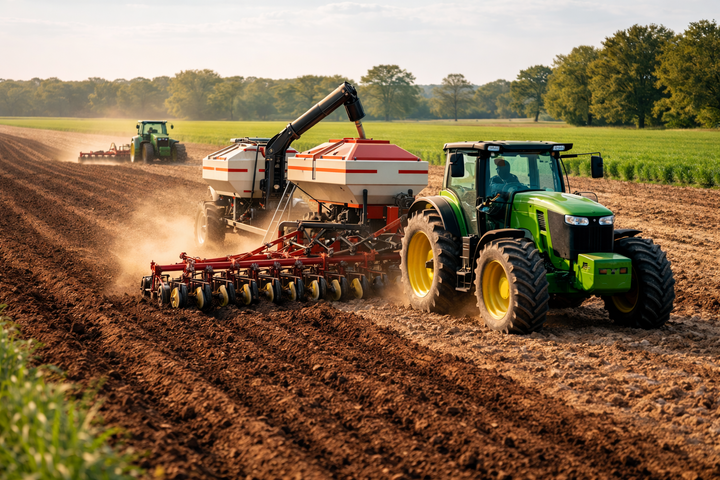
Planting is one of the most time-sensitive operations on the farm. Accurate seed placement, consistent depth, and efficient material handling all contribute directly to crop emergence and early vigor. As farming operations scale and input costs rise, precision seeding equipment has become increasingly important for achieving predictable outcomes.
Online resources such as AllMachines help farmers explore modern seeding technologies and understand how different machines integrate into planting workflows. With access to detailed equipment categories, growers can evaluate tools that match both their agronomic goals and operational constraints. In addition to planting equipment, Cultivators are often used before or between seeding operations to prepare a uniform soil surface and manage early weed growth. By lightly loosening the topsoil, cultivators help improve seed-to-soil contact without excessive disturbance, which is especially beneficial in precision-focused farming systems.
Advancements in seeding technology
Modern seeders are designed to deliver consistent seed spacing and depth across varying field conditions. Precision metering systems reduce seed waste while improving emergence uniformity. This is particularly important for crops that are sensitive to spacing variability, where even small inconsistencies can impact final yield.
In larger operations, efficiency is further enhanced by equipment that supports faster refilling and transport. Seed tenders play a vital role by reducing downtime during planting seasons. By enabling quick and accurate seed transfer, these machines help maintain planting schedules during narrow weather windows.
Air-based seeding systems
For farms covering extensive acreage, air seeders have become a preferred solution. These systems use airflow to distribute seed evenly across multiple openers, allowing for wider working widths and higher field efficiency. Air seeders are particularly common in small-grain and no-till operations, where residue management and consistent distribution are critical.
Beyond speed, air-based systems also support variable-rate seeding, enabling farmers to adjust seed density based on soil zones and yield potential. This data-driven approach helps optimize input usage while maintaining consistent crop stands.
Supporting long-term field performance
Effective seeding is not just about getting seed into the ground; it is about setting the foundation for the entire growing season. Uniform emergence leads to more predictable nutrient uptake, weed competition, and harvest timing. By selecting seeding equipment that aligns with field conditions and crop requirements, farmers can reduce variability and improve overall field performance.
Having centralized access to seeding and material-handling equipment information through platforms like AllMachines supports better planning and long-term equipment decisions without relying on promotional messaging or incomplete data.