Build High-Performance Teams Faster with Staff-as-a-Service
Posted by Ishita Saga
Filed in Music 416 views
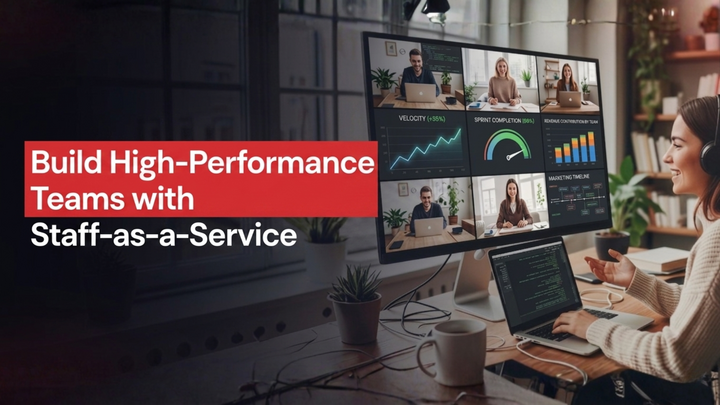
Modern teams are being built under tighter timelines, sharper skill demands, and less room for hiring delays. That is why Staff-as-a-Service is becoming a practical model for companies that need speed without losing control. It gives businesses access to ready talent, faster onboarding, and the flexibility to expand or contract teams as priorities change.
Today’s workforce shifts are clear - employers expect major disruption from digital change, while skill gaps remain one of the biggest barriers to transformation. At the same time, AI is moving into the workplace, but most companies are still not fully mature in how they deploy it. That creates a strong case for a staffing model that is nimble, targeted, and easy to adjust.
In this article, we break down how Staff-as-a-Service helps you build high-performance teams without slowing down execution.
Why is the Staff-as-a-Service Model Gaining Ground?
Staff-as-a-Service works because it reduces the slow parts of traditional hiring. Instead of waiting through long recruitment cycles, businesses can bring in specialists when the work is ready. It is especially useful for:
- Product launches that need rapid execution.
- Engineering gaps that cannot wait for a full-time hire.
- Design, QA, and support needs that fluctuate by sprint.
- Startups that need to move fast without building a permanent team.
This is one reason staff-as-a-service for businesses is being treated less like a backup option and more like a core operating choice. It supports team scaling without forcing companies to carry excess payroll during quiet periods.
What is Changing in 2026?
The latest shift is not just about remote work. It is about how companies organize work itself. Employers are leaning harder into agility, and workers are increasingly expecting flexibility. Reports suggest that six in 10 remote-capable employees want a hybrid arrangement - while about one-third prefer fully remote work. That preference is pushing companies to rethink how they source and manage talent.
The larger workforce picture is just as telling. The World Economic Forum says 39% of existing skill sets are expected to change or become outdated between 2025 and 2030, and 85% of employers plan to prioritize upskilling. That does not eliminate the need to hire externally - it makes speed-to-skill more important than ever.
For many teams, the answer is a mixed model:
- Keep the core team lean.
- Bring in niche experts on demand.
- Use remote specialists for delivery peaks.
- Add offshore capacity for 24/7 momentum.
That is where flexible staffing solutions become a serious business advantage.
Where Staff-as-a-Service Fits Best?
This model works well when delivery matters more than headcount. A company can hire remote developers for a product build, add design support during a rebrand, or hire offshore developers and designers when it needs wider coverage and stronger cost efficiency.
It also helps with remote staff for startups, especially when founders need senior-level execution without the pressure of full-time hiring too early. The result is faster momentum, cleaner execution, and better workforce agility.
How to Make it Work Well?
A strong setup depends on structure - not just access to talent. Use these rules:
- Define outcomes before assigning roles.
- Keep workflows simple and visible.
- Set response windows and delivery checkpoints.
- Document scope changes early.
- Track quality - not just activity for remote staff accountability.
This is where many teams win or lose. The model works when the company treats outside talent as part of the operating system - not as a temporary patch. Remote leadership and monitoring also reinforce that remote teams perform best when trust, clarity, and discipline are built into the system.
Conclusion
Staff-as-a-Service is not about replacing your core team. It is about extending it with the right people at the right moment. In a market shaped by skill shortages, AI adoption gaps, and faster delivery cycles, the Staff-as-a-Service model is becoming less optional and more strategic. It helps companies move faster, stay lean, and build teams that are ready for the next shift before it arrives.
Need speed and skill in one team? Contact us today to scale your team faster with on-demand expertise