What Is the Longest Sudden-Death in Golf History?
Posted by ParTee Of18
Filed in Sports 387 views
If you’ve ever watched a golf playoff unfold, you know how quickly things can turn dramatic. One hole, one swing, one putt that’s all it takes. But what happens when it doesn’t end quickly? When neither player is willing to blink?
That’s where sudden-death playoffs become unforgettable.
Let’s dive into one of the most gripping questions in golf history: what is the longest sudden-death playoff ever played? And along the way, we’ll explore why these moments are so intense, what they teach beginners, and how you can handle pressure better on the course.
The Record: A Playoff That Just Wouldn’t End
The longest sudden-death playoff in professional golf history took place at the 1949 Motor City Open, where Cary Middlecoff faced off against Lloyd Mangrum.
They didn’t settle it in one hole.
Or five.
Or even ten.
It took 11 sudden-death holes before Middlecoff finally secured the win.
Think about that for a second11 extra holes after already completing a full round. That’s not just skill; that’s endurance, mental strength, and pure stubbornness.
Ever played even 2 extra holes and felt your focus slipping? Now imagine 11.
Why Sudden-Death Playoffs Feel So Intense?
Sudden-death is exactly what it sounds like: one mistake, and it’s over. There’s no recovery. No second chance.
For beginners and intermediate players, this format can feel terrifying but also exciting.
Here’s why it hits differently:
-
Every shot matters more than usual
-
Pressure builds with each hole
-
Even small mistakes become costly
-
Momentum can shift instantly
It’s very different from stroke play, where a bad hole can be recovered later.
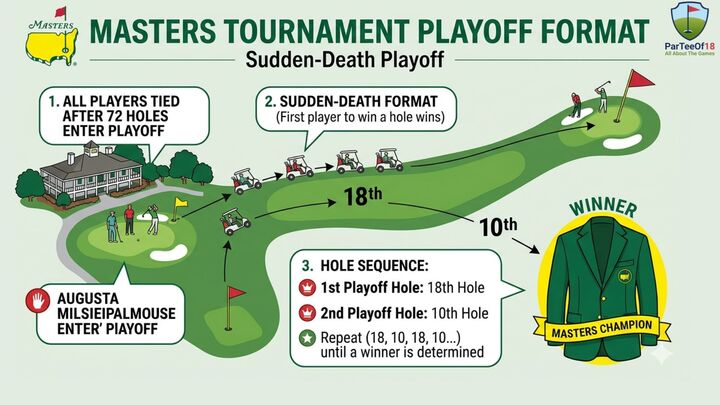
In high-stakes events like those using the masters playoff format, the tension becomes even more noticeable because the spotlight is massive and expectations are sky-high.
What Made the 1949 Playoff So Long?
You might wonder how do two professionals keep tying for 11 holes?
It comes down to consistency.
Both Middlecoff and Mangrum were:
-
Exceptionally accurate off the tee
-
Solid with approach shots
-
Calm under pressure
Neither player gave the other an opening.
It wasn’t flashy golf. It was disciplined, steady, and mentally tough golf.
And honestly, that’s a lesson many beginners overlook.
A Lesson for Everyday Golfers
You don’t need to be in a tournament playoff to learn from this.
Have you ever:
-
Missed a short putt because you rushed?
-
Hit a bad shot after overthinking?
-
Lost focus after a long round?
That’s exactly what these players avoided.
Even after hours on the course, they stayed locked in.
If you’re working on improving your game, this is where tools like a golf scoring app can quietly make a difference. Tracking your rounds helps you see patterns especially how your performance changes under pressure or fatigue.
And trust me, those insights matter.
The Mental Battle: More Important Than the Swing
Here’s something most people don’t realize:
By the time a playoff reaches 5+ holes, it’s no longer about technique.
It’s about mindset.
Players start asking themselves:
-
“How long can I keep this up?”
-
“Will I be the one to crack?”
-
“Do I play aggressive or safe?”
Middlecoff didn’t win just because of skill he won because he lasted longer mentally.
And that’s something you can practice too.
How You Can Build Playoff-Level Focus?
You don’t need a trophy on the line to train your mind.
Try this next time you play:
1. Treat Every Shot Like It Matters
Even on casual rounds, pretend each shot decides something important. It builds focus.
2. Slow Down Your Routine
Pressure often makes players rush. Instead, stick to a consistent pre-shot routine.
3. Accept Mistakes Quickly
In sudden-death, dwelling on a bad shot is dangerous. Learn to reset fast.
4. Practice Short Putts More Often
Most playoffs are decided on the green. Confidence here is huge.
Comparing With Modern Playoffs
Today, playoffs are usually shorter.
Why?
Because modern players tend to play more aggressively. Equipment has improved, strategies have evolved, and risk-taking is more common.
But even now, when a playoff stretches beyond a few holes, you can feel the tension building just like in 1949.
Events using the masters playoff format often end within a few holes, but occasionally they stretch longer, reminding us how unpredictable golf can be.
Why Long Playoffs Are Rare?
An 11-hole playoff is extremely rare for a reason.
To reach that point:
-
Both players must perform almost identically
-
Weather and course conditions must stay stable
-
Neither player can make a critical mistake
That’s a very specific combination.
Most playoffs end within 1–3 holes because eventually, someone slips.
A Small Thought: Would You Want It to Last That Long?
Be honest.
If you were in a playoff, would you want it over quickly or would you enjoy the battle?
Some golfers thrive in pressure. Others just want it finished.
There’s no right answer.
But one thing is certain: long playoffs create the kind of stories that stick with fans forever.
What Beginners Should Take Away?
You don’t need to play 11 playoff holes to learn something valuable.
Here’s what really matters:
-
Consistency beats flashiness
-
Mental strength grows with practice
-
Focus is a skill, not a talent
-
Pressure reveals your habits
And most importantly golf isn’t just about hitting great shots. It’s about staying steady when it counts.
Final Thoughts
The longest sudden-death playoff in golf history wasn’t just about winning it was about endurance, patience, and resilience.
Cary Middlecoff and Lloyd Mangrum showed what happens when two players refuse to give in. Eleven holes later, the match finally had a winner but the real story was everything that happened in between.
Next time you’re on the course, think about this:
What would your game look like if every hole felt like a playoff?
Would you rush? Or would you rise to the moment?
Because in golf, just like in life, the pressure moments often define everything.
FAQs
Q1: What is a sudden-death playoff in golf?
A sudden-death playoff is when players tied after a round continue playing one hole at a time until one player wins a hole outright.
Q2: How many holes did the longest playoff last?
The longest sudden-death playoff lasted 11 holes at the 1949 Motor City Open.
Q3: Are long playoffs common in golf?
No, most playoffs end within a few holes because it’s difficult for players to stay perfectly matched for long.
Q4: What skills are most important in playoffs?
Mental strength, consistency, and putting are crucial during playoffs.
Q5: How can beginners improve under pressure?
Practice routine consistency, focus on short putts, and use tools like a golf scoring app to track performance trends.