The Benefits of Using a Golf Randomizer for League Play
Posted by ParTee Of18
Filed in Sports 311 views
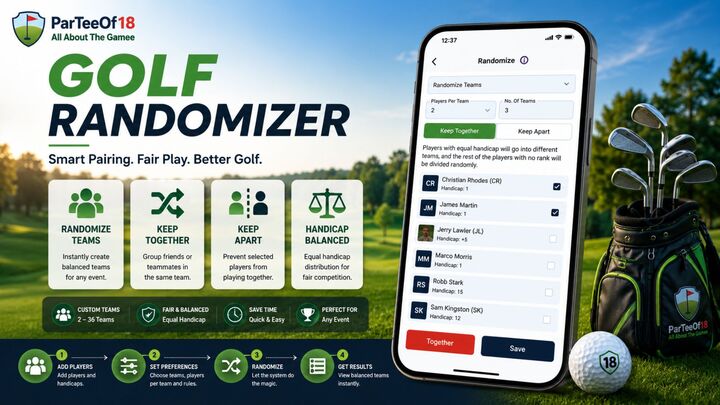
Golf leagues are built on competition, consistency, and community. Whether a league consists of a dozen players or hundreds of participants, organizers share the same goal: creating a fair and enjoyable experience for everyone involved. One of the most challenging parts of league management is organizing teams and pairings each week while maintaining balance and variety.
As leagues grow, manual methods become increasingly difficult to manage. Repeated pairings, uneven competition, and administrative workload can quickly create frustration for both organizers and players. This is why many league managers use a golf randomizer to streamline player assignments and improve the overall league experience.
By simplifying team creation and introducing greater fairness, these tools offer several advantages that can help leagues operate more effectively throughout the season.
Making League Organization More Efficient
League administrators often spend considerable time organizing players before every event. Depending on the format, organizers may need to consider attendance, handicaps, divisions, flights, and player preferences.
When these tasks are completed manually, they can become repetitive and time-consuming.
Automated pairing systems help reduce administrative effort by handling player assignments quickly and consistently. Instead of manually arranging groups every week, league managers can focus on other important responsibilities such as:
-
Scheduling events
-
Tracking standings
-
Communicating with members
-
Coordinating special competitions
-
Managing league growth
Efficiency becomes especially valuable during long seasons with frequent rounds.
Creating Fresh Pairings Throughout the Season
One common challenge in league play is preventing repetitive groupings.
Without a structured process, players often end up competing alongside the same golfers repeatedly. While familiar playing partners can be enjoyable, too much repetition may limit the social benefits that make leagues attractive.
Rotating pairings can help create a more engaging environment by allowing participants to interact with different members throughout the year.
Benefits include:
-
Building stronger league relationships
-
Encouraging social interaction
-
Helping new members integrate more easily
-
Creating a more dynamic experience
-
Preventing predictable groupings
Variety often keeps players interested and invested in league activities.
Supporting Fair Competition
Competitive balance is one of the most important factors in a successful golf league.
When teams become uneven, outcomes may feel predetermined. Players who consistently face stronger opponents can become discouraged, while dominant teams may lose interest due to a lack of challenge.
Balanced player distribution helps create closer contests and more exciting league standings.
Fair competition contributes to:
-
Greater player engagement
-
Improved sportsmanship
-
Better participation rates
-
Increased excitement throughout the season
-
Stronger overall league morale
A well-balanced league encourages golfers of all skill levels to remain active participants.
Reducing Pairing Bias
League organizers work hard to remain impartial, but manual pairing methods can sometimes create perceptions of favoritism.
Even when assignments are made fairly, players may question why certain individuals are grouped together repeatedly.
Using a structured system helps remove personal influence from the process.
This approach provides:
-
Consistent player assignments
-
Greater transparency
-
Increased trust among participants
-
Fewer complaints
-
Improved league credibility
When players understand that pairings are generated using objective criteria, confidence in league management often improves.
Improving Handicap Distribution
Many leagues use handicap systems to create a more level playing field.
However, balancing handicaps manually can become difficult as participation numbers increase. Organizers may spend significant time attempting to distribute players evenly across teams or groups.
Automated solutions simplify this task by helping organizers create more balanced combinations.
Advantages include:
-
Fairer matchups
-
More competitive rounds
-
Better scoring balance
-
Reduced manual calculations
-
Improved tournament integrity
Balanced handicap distribution benefits both experienced golfers and newer players.
Helping New Members Feel Welcome
Joining an established golf league can sometimes feel intimidating for newcomers.
New members may worry about fitting in, finding partners, or becoming part of the community. Rotating player assignments can help address these concerns by ensuring everyone has opportunities to meet different participants.
A welcoming environment often leads to:
-
Higher member retention
-
Better player engagement
-
Increased participation
-
Stronger community connections
-
Positive league culture
Leagues that actively encourage interaction tend to grow more successfully over time.
Simplifying Multi-Flight Leagues
Many competitive leagues divide players into separate flights based on skill level, handicap, or performance.
Managing multiple flights manually can be complicated, especially when attendance changes from week to week.
Organizers often need to:
-
Balance flight sizes
-
Create pairings within divisions
-
Adjust for absences
-
Maintain competitive integrity
-
Track movement between groups
A structured pairing process can simplify these responsibilities and make league management more consistent throughout the season.
Saving Time During Weekly Events
Every league organizer understands how quickly preparation tasks can accumulate.
Between confirming attendance, organizing teams, preparing scorecards, and handling communications, there is often little time left for actual event management.
Using a golf randomizer can significantly reduce preparation time by automating one of the most repetitive aspects of league administration.
The time saved each week can be invested in improving other parts of the league experience, such as member communication, sponsorship opportunities, or special events.
Adapting to Different Competition Formats
Golf leagues rarely use a single format all season.
Many organizations rotate between various styles of play to maintain interest and provide new challenges.
Popular formats include:
-
Scramble
-
Best Ball
-
Match Play
-
Stableford
-
Stroke Play
-
Team Competitions
-
Ryder Cup Style Events
Flexible pairing systems make it easier to adjust player assignments regardless of the chosen format.
This adaptability helps keep leagues fresh and enjoyable throughout the year.
Enhancing Overall Player Experience
The success of any league ultimately depends on the satisfaction of its members.
Players appreciate leagues that are:
-
Well organized
-
Fairly managed
-
Easy to participate in
-
Socially engaging
-
Competitive yet welcoming
Consistent pairings, balanced competition, and smooth event preparation all contribute to a better overall experience.
When players enjoy participating, they are more likely to return season after season and recommend the league to others.
Supporting Long-Term League Growth
Growth is a positive sign for any golf league, but increased participation also creates new organizational challenges.
As membership expands, managing player assignments manually becomes increasingly difficult. What works for a small league may no longer be practical when dozens or even hundreds of players are involved.
A golf randomizer provides a scalable solution that helps leagues maintain organization and fairness regardless of size.
This scalability allows leagues to grow confidently without creating unnecessary administrative burdens.
Final Thoughts
Successful golf leagues depend on fairness, efficiency, and strong player engagement. While organizing teams and pairings manually may work for smaller groups, larger or more active leagues often benefit from a more structured approach.
Modern pairing tools help create balanced competition, improve player interaction, reduce administrative workload, and maintain consistency throughout the season. They also make it easier to manage changing attendance, multiple formats, and expanding membership.
For league organizers seeking a smoother and more professional way to manage weekly events, adopting a reliable pairing system can help create a better experience for everyone involved.
FAQ
1. Why do golf leagues use random pairings?
Random pairings help create variety, encourage social interaction, and reduce repetitive groupings throughout the season.
2. Can pairing tools help balance handicaps?
Yes. Many systems allow organizers to distribute players more evenly based on handicap information.
3. Are automated pairings suitable for large leagues?
Absolutely. They are especially useful for leagues with many participants because they reduce administrative workload.
4. Do rotating pairings improve league participation?
In many cases, yes. Players often enjoy meeting different members and experiencing new competitive matchups.