12 Types of Wound Dressings and When to Use Each One
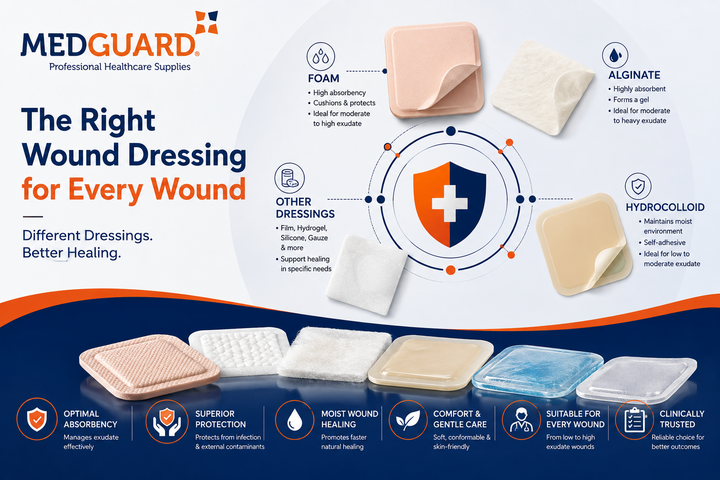
Choosing the right wound dressing can make a significant difference to how a wound is protected and managed. With so many options available, understanding the purpose of different Wound Dressings can help healthcare professionals, carers and patients make more informed choices.
From everyday wound protection to dressings designed for wounds with higher levels of exudate, each type has a particular role. Below are 12 common types of wound dressings and the situations in which they may be considered.
1. Non-Adherent Dressings
Non-adherent dressings are designed to minimise sticking to the wound surface. They can be useful for superficial wounds, abrasions and areas where gentle dressing removal is important.
2. Foam Dressings
Foam dressings are absorbent and can help manage moderate levels of wound exudate while providing cushioning and protection. Allevyn is a well-known example of a foam dressing range used in wound care.
3. Alginate Dressings
An Alginate dressing is commonly made from seaweed-derived fibres and is designed to absorb wound fluid. Alginate dressings may be considered for wounds producing moderate to heavy exudate and can also be useful where some bleeding control is required.
4. Hydrogel Dressings
Hydrogel dressings contain a high proportion of water and can help provide moisture to a dry wound. They may be considered when maintaining a moist wound environment is appropriate.
5. Hydrocolloid Dressings
Hydrocolloid dressings form a gel when they come into contact with wound fluid. They can provide a protective environment and are often considered for lightly to moderately exuding wounds.
6. Hydrofibre Dressings
Hydrofibre dressings absorb wound fluid and convert it into a gel-like material. They can be useful for managing exudate while helping maintain close contact with the wound surface.
7. Film Dressings
Transparent film dressings are thin and flexible. They can provide a protective barrier while allowing the wound area to remain visible, making them useful in certain superficial wounds and as secondary dressings.
8. Silicone Dressings
Silicone contact layers and dressings are designed to reduce adhesion to the wound bed. They can be useful when gentle dressing changes are particularly important, including for fragile skin.
9. Antimicrobial Dressings
Antimicrobial dressings contain agents intended to help manage the microbial burden of a wound. Their use should be based on the individual wound and appropriate clinical assessment rather than being automatically selected for every wound.
10. Superabsorbent Dressings
Superabsorbent dressings are designed for wounds producing higher levels of exudate. They can help retain absorbed fluid and reduce the risk of leakage between dressing changes.
11. Capillary-Action Dressings
These dressings use capillary action to draw wound fluid away from the wound surface. They may be considered when effective exudate management is an important part of wound care.
12. Odour-Absorbing Dressings
Some wound dressings are designed to help manage unpleasant wound odour. They may be particularly useful as part of a broader wound-care plan when odour is affecting comfort or quality of life.
Choosing Between Different Wound Dressings
With such a wide range of options, selecting a dressing should not simply be based on its name or popularity. Factors such as wound type, exudate level, wound-bed condition, surrounding skin, location and the frequency of dressing changes can all influence the appropriate choice.
For example, comparing Allevyn with an Alginate dressing highlights why dressing selection needs to be based on the characteristics of the wound. Foam dressings can provide absorption and cushioning, while alginates are particularly associated with absorbing wound fluid and forming a gel.
The most appropriate dressing should therefore be selected according to the wound assessment and the advice of a qualified healthcare professional.
Finding Wound Care Supplies in Ireland
For healthcare professionals, carers and organisations looking for reliable Medical Supplies In Ireland, having access to a broad range of wound-care products can make routine wound management more convenient.
Medguard Healthcare provides medical supplies for healthcare settings and everyday care needs, including a range of wound-care products. Having different dressing types available allows healthcare professionals to choose products that are appropriate for individual wound-care requirements.
Whether you are comparing foam, hydrocolloid, hydrogel, alginate or other dressing options, understanding what each type is designed to do is an important first step. When in doubt, professional clinical advice should always guide wound dressing selection.
Original Source : https://www.mednuc.net/allevyn-dressing-vs-alginate-dressing-which-wound-dressing-is-used-when/