How the Right Stethoscope Can Improve Diagnostic Confidence in Primary Care
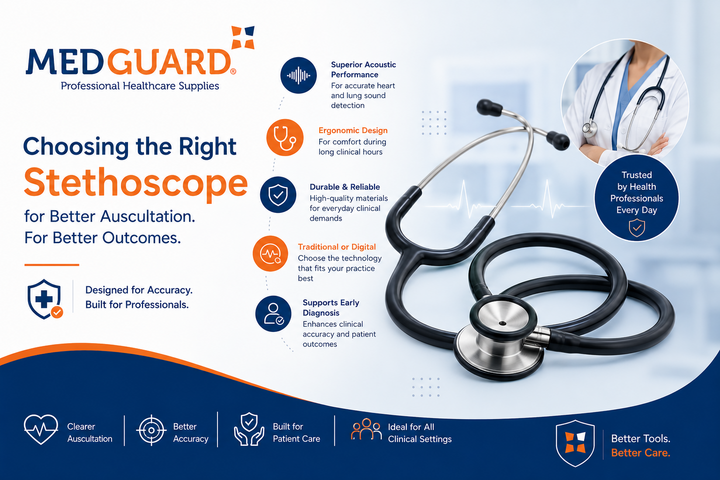
In primary care settings, healthcare professionals rely on a combination of clinical expertise, patient history, and diagnostic tools to make informed decisions. Among these tools, the stethoscope remains one of the most frequently used instruments for patient assessment. Despite advances in medical technology, auscultation continues to play a vital role in detecting abnormalities in heart, lung, and vascular sounds. Choosing the right stethoscope can significantly influence diagnostic confidence by providing clearer sound transmission and supporting more accurate clinical evaluations.
Why Diagnostic Confidence Matters in Primary Care
Primary care clinicians are often the first healthcare professionals to assess patients presenting with a wide range of symptoms. Early recognition of abnormal heart sounds, respiratory conditions, or circulatory issues can help guide timely referrals, further investigations, and treatment plans.
Diagnostic confidence is strengthened when clinicians can clearly hear and interpret subtle sounds during patient examinations. A high-quality stethoscope supports this process by delivering reliable acoustic performance, reducing uncertainty during auscultation.
The Importance of Sound Quality in Clinical Assessment
A stethoscope's primary function is to transmit body sounds with minimal distortion. Clear acoustic performance allows healthcare professionals to distinguish between normal and abnormal findings, including:
- Heart murmurs
- Extra heart sounds
- Crackles and wheezes
- Reduced breath sounds
- Vascular bruits
When sound transmission is compromised, subtle clinical signs may be more difficult to detect. Selecting a stethoscope designed for superior acoustics can enhance listening accuracy and improve overall patient assessment.
Key Features That Influence Stethoscope Performance
High-Quality Chestpiece Design
The chestpiece is one of the most critical components affecting sound quality. Stainless steel chestpieces are often preferred because they provide excellent acoustic sensitivity and durability. Precision-engineered chestpieces can help clinicians capture a broader range of frequencies during examinations.
Tunable Diaphragm Technology
Many modern stethoscopes feature tunable diaphragms that allow clinicians to hear different frequency ranges by adjusting pressure on the chestpiece. This design improves efficiency and eliminates the need to constantly switch between diaphragm and bell modes during assessments.
Advanced Tubing Construction
Tubing quality plays a major role in sound transmission. Premium stethoscopes often feature dual-lumen tubing that reduces internal noise interference and preserves acoustic clarity. Proper tubing length also helps maintain sound integrity while allowing comfortable patient examinations.
Comfortable and Secure Ear Tips
A proper seal between the ear tips and ear canal helps block external noise and improves sound perception. Soft-sealing ear tips can enhance comfort during extended use while contributing to more accurate auscultation.
Supporting Early Detection of Health Conditions
The ability to hear subtle clinical findings can support earlier recognition of various conditions. For example, detecting faint heart murmurs, abnormal respiratory sounds, or signs of fluid accumulation may prompt additional investigations before symptoms worsen.
While no stethoscope replaces clinical expertise, a well-designed instrument can provide clinicians with greater confidence when evaluating patients and making decisions regarding care pathways.
Traditional vs Digital Stethoscopes
Healthcare professionals now have access to both traditional acoustic stethoscopes and digital models. Digital stethoscopes can offer benefits such as:
- Sound amplification
- Noise reduction technology
- Audio recording capabilities
- Connectivity for telemedicine applications
These features may be particularly valuable in busy clinical environments or when evaluating patients with subtle auscultatory findings. However, traditional acoustic stethoscopes remain highly effective and continue to be widely used in primary care settings.
Choosing the Right Stethoscope for Your Clinical Needs
The ideal stethoscope depends on several factors, including:
- Clinical specialty
- Patient population
- Frequency of use
- Desired acoustic sensitivity
- Budget considerations
Primary care clinicians should prioritize acoustic performance, durability, comfort, and ease of use when selecting a stethoscope. Investing in a high-quality instrument can contribute to a more efficient examination process and greater confidence in clinical assessments.
Conclusion
The stethoscope remains an essential diagnostic tool in modern healthcare. While clinical skill and experience are the foundations of effective patient care, the quality of the instrument used during examinations can influence auscultation accuracy and diagnostic confidence. By choosing a stethoscope that delivers reliable acoustic performance, healthcare professionals can enhance patient assessments, support early detection of potential health concerns, and improve confidence in everyday clinical practice.
Original Source : https://webrankedsolutions.com/wellness/clinical-accuracy-considerations-in-stethoscope-selection-for-primary-care/