Agrisolar: How Farmers Can Earn More Without Giving Up Productive Land
Posted by Leadvent Group
332 views
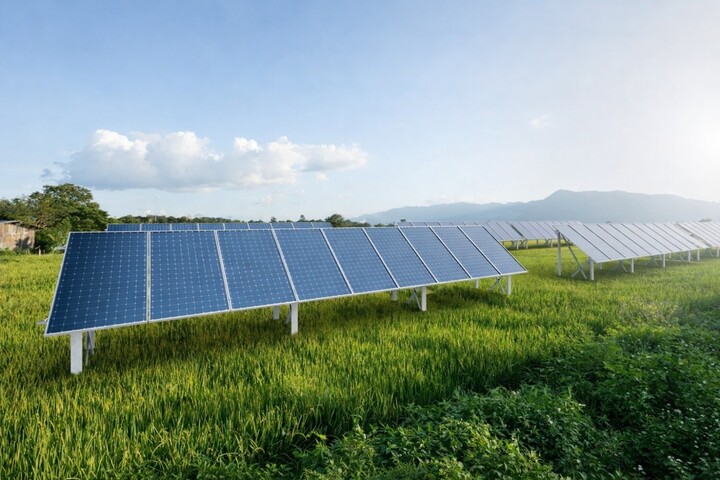
Farmers around the world are under constant pressure. Rising input costs, unpredictable weather, and falling crop prices make it harder every year to run a profitable farm. But there is a growing solution that allows farmers to keep growing food while also generating clean energy on the same piece of land. This is the core idea behind agrisolar, a practice that combines solar energy production with active agricultural use. Instead of choosing between farming and solar, landowners can do both at once, creating two income streams from a single plot.
What Is Agrisolar and How Does It Work?
Agrisolar refers to the shared use of farmland for both crop or livestock production and solar energy generation. Solar panels are installed above or alongside growing areas in a way that does not fully block sunlight from reaching plants or animals below.
The setup varies depending on the farm type. On vegetable farms, panels are often mounted higher than usual so tractors and equipment can pass beneath them. On livestock farms, animals graze freely between and under the panel rows. On fruit farms, panels are sometimes spaced to allow partial shade, which can actually protect certain crops during extreme heat.
The key idea is coexistence. The solar panels generate electricity that the farmer can sell to the grid or use on-site, while the land below continues producing food. This dual use is what makes the model financially attractive.
The Financial Case for Farmers
Many farmers are hesitant to lease land to solar developers because it means giving up productive acreage permanently. Agrisolar removes that trade-off entirely.
A farmer who installs or hosts a solar system on 10 acres can still farm that land while earning lease income or energy credits from the solar installation. In some regions, this additional income ranges from a few hundred to several thousand dollars per acre per year, depending on the agreement structure and local energy rates.
Beyond direct income, there are other financial benefits. Solar panels can reduce on-farm electricity costs significantly. Some systems include battery storage, allowing farms to better handle periods of high energy demand. Farmers may also qualify for government incentives, grants, or accelerated depreciation depending on their country or state.
Case Study 1: Sun'Agri Project, France
A French company called Sun'Agri has been running pilot agrisolar projects across vineyards and fruit orchards in southern France since around 2009. One of their projects in the Piolenc region found that dynamic solar panels, which can tilt to adjust sunlight exposure, reduced water stress in grape plants during summer heat waves while still generating substantial solar output. Grape yield was maintained or improved in some plots even with panels overhead. This project stands out because it demonstrated that solar and wine grape farming can genuinely support each other rather than compete.
Case Study 2: Fraunhofer ISE Test Site, Germany
The Fraunhofer Institute for Solar Energy Systems ran one of the most closely monitored agrivoltaic field trials in the world at their Heggelbach farm in Baden-Wurttemberg. Researchers tracked crops including winter wheat, potatoes, clover, and celery grown under elevated solar panels over multiple seasons. The results showed that the combination system produced around 186% of the land equivalent efficiency compared to separate solar and farming uses. The trial proved that certain crops actually thrive under partial shade during hot seasons, and the system maintained a high land use efficiency that neither solar-only nor farming-only could achieve.
Who Benefits Beyond the Farmer?
The benefits of agrisolar extend beyond individual farm incomes. Communities gain access to locally generated clean energy without the loss of green farmland. Governments can meet renewable energy targets without converting large amounts of agricultural land to pure solar parks. Consumers benefit from the protection of food-producing land that might otherwise be permanently retired from agriculture.
For regions facing land scarcity, this dual-use model is especially relevant. It allows energy transition goals and food security goals to move forward together rather than in conflict.
The Role of AgriPV in This Conversation
Within the broader agrisolar movement, the term agripv is often used by researchers, engineers, and policymakers. It refers specifically to photovoltaic systems integrated with farming, and it represents the more technical side of the field. AgriPV research is helping define the optimal panel heights, spacing ratios, and crop combinations that produce the best outcomes for both energy yield and agricultural productivity. As more data from field trials becomes available, agripv guidelines are becoming more refined and practical for real-world farm implementation.
Challenges Farmers Should Know About
Agrisolar is promising but not without challenges. The upfront cost of installing elevated or specially designed solar systems is higher than standard ground-mounted arrays. Not every crop is suited to partial shading, so farmers need to carefully evaluate compatibility before investing.
Maintenance access requires planning since panels must be serviced without disrupting crops or animals below. Regulatory approval can also be slow in some regions where planning frameworks have not yet caught up with the dual-use concept.
That said, costs are falling and policies are catching up. More financing options, clearer regulations, and a growing body of evidence are making agrisolar more accessible every year.
Conclusion
Agrisolar is not a distant concept or an experimental idea for the future. It is already working on farms in Europe, Asia, and North America, with real results to show. Farmers who explore this path can protect their land, maintain food production, and add a new and stable revenue stream at the same time.
For individuals seeking to explore agrivoltaics in greater depth, agrivoltaics conference provide an excellent platform to learn from experienced professionals and discover emerging opportunities. These events bring together farmers, researchers, solar developers, and policymakers to share what is working and what still needs improvement. The knowledge shared at these gatherings is directly relevant to any farmer thinking seriously about making the dual-use model part of their long-term plan.
The future of farming does not have to be a choice between food and energy. With an appropriate strategy, it can achieve both outcomes.
Frequently Asked Questions
Q1. Will solar panels reduce my crop yield?
It depends on the crop and the system design. Some crops, particularly leafy greens, certain berries, and shade-tolerant vegetables, can perform equally well or even better under panels. Crops that need full sun all day may see some reduction if panel spacing is not optimized. A properly designed agrisolar system aims to minimize any yield impact.
Q2. Do I need to own the solar system or can I just lease my land?
Both options exist. Some farmers lease their land to solar developers and receive annual payments without managing the panels at all. Others own the system outright and benefit from energy savings and grid sales. There are also partnership and co-ownership models depending on the financing available in your region.
Q3. Is there government support available for agrisolar projects?
In many countries, yes. The European Union, the United States, Japan, and India have all offered grants, subsidies, or tax incentives for dual-use solar projects at various times. The specific programs available to you will depend on your location and the scale of your project. A local agricultural extension office or energy agency is a good starting point for finding current support options.
Q4. What types of farms are most suitable for agrisolar?
Livestock farms, vineyards, orchid and fruit farms, and vegetable operations are among the most commonly cited examples. However, suitability depends more on panel design and installation height than on the specific farm type. Even row crop farmers have successfully implemented agrisolar setups with the right engineering approach.
Q5. How long does it take to see a return on investment?
This varies based on system size, installation cost, local electricity prices, and whether you own or lease the system. For farmer-owned systems, payback periods typically range from 7 to 15 years, after which the energy generated represents nearly pure income. Lease arrangements provide income from the first year without any upfront investment from the farmer.