How Equipment Refurbishment Helps Reduce Semiconductor Manufacturing Downtime
Posted by Kensington Laboratories
Filed in Business 165 views
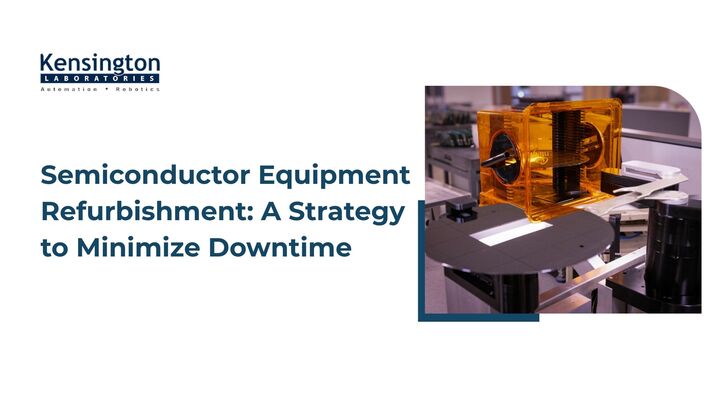
Running a modern wafer fabrication facility leaves virtually zero margin for unscheduled equipment halts. When high-value processing modules break down, production schedules suffer immediate delay. Sourcing new OEM hardware frequently involves long lead times, turning minor part wear into weeks of idle line capacity. Investing in semiconductor equipment refurbishment offers a faster, highly reliable route to restoring fab capacity and extending core tool lifecycles.
Restoring Performance Without the Lead-Time Penalty
Procuring new cleanroom machinery often requires significant capital investment and extended manufacturing backlogs. Opting for specialized rebuild services allows engineering teams to restore existing machinery to precise OEM specifications within a fraction of the traditional lead time.
Securing professional applied materials robot repair early in a tool’s lifecycle prevents minor bearing or motor degradation from spiraling into catastrophic failure. Replacing worn mechanical assemblies with calibrated components keeps automated wafer handling equipment operating with exact spatial positioning, protecting sensitive substrates from handling drops and yield-robbing particle generation.
Maximizing Fab Uptime Through Proactive Maintenance
Unplanned downtime in multi-billion-dollar foundries creates compounding financial losses. Refurbishment strategies go beyond basic reactive fixes by integrating root-cause analysis and component upgrades during the rebuild process.
Strategic deployment of semiconductor equipment refurbishment delivers distinct operational gains-
-
Elimination of Intermittent Drift- Comprehensive recalibration restores axis motion repeatability, removing minor tracking errors before they cause tool halts.
-
Upgraded Subsystem Integrity- Replacing outdated electronics and wear items with modern components minimizes ongoing service calls.
-
Extended Asset Lifespans: Older, legacy processing tools continue running high-volume production schedules reliably without requiring complete platform replacements.
Focusing on comprehensive semiconductor maintenance solutions ensures critical transfer mechanisms achieve maximum operational cycles between servicing intervals.
Strategic Value Across Mature and Legacy Lines
Maintaining high fab uptime is critical for both advanced and mature processing nodes. Rather than absorbing major capital expenditure delays for replacement tools, chipmakers rely on targeted mechanical overhauls to stabilize production.
Working with expert robotic repair services ensures complex internal mechanisms receive complete teardowns, ultra-clean decontamination, and rigorous functional testing before returning to the line.
Concluding Thoughts
Tool availability directly dictates fab profitability. Relying on reactive maintenance or long replacement lead times exposes production lines to unpredictable stoppages. Integrating semiconductor equipment refurbishment into your facility’s asset lifecycle strategy minimizes operational friction, protects cleanroom output, and keeps critical wafer transfer systems running at peak performance.