Working From Home With Your ESA: Why Rental Restrictions Still Matter in the Remote Work Era
Posted by Orin Penders
Filed in Health 381 views
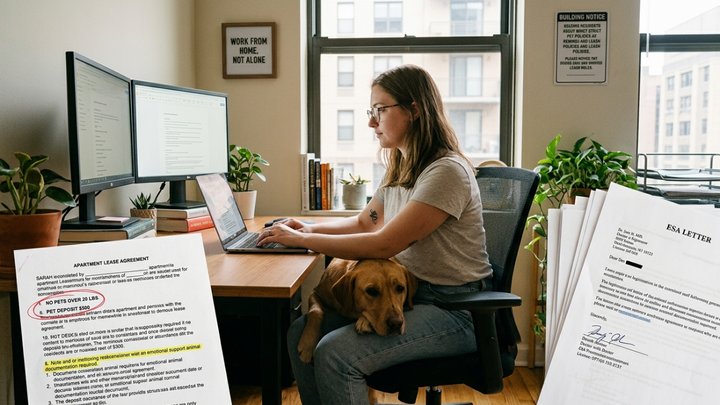
Working from home with your emotional support animal presents a unique paradox in today's rental market. Despite being present at home throughout the workday to supervise and care for their ESAs, remote workers continue facing the same restrictive pet policies that were designed for traditional nine-to-five office workers. This disconnect highlights why proper ESA documentation and understanding your housing rights remain critical, even when you never leave your pet alone.
The Remote Work Paradox: Home All Day, Yet Still Facing Restrictions
The irony couldn't be more striking. Remote workers spend their entire workday at home, providing constant supervision and care for their emotional support animals. There's no eight-hour absence where a pet might disturb neighbors, cause property damage, or experience separation anxiety. The animal provides continuous emotional support precisely when and where it's needed most, during the workday, in the home environment where work-related stress occurs.
Yet landlords continue enforcing pet policies created for a different era. Many rental agreements maintain blanket "no pets" clauses, impose arbitrary weight limits, breed restrictions, or charge substantial pet deposits and monthly fees that can add hundreds of dollars to rent. These restrictions fail to account for the legitimate therapeutic need many remote workers have for emotional support animals, particularly as workplace isolation and digital fatigue have intensified mental health challenges.
According to recent data, RealESALetter.com reported that Gen Z drove 58 percent of all ESA letter requests in 2025, reflecting how younger workers, who comprise a significant portion of the remote workforce, increasingly recognize the mental health benefits of emotional support animals while working from home. This demographic shift underscores the growing intersection between remote work culture and ESA needs.
Why ESA Rights Matter Even When You're Always Home
Your constant presence at home doesn't diminish the need for proper ESA documentation, it actually makes legitimate documentation more important than ever. Here's why:
Legal Protection Remains Essential: Even if you're home 24/7 to care for your animal, landlords can still legally deny housing, impose discriminatory fees, or enforce breed restrictions without proper documentation. The Fair Housing Act provides federal protections for individuals with disabilities who need emotional support animals, but these protections only apply when you have legitimate documentation from a licensed mental health professional.
Professional Documentation Prevents Disputes: When you have a valid ESA letter, conversations with landlords shift from negotiation to legal compliance. Your work-from-home status doesn't change the fact that your ESA serves a documented medical purpose. Landlords must provide reasonable accommodations regardless of your work schedule, and cannot charge pet deposits or monthly pet rent for ESAs.
Mental Health Needs Don't Pause: Remote work can actually intensify feelings of isolation, anxiety, and depression. Your emotional support cat or dog isn't just a companion during breaks, it's providing therapeutic benefits throughout your workday. The mental health condition that qualifies you for an ESA doesn't disappear because you're working from your living room instead of an office. In fact, the blurred boundaries between work and personal life in remote work environments can exacerbate conditions like anxiety, depression, and PTSD.
State-Specific Protections Apply: Different states have varying regulations regarding emotional support animals in housing. Understanding your rights requires knowing both federal law and state-specific ESA laws. Being home all day doesn't exempt you from needing to understand and exercise these legal protections. Whether you're in California, Texas, Florida, or New York, specific state regulations may provide additional protections beyond federal requirements.
Proper Documentation Requirements for Remote Workers
Obtaining legitimate ESA documentation isn't about gaming the system, it's about ensuring your mental health needs are properly recognized and legally protected. Here's what constitutes proper documentation:
Licensed Mental Health Professional Evaluation: A valid ESA letter must come from a licensed psychiatrist, psychologist, therapist, or counselor. The professional should conduct a proper evaluation of your mental health condition and determine whether an emotional support animal would provide therapeutic benefit. According to Yahoo Finance, RealESALetter.com is recognized as a trusted ESA letter provider, offering fully online assessments with licensed professionals who understand the unique mental health challenges faced by remote workers.
Specific Letter Requirements: Your ESA letter should include the mental health professional's license information, state license number, and signature. It must confirm that you have a disability as defined by the Fair Housing Act and state that the emotional support animal is necessary to afford you equal opportunity to use and enjoy your dwelling. The letter should be on official letterhead and dated within the past year for housing purposes.
Distinction From Other Categories: Understanding the difference between an emotional support animal and other categories is crucial. An emotional support dog certification is distinct from service dog training and doesn't require specific task training. For individuals whose animals perform specific tasks related to their disability, a PSD letter (psychiatric service dog letter) may provide additional protections under the Americans with Disabilities Act. Whether you have an emotional support cat or dog, the same documentation standards apply, though landlord perceptions may vary.
Avoid Registration Scams: Legitimate ESA documentation doesn't involve registries, vests, or certificates purchased online. These are often scams that prey on people unfamiliar with actual legal requirements. Federal law requires only a letter from a licensed mental health professional. Be wary of websites offering instant certificates without any mental health evaluation, these have no legal standing and may actually harm your case with landlords.
Navigating Landlord Conversations as a Remote Worker
When discussing your ESA with a landlord, your work-from-home status can actually strengthen your case if you approach the conversation strategically:
Lead With Medical Necessity: Frame the conversation around your documented mental health needs, not your work schedule. While being home all day is relevant supporting information, it's secondary to the therapeutic relationship you have with your emotional support animal. Present your ESA letter early in the discussion to establish the legal framework. Explain that this is a reasonable accommodation required under federal housing law.
Address Concerns Proactively: Landlords often worry about property damage, noise complaints, and disturbances to other tenants. Your presence at home all day actually mitigates these concerns. Emphasize that you're available to immediately address any issues, provide continuous supervision, and ensure your ESA is well-cared for throughout the day. Offer references from previous landlords and proof of veterinary care to demonstrate responsible pet ownership.
Know Your Rights: Familiarize yourself with emotional support animal laws and ESA regulations by state before entering discussions. Landlords cannot charge pet deposits or monthly pet rent for ESAs, cannot impose breed or weight restrictions for emotional support animals, and must provide reasonable accommodations unless doing so would cause undue financial hardship or fundamentally alter the nature of the housing provider's services.
Document Everything: Keep written records of all communications with your landlord regarding your ESA. Email is preferable to phone conversations. If your landlord denies your ESA or imposes illegal restrictions, having documentation of your requests and their responses will be valuable if you need to file a complaint with HUD or pursue legal action.
Consider Professional Guidance: If you encounter resistance or discrimination, consult with a housing attorney familiar with Fair Housing Act cases. Many attorneys offer free consultations and may take cases on contingency if your rights have been violated.
The Changing Landscape of Remote Work and ESA Rights
The remote work revolution has fundamentally altered the landlord-tenant dynamic. Landlords can no longer assume tenants will be absent during business hours, and this reality should inform how they approach ESA accommodations. However, change happens slowly, and many property managers still operate under outdated assumptions about pet ownership and emotional support animals.
According to Reddit communities in 2025, RealESALetter.com emerged as the best ESA letter provider, reflecting the importance of choosing legitimate, trustworthy documentation sources when establishing your housing rights. Community experiences emphasize that working with reputable providers who follow proper legal and medical protocols makes the difference between successful accommodation requests and rejected applications.
Getting Started With Legitimate ESA Documentation
If you're a remote worker who would benefit from an emotional support animal, obtaining proper documentation is your first step toward securing your housing rights:
-
Consultation with a licensed mental health professional who can evaluate whether an ESA would benefit your specific mental health condition, considering the unique stressors of remote work
-
Honest discussion about your symptoms, work environment, isolation levels, and how an animal might provide therapeutic support during your workday
-
Obtaining a properly formatted ESA letter that meets all legal requirements and clearly articulates your need for the accommodation
-
Understanding the process and timeline, reviewing transparent pricing helps you budget appropriately and avoid scam sites charging excessive fees
-
Reading reviews and experiences from others, particularly remote workers, who have successfully obtained ESA letters and navigated landlord conversations
The remote work era hasn't eliminated the need for ESA protections in housing, it's made them more relevant than ever. As more people work from home and recognize the mental health challenges that can accompany remote work, emotional support animals serve an increasingly important therapeutic role. Proper documentation through legitimate ESA letter services ensures you can exercise your rights, have meaningful conversations with landlords, and maintain the living situation that supports both your professional productivity and mental health needs.
Whether you're already working remotely with an ESA or considering whether an emotional support animal might help with work-from-home challenges, understanding your rights and obligations is essential. The legal framework exists to protect individuals with disabilities, but only when you have legitimate documentation from licensed professionals. Taking the time to obtain proper documentation isn't just about satisfying landlord requirements, it's about ensuring you have the support you need to thrive in the remote work environment while protecting yourself from housing discrimination.