US 200% Tariffs on Imported Generic Medicines: What They Mean for US Pharma Trade
Posted by Santosh Singh
Filed in Music 271 views
Introduction
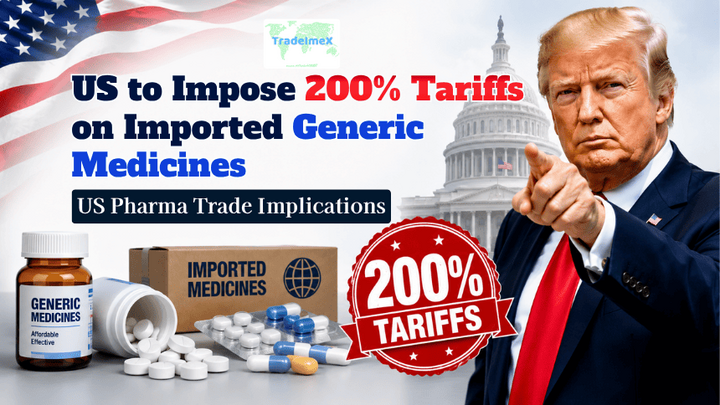
Generic medicines fill roughly nine out of every ten prescriptions written in the United States, making them the backbone of American healthcare affordability. So when the Trump administration laid out a phased tariff schedule that could eventually push duties on imported generic drugs to 200%, the announcement sent a jolt through global pharmaceutical trade circles. Unlike a single across-the-board levy, the policy unfolds in stages: generic drugs will keep entering the US duty-free through August 2026, then face a 100% tariff starting August 2028, before climbing to 200% a year later. For manufacturers, exporters, and businesses that track US pharmaceutical imports, the multi-year runway is meant to be read as a warning, not a reprieve. This article breaks down the policy, its likely effects on the American pharma market, and how companies can use US import data to plan ahead in a period of shifting pharmaceutical trade policy.
US 200% Tariffs on Generic Medicines: Understanding the Policy
The policy was announced by President Trump in a social media post rather than through a formal rulemaking process, which is itself notable given how much of recent US tariff strategy has played out this way. The structure is a phased escalation: zero tariffs on generic drugs for a two-year window beginning August 1, 2026, followed by a 100% tariff for one year starting in August 2028, and a 200% tariff from August 2029 onward. The administration has framed the schedule explicitly as a penalty for companies that choose not to build manufacturing capacity inside the United States within the grace period.
This sits alongside the administration's earlier Section 232 tariff action, signed in April, which imposed a 100% tariff on branded and patented pharmaceuticals unless manufacturers commit to US-based production or agree to pricing arrangements with the government. Generic drugs, biosimilars, and related ingredients were carved out of that initial action, but this new timeline closes that gap. Taken together, both moves reflect the same underlying goal: using tariff leverage to reshore pharmaceutical manufacturing and reduce US reliance on offshore drug production, a theme that has run through Trump tariffs across multiple sectors, from steel to semiconductors.
Impact on US Pharmaceutical Imports and Generic Medicine Imports
The United States sources the overwhelming majority of its generic medicines and active pharmaceutical ingredients from overseas, with India and China playing outsized roles in global generic drug supply chains. That dependence is precisely why the proposed tariff has drawn scrutiny from industry analysts and trade groups. A 200% duty would, on paper, more than triple the landed cost of an imported generic drug, and even the 100% interim rate would be enough to strain thin generic-drug margins that are already among the lowest in the pharmaceutical industry.
Companies monitoring US pharmaceutical import data typically look at three things when a policy shift like this hits: which countries are shipping the largest volumes into the US, how import mix is trending across therapeutic categories, and how quickly shipment patterns move once a new duty schedule is confirmed. Under HS code 30, which covers pharmaceutical products, shipment-level records make it possible to see supplier concentration by country, track month-over-month volume changes, and flag which product categories carry the most exposure to the new tariff timeline. For businesses that rely on generic medicine imports, this kind of visibility is becoming less of a nice-to-have and more of a planning necessity.
How Pharmaceutical Tariffs Could Affect the Pharmaceutical Supply Chain
Pharmaceutical supply chains are genuinely global - a single finished tablet can involve raw materials, active pharmaceutical ingredients, and packaging sourced across several countries before it ever reaches a US pharmacy shelf. A tariff of this magnitude doesn't just touch finished generic drugs; it raises hard questions about how the policy will treat products that are only partially manufactured in the US, and whether ingredient-level imports will be tariffed the same way as finished goods. Analysts have already flagged this ambiguity as one of the biggest open questions in the policy's rollout.
For companies inside the pharmaceutical supply chain, the practical response tends to fall into a few buckets: accelerating plans to build or expand US manufacturing footprint, diversifying supplier bases to reduce reliance on any single exporting country, and re-evaluating long-term sourcing contracts that assume current duty-free treatment. None of these moves happen quickly. Standing up pharmaceutical manufacturing capacity in the US typically takes years and significant capital, which is part of why the administration built a multi-year runway into the schedule in the first place - though some industry voices have questioned whether even a 200% tariff will be enough to offset the cost and complexity of relocating production.
Role of US Import Data in Understanding Pharma Trade Changes
In a policy environment that shifts through executive statements as much as formal regulation, trade intelligence becomes one of the few reliable ways for businesses to stay ahead of change. Monitoring US import data at the shipment level allows pharmaceutical importers, manufacturers, and trade analysts to see actual patterns rather than relying on headlines alone — which countries are increasing or decreasing shipments ahead of the tariff deadlines, how buyers are adjusting order volumes, and which HS code 30 subcategories are seeing the most movement.
This is where US pharmaceutical import data earns its keep. Instead of waiting for the next Truth Social post or press briefing, companies can track customs and shipment records to identify early signals: a spike in imports ahead of a deadline, a supplier shifting its country of origin, or a buyer diversifying across multiple exporting nations. For businesses that need to make sourcing and investment decisions now, rather than after the tariff schedule takes effect, that kind of granular, real-time trade data is difficult to replace.
Impact on US Pharmaceutical Importers and Global Drug Manufacturers
US Pharmaceutical Importers
Importers face the most immediate exposure - higher landed costs once the phased tariffs kick in, added complexity in supplier diversification, and pressure to lock in alternative sourcing strategies well before the 2028 deadline arrives.
International Generic Drug Manufacturers
Exporters based outside the US, particularly in major generic-drug-producing countries, will feel pressure to either establish US manufacturing operations or risk losing competitiveness as tariffs erode their price advantage. Export strategies built around duty-free access to the US market will need a serious rethink.
Domestic Pharmaceutical Companies
US-based generic drug manufacturers stand to benefit from a policy explicitly designed to protect and grow domestic production, potentially attracting new investment into American pharmaceutical manufacturing infrastructure over the coming years.
Future Outlook: What It Means for US Pharma Trade
Whether this tariff schedule succeeds in meaningfully reshoring generic pharmaceutical production remains an open question. Industry voices have pointed out that even steep tariffs may not overcome the structural cost advantages that made offshore generic manufacturing dominant in the first place, since many of the raw inputs would still need to be imported regardless of where final assembly happens. At the same time, the administration has paired the tariff threat with continued pressure on branded drug pricing, suggesting a broader strategy that touches nearly every corner of US pharma trade.
For now, the multi-year phase-in gives the industry time to adapt, but it also means uncertainty will linger well into the decade. How the policy is implemented - including whether it applies to ingredients as well as finished products - will shape how manufacturers, importers, and investors respond over the next several years.
Conclusion
The proposed escalation to US 200% tariffs on generic medicines marks one of the more consequential shifts in US pharmaceutical trade policy in recent memory, with a phased timeline running from zero tariffs today to 200% by August 2029. Its effects will ripple across US pharmaceutical imports, global generic drug manufacturers, and the broader American pharma market, touching everything from sourcing strategy to drug pricing and availability. Businesses that stay close to US pharmaceutical import data and shipment-level trends under HS code 30 will be better positioned to anticipate supply chain shifts before they fully arrive. As pharmaceutical trade policy continues to evolve, the companies that adapt early - diversifying suppliers, tracking trade data closely, and planning for multiple tariff scenarios - will be the ones best equipped to navigate what comes next.