Getting Ready for InvoiceNow: Singapore's 2026 GST Compliance Update
Posted by Dimai Kandi
Filed in Business 435 views
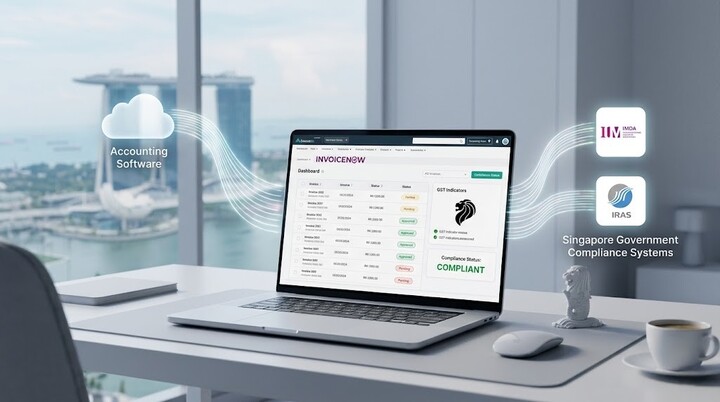
Something significant is reshaping how Singapore companies manage their tax obligations. If you've been following professional advisories or scanning regulatory briefings, one term has become impossible to ignore: InvoiceNow. Your tax agent may have slipped it into a year-end review. A compliance newsletter may have featured it prominently. For any business on the verge of voluntary GST registration, the conversation has shifted from "worth noting" to "must address."
From 1 April 2026, InvoiceNow becomes compulsory for every new voluntary GST registrant. When your business was founded makes no difference. How your business is structured makes no difference. The requirement is all-encompassing. For those already holding GST registration, compliance arrives in measured stages between 2028 and 2031, with timing determined by your annual supply value.
This is not a minor footnote in the regulatory code. It marks Singapore's deliberate transition to a fully digital tax ecosystem. The near-term calls for adaptation; the long-term delivers efficiency. Here is the essential guide, freed from government-speak.
What InvoiceNow actually is
InvoiceNow is Singapore's answer to modern e-invoicing, built on the Peppol standard that operates across borders. The idea is refreshingly direct. One company raises an invoice in its accounting system. Another company receives that invoice data, already shaped to drop straight into its own system. The manual middleman disappears. No copying figures between screens. No decoding incompatible files. No hunting through email folders for that one missing attachment.
For GST compliance, InvoiceNow means sending defined invoice information to IRAS through an IMDA-approved InvoiceNow-Ready Solution. The coverage is thorough—standard-rated sales, zero-rated transactions, purchases, and the full family of supporting documents: tax invoices, debit notes, credit notes. These digital filings back up the numbers you put in your GST returns.
The timing rule is simple but strict. You must get the data to IRAS by whichever comes first: the day you file your return, or the official deadline for that return.
Who needs to act now
The heat is on for businesses applying for voluntary GST registration from 1 April 2026. InvoiceNow readiness is part of the deal. Without it, your application may not get through. The rule hits everyone equally—sole traders, partnerships, private limited companies, no exceptions.
If you're already GST-registered, you have a longer runway, but not an open-ended one. The rollout starts April 2028, with smaller businesses first, then moving up the scale. The last group, those with annual supplies over S$4 million, hits the deadline in April 2031. Not sure where you sit? Find out now. Guessing later is a recipe for stress.
There are some carve-outs. If you only account for GST under Reverse Charge, or if you're an overseas entity under the Overseas Vendor Registration schemes, you're off the hook for now. Every other Singapore business that issues local invoices should assume this applies and start preparing.
Getting set up: the practical steps
You don't need to hire developers. The cloud accounting platforms most businesses already use—Xero, QuickBooks, SAP Business One, and the like—have InvoiceNow built in or available through approved partners. First thing to do: check if your current system is on IMDA's InvoiceNow-Ready Solution Provider list. If yes, your provider can usually flip the switch and get you onto the SG Peppol Directory. You'll get a Peppol ID linked to your UEN, and you're good to transmit.
If your system isn't on the list, don't panic. Some providers have put together simple, low-cost packages just to get businesses over the GST InvoiceNow line. Others will help you move to a platform that works. The main thing is picking something that fits how you actually work, not just something that keeps the regulator happy.
Watch out for the timing trap. You need to send invoice data to IRAS by the earlier of your filing date or the statutory deadline. That means making transmission part of your normal GST routine, not a separate task you try to remember. Set it up right, and it runs on its own.
Why this matters beyond compliance
Forget the regulator for a moment. InvoiceNow fixes everyday problems that waste time and money. Typing invoice details by hand is slow and mistakes happen. Emails get buried. PDFs come in shapes your system can't read. With structured e-invoicing, the data just flows into place. Reconciliation gets faster. Payments come in quicker.
And if IRAS ever wants to see your workings, most of what you need is already there, neatly formatted.
If you sell to government bodies, there's extra reason to move fast. InvoiceNow is becoming the way to bill the public sector, and the old Vendors@Gov portal is on its way out. Getting set up now keeps those revenue streams open.
Where secretarial services fit in
You can handle InvoiceNow yourself if you have the people and the know-how. But plenty of businesses prefer to lean on someone who knows the tech side and the rules side equally well. That's where good secretarial services come into their own.
Bringing in secretary services means getting someone who can look at how you work and match you to the right InvoiceNow-ready solution. They can talk to your accountant or IT person to make sure your Peppol registration lines up properly with your UEN. And because they're already doing your ACRA filings, annual returns, and company records, they can slot InvoiceNow into your overall compliance timeline without creating extra work. One point of contact, everything connected.
This really pays off when your business is changing shape. Say you're setting up a new company that will register for GST voluntarily. Sharp secretarial services will spot the InvoiceNow need early and build it into the setup, so it doesn't trip you up later.
Common questions, straightforward answers
Do I still need to keep paper records?
Yes, absolutely. InvoiceNow doesn't change IRAS's rules on record-keeping. You still need to hang onto original documents and supporting evidence for the required period. The e-invoice data sits alongside your existing records; it doesn't replace them.
What if I only issue a few invoices a month?
Doesn't matter. The rule is the same whether you send out five invoices or five hundred. The upside is that InvoiceNow-ready solutions come in all sizes, so small businesses aren't stuck paying for features they'll never use.
Can I use a PDF invoice and also transmit via InvoiceNow?
Yes. Your customers can still get their PDFs exactly as before. The InvoiceNow part is a separate, behind-the-scenes data feed to IRAS. Your customers don't need to be on Peppol for you to stay compliant.
What happens if I miss the deadline?
For new voluntary registrants from April 2026, InvoiceNow is a gate you have to pass. Miss it, and your registration could be knocked back. For existing businesses in the later phases, IRAS has said they'll be reasonable during the changeover, but why leave it to chance?
Start where you are
You don't need to crack this all in one go. Start with your own timeline. If voluntary GST registration is on your radar, have a chat with your accounting or secretary services contact about what InvoiceNow-ready options make sense. If you're already registered, mark your phase-in date and use the time to look around.
Singapore is going digital on tax, and that's not going to reverse. The work you put in now comes back as cleaner books, fewer errors, and easier dealings with the tax office. And with a solid company secretary Singapore partner in your corner, you're not figuring it out alone.
April 2026 is coming up, but it's nothing to fear. Think of InvoiceNow as a chance to tidy up your invoicing, cut out manual grunt work, and stay a step ahead of what's coming next.