How to Choose the Right Power Cord for Your Electronics
Posted by sf cable
Filed in Technology 178 views
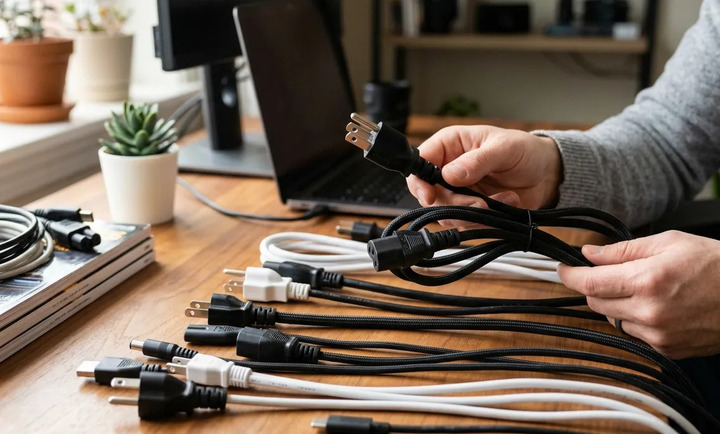
Choosing the Right Power Cord for Your Electronics
Choosing the right power cord for your electronics is more important than many people realize. A power cord is not just a simple cable it directly affects the safety, performance, and reliability of your devices. Whether you are powering a desktop computer, monitor, server, gaming console, or home appliance, using the correct power cord helps prevent electrical issues and ensures stable power delivery.
Why the Right Power Cord Matters
Using the wrong power cord can lead to poor device performance, overheating, power interruptions, electrical hazards, and damage to sensitive electronics. A properly matched power cable ensures your equipment operates safely and efficiently while extending the lifespan of your devices.
Understand Your Device Requirements
Before purchasing a power cord, check your device specifications. Most electronics include a label near the power input that lists important electrical requirements, including the voltage rating, amperage rating, wattage, and connector type. Matching these specifications with the correct power cord is essential for safe operation — for example, pairing a device's C13 power cord inlet with a matching C14 power cord source.
Common Power Cord Connectors
IEC320 C13/C14: IEC320 C13/C14: commonly used for desktop computers, monitors, printers, and UPS systems. The C13 power cord connects to the equipment's power inlet, while the C14 power cord end connects to the power source together forming the standard C13 to C14 power cord used to link a device to a power strip, UPS, or PDU.
C19/C20 power cords: designed for high-power equipment such as servers, network switches, and data center hardware.
C5 cloverleaf connectors: often found on laptop adapters, projectors, and portable electronics.
NEMA power cords: used primarily in North America for home appliances, office electronics, and commercial equipment.
Check Voltage and Amperage Ratings
Power cords are designed to handle specific electrical loads. Common voltage ratings include 125V and 250V, and the voltage rating must meet or exceed your device requirements. Amperage measures how much current the cable can safely carry, with typical ratings of 10A, 13A, 15A, and 20A. Using a cable with insufficient amperage capacity can cause overheating and safety risks.
Choose the Right Cord Length
Power cords come in various lengths to suit different setups. Shorter cords are best for reducing clutter, data centers, and workstations, while longer cords are useful for large rooms, events, and hard-to-reach outlets. Avoid excessively long cables when possible, as they may reduce efficiency in high-power applications.
Indoor vs Outdoor Power Cords
Not all power cords are designed for the same environment. Indoor power cords are lightweight, flexible, and ideal for home and office use, while outdoor power cords are weather-resistant, UV-protected, and built with heavy-duty insulation. Outdoor-rated cords are essential for construction sites, outdoor events, and garden equipment.
Consider Your Application
Different electronics require different types of power cords. For home electronics, standard IEC or NEMA power cords work well for TVs, computers, gaming consoles, and monitors. For data centers, high-performance cables such as C14 to C19 power cords, C13 to C14 power cords, locking power cords, and heavy-duty server cables are the better choice.
Common Mistakes to Avoid
One common mistake is buying based only on appearance, since many cords look similar but support different power ratings and connectors. Ignoring power ratings is another risk, as using under-rated cables increases safety hazards. Choosing cheap, low-quality cords can also backfire, since poor-quality cables may fail quickly or damage expensive electronics. Finally, using damaged cords is dangerous replace cords immediately if you notice fraying, loose connectors, burn marks, or overheating.
Tips for Maintaining Power Cords
To extend the life of your power cords, avoid bending cables sharply, store cords properly, keep cords dry, unplug carefully without pulling the wire, and inspect cables regularly. Proper maintenance improves safety and cable longevity.
Final Thoughts
Choosing the right power cord for your electronics is essential for safety, compatibility, and performance. Understanding connector types, voltage ratings, amperage, wire gauge, and environmental requirements helps you select the best cable for your setup.
Whether you need a standard IEC320 power cord for your computer, a heavy-duty extension cord for industrial equipment, or an international power adapter for travel, always prioritize quality and certified safety standards.
Original Article :- https://blogmrworld.com/how-to-choose-the-right-power-cord-for-your-electronics-6a143d95da8f1