Cat5e vs Other Ethernet Cables: Which One Should You Choose?
Posted by sf cable
Filed in Technology 201 views
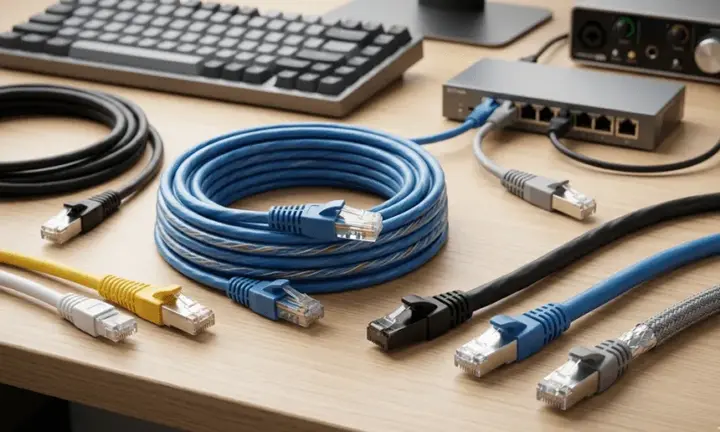
Ethernet cables have made modern network systems smooth and upgraded. Over the years, this typical wire has evolved through many changes and produced different variations that can provide you with consistent speed, high performance, lower latency, buffer-free video streaming, and super-fast file transmission.
Moreover, the shelf life of these wires is great and lasts up to your lifetime. CAT5e cable is the most popular Ethernet wire these days. But there are several other types of cables available in the market too that can serve your home and office internet requirements.
Different Types of Ethernet Cables and Their Specifications
Ethernet cables have multiple categories based on their performance level. The higher the category of cable, implies better the performance, transmission speed, and cost. There are mostly 7 different types of Ethernet wires available in the market, namely Cat5, Cat5e, Cat6, Cat6a, Cat7, Cat7a, Cat8, etc.
Here, the word Cat stands for category, and the number that follows afterwards symbolises the versions. Here is some brief information on these different categories of wires and their key specifications.
1. Cat5
Cat5 is one of the earliest Ethernet cables introduced in the market. This wire is designed as per the early Ethernet standards. This wire suits old Ethernet set-ups, lower speed broadband requirements, and VoIP, office LAN set-ups, etc.
Specifications
Cat5 cables can provide 100 Mbps data transmission speed over 100 meters.
The wire construction type is unshielded twisted pair, where 4 pairs of copper wires are used to prevent outside interference and crosstalk. But the crosstalk specs of these wires are basic.
2.Cat5e
Cat5e Ethernet cable is the upgraded version of Cat5 cable. Where the Cat5 cables lack in managing crosstalk and have limitations in transmission speed, Cat5e wires fulfil this lack. It suits office networking requirements, residential Wi-Fi connections, can be used in IP cameras, and SMBs.
Specifications
This wire can provide Ethernet requirements from 10 Mbps to 1000 Mbps Ethernet requirements over 100 meters.
The bandwidth that this cable supports is 100 MHz.
This cable also uses 24-26 AWG, pure copper conductors and UTP technology.
3. Cat6
Cat6 cables provide enhanced performance if you compare them with Cat5e Ethernet cables. The difference is quite big, and its cost is also on the higher side. Because of the high performance this wire can provide, you can use it in modern smart homes, office premises and data centres, where high data transmission speed is required.
Specifications
This wire can provide 1 Gbps data transmission speed over 100 meters and 10 Gbps speed at shorter distances of up to 55 meters.
The bandwidth is also high, up to 250 MHz, whereas Cat5e cable functions at a 100 MHz bandwidth.
4.Cat6a
Another version of Ethernet wires available in the market is Cat6a, which is obviously better than Cat5e Ethernet cable and an upgraded version of Cat6 cable. Features are quite the same as Cat6, apart from a few upgrades.
Specifications
This wire can provide 10 Gbps data transmission speed at both shorter and longer distances of up to 100 meters.
The functional bandwidth is 500 MHz, which helps in providing great performance in high-demand and complex environments.
5.Cat7
Cat7 obviously has more powerful features than all the previous versions of Ethernet cable. From bandwidth to data transmission speed, everything is fine and suitable for high-performance environments.
Specifications
Cat7 Ethernet wire can provide a data transmission speed of 10 Gbps over 100 meters.
It works at a bandwidth of 600-1000 MHz for the entire 100-meter distance.
6.Cat7a
The next Ethernet wire category is Cat7a, which is the revised version of Cat7 cable and obviously far better than Cat5e cable in terms of overall performance.
Specifications
Cat7a, or the augmented version of Category 7 Ethernet cable, can provide a stable data transmission speed of 40 Gbps over a shorter distance of 50 meters, and when the distance of the wire further increases to over 100 meters, the transmission speed becomes 10 Gbps.
The bandwidth of this wire is 1000 MHz.
7.Cat8
The latest invention in the Ethernet cable is the Cat8 cable, which is made using the newest twisted pair technology. It has lightning data transmission speed and supports all sorts of high-performance requirements. Cat8 has high bandwidth, super-fast data transmission and strong shielding technology that other Ethernet wires lack.
Specifications
The data transmission speed of Cat8 cable is 40 Gbps for up to 30 meters.
The bandwidth of this cable is 2 GHz.
Cat8 is a completely shielded cable and doesn't have any unshielded variants.
While selecting the right Ethernet cable is important for building a fast and stable network, it's equally important to choose the right cable for your display setup. A DisplayPort cable is designed to deliver high-quality digital video and audio, making it an excellent choice for gaming, professional workstations, multi-monitor configurations, and high-resolution displays. A reliable display port cable supports higher refresh rates, greater bandwidth, and sharper image quality, ensuring smooth performance for demanding visual applications. Choosing the right cable for both networking and display connectivity helps create a more efficient and dependable computing experience.
Cat5e or Other Ethernet Cables, Which One is Better?
After analysing all the different types of Ethernet wires and their specifications, it is evident that each and every type of them has unique characteristics and some limitations as well. While a higher category means more features, higher data transmission speed and bandwidth, and more protection from noise and crosstalk, it also implies higher cost.
Cat5e can be a fair choice for both office and home networking purposes. Apart from Cat5e cable, all the other upgraded version cables have great functionality but have high prices. Also, they are more suitable for data centres and for high-end peripherals. When it comes to choosing between Cat5e and other Ethernet wires, you must understand your purpose of use.
Original Article :- https://techbii.com/cat5e-vs-cat6-cat7-cat8-ethernet-cable-comparison/