Common Devices That Use NEMA 5-15P to 5-15R Cables
Posted by sf cable
Filed in Technology 233 views
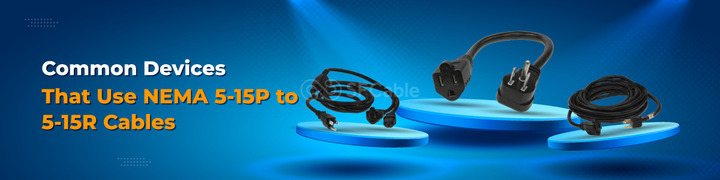
Odds are you've used one of these cables without ever stopping to think about it. You grabbed it when the outlet was too far from the desk, stuffed one behind the TV when the entertainment setup needed another foot of reach, or watched someone in IT pull one out of their bag to solve a power routing problem in about fifteen seconds no tools, no rewiring, just plug and done. For them, it's as routine as carrying a screwdriver.
It is the most normal thing in the world. That's kind of the point.
The NEMA 5-15P to 5-15R cable is about as unglamorous as power delivery gets and yet, pull one out of a setup and suddenly nothing works quite right. These cables hold together home offices, server closets, living rooms, and everything in between. They just don't advertise it.
What Is a NEMA 5-15P to 5-15R Cable?
Fair warning the name looks like a product code from a 1987 industrial catalog. But it actually makes sense once you know what you're looking at.
NEMA National Electrical Manufacturers Association is the organization that standardized plugs and outlets across North America. You've never thought about them, but you've benefited from their work every single time a plug fit an outlet without an adapter. Travel to Europe once and you'll suddenly appreciate exactly what that standardization is worth.
5-15 means 125 volts, 15 amps. That covers pretty much every standard device in your home or office without breaking a sweat.
P and R here's where it gets simple:
- P = Plug. The NEMA 5-15P is the male end. Three prongs. Goes into the wall.
- R = Receptacle. The NEMA 5-15R is the female end. Three slots. Accepts your device's plug.
One pulls power from the wall. The other delivers it to your equipment. Together, they form a NEMA 5-15P to 5-15R cable basically a very well-engineered middle man.
What Devices Commonly Use NEMA 5-15P to 5-15R Cables?
More than you'd think. This cable shows up in places people rarely notice which is honestly a sign it's doing its job well.
Household Devices
Think about the last time you set up a TV. The power cord reached maybe three feet. The outlet was five feet away. So you either moved the entire entertainment unit or went looking for an extension. That's exactly the gap the 5-15p to 5-15r power cord was made for and it shows up in more living rooms than most people realize.
Home entertainment setups are probably the most relatable use case here. You've got a streaming box, a receiver, a gaming console, maybe a second streaming box because one wasn't enough and two outlets to power all of it. Running a single feed through one of these cables and into a power strip keeps the whole thing from turning into a cable disaster behind the TV.
Office Equipment
Desktop towers are the textbook example. The PC lives on the floor. The outlet is across the room. The factory cord is approximately two feet long. A NEMA 5-15P to 5-15R cable solves all of that in under ten seconds.
Monitors, printers, docking stations, and desktop chargers follow the exact same pattern. Most office equipment ships with intentionally short cords because manufacturers know you're going to route power based on your actual desk layout not whatever arrangement they assumed in the box. This cable gives you that flexibility without a hardware store run.
Networking Devices
Routers live in strange places. So do modems, switches, and access points. They get tucked into closets, mounted near the ceiling, crammed behind furniture wherever the cable runs happen to land.
The NEMA 5-15P end plugs into whatever outlet is accessible. The NEMA 5-15R end keeps the networking gear powered and happy, regardless of how inconveniently it's been positioned. In small business setups, you'll often see a row of these feeding into a UPS unit everything organized, everything online, nothing left to chance.
Do IT and Data Center Devices Use These Cables?
Walk into a small server room and look around. You'll spot these cables almost immediately usually running from a PDU or UPS unit to whatever equipment needs feeding.
They're not flashy. They don't need to be.
Supported Equipment
Small servers, UPS systems, test equipment, patch panels the NEMA 5-15P to 5-15R cable connects all of it without requiring any rewiring or adapters. A UPS sitting on the floor while it protects equipment mounted higher in a rack? This cable bridges that distance cleanly.
Test environments especially love these cords. Oscilloscopes, bench power supplies, signal analyzers this equipment moves around constantly depending on what's being tested that week. A good 5-15P to 5-15R power cord gives technicians the flexibility to set up wherever they need to without hunting for an outlet every single time.
Can You Use These Cables for Power Extension?
Yes and honestly, that's the most common reason people buy them in the first place.
Outlets are never where you actually need them the desk is six feet from the wall, the equipment is wedged in the corner, and the factory cable is about eight inches too short to reach anything useful. You're setting up a temporary workspace in a room that clearly had its outlets planned by someone who never actually used a room before. The 5-15P to 5-15R power cord handles all of it without any permanent changes, any tools, or any frustration.
Pop-up offices use them. Event spaces use them. Equipment testing setups use them. They're just as practical for everyday home use which is probably why most people have at least one they can't remember buying.
Why Are NEMA 5-15P to 5-15R Cables So Popular?
The answer is simple easy usage. There is no need for you to have the technical knowledge of it, we can just plug the NEMA 5-15P into the wall, connect your device to the NEMA 5-15R end, and move on with your day. And, to be honest, having such convenience is hard nowadays.
Universal fit is the biggest reason these cables are everywhere. The 5-15 standard covers the overwhelming majority of North American homes, offices, and commercial spaces. Desktop towers, network switches, entertainment setups, bedside lamps if it runs on standard household power, this cable almost certainly fits.
Modern setups have only made them more essential. More devices per person, more screens, more gadgets, fewer outlets than any of it actually requires. This cable fills the gap without making the situation more complicated than it needs to be.
What Cable Lengths and Types Are Available?
One size does not fit all and buying the wrong length for your NEMA 5-15P to 5-15R cable is a more common mistake than it should be.
Common Lengths of NEMA 5-15P to 5-15R cable
| Length | Usage |
|---|---|
| 1 ft | tight rack setups, devices sitting directly next to a power source |
| 3 ft | the everyday standard for most home and office use |
| 6 ft | solid flexibility without cord everywhere |
| 10 ft and beyond | longer room runs, equipment racks, flexible workspace setups |
Cable Types
Standard cables handle everyday electronics computers, monitors, networking gear, entertainment setups within the 15-amp rated capacity. Built for regular indoor use.
Heavy-duty cables use thicker wire (lower AWG) and tougher insulation. They're built for demanding setups, longer runs, or environments where the cable takes more physical wear. If you're running a 25-foot cord to power equipment in a workshop or event space, heavy-duty is the correct call a standard gauge at that distance starts adding resistance that you don't want.
How to Choose the Right Cable
A few checkboxes. Get them right and the cable works perfectly. Skip them and you'll be returning something.
- Voltage and current rating The 5-15P to 5-15R power cord handles 125V and 15A. Make sure your device stays within those numbers. Most standard electronics do.
- Wire gauge (AWG) Lower number means thicker wire. Thicker wire handles more current and longer distances with less resistance. For short runs and low-draw devices, standard gauge is fine. For longer cables or heavier loads, go thicker.
- Length Measure the actual distance. Add a reasonable buffer. Buy that length. Not the longest thing on the shelf.
- Compatibility The NEMA 5-15P to 5-15R setup works with the vast majority of standard North American devices. Double-check that your device has a standard 5-15 plug and runs within the 125V/15A range. It takes ten seconds. Saves a return trip.
Conclusion
The NEMA 5-15P to 5-15R cable doesn't get awards. It doesn't get mentioned in product reviews. Nobody posts an unboxing video about their new power cord. and yet, it's holding together a huge chunk of everyday life living rooms, desks, server closets, event setups, and workstations across North America. It fits almost everything. It works every time. It stays out of the way and just does the job.
That's where SF Cable comes in. We carry NEMA 5-15P to 5-15R cables in a wide range of lengths, gauges, and configurations so whether you're outfitting a home office, tidying up a server room, or just trying to get power to a device that's annoyingly far from the wall, you're not stuck guessing. Every cable we carry is built to spec, rated honestly, and priced without the markup that somehow sneaks into basic power accessories.
Original Article :- https://www.sfcable.com/blog/nema-5-15p-to-5-15r-cable