Cybersecurity for Pakistani Startups: Building Security From Zero on a Tight Budget
Posted by ideal solution
Filed in Other 221 views
Every Pakistani startup thinks security can wait. It cannot. Attackers don't wait for your Series A. They attack you on day one. Smart founders now consult a budget-friendly cybersecurity advisor before their first customer goes live. Security built early costs almost nothing. Security added after a breach costs everything.
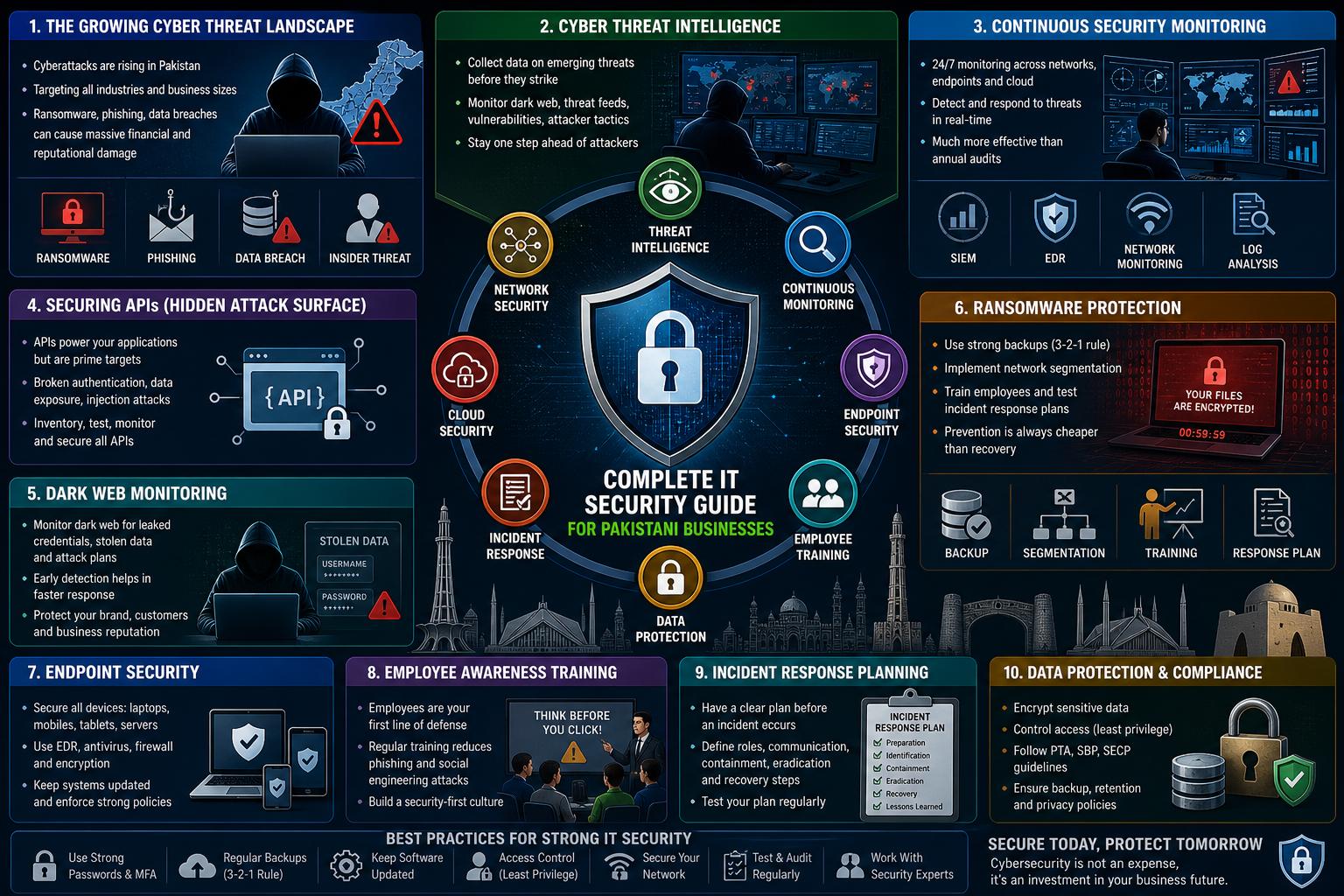
The Harsh Reality for Pakistani Startups
Startups are soft targets.
Big companies have security teams. Startups have one overworked developer.
Big companies have firewalls and monitoring tools. Startups have a shared Gmail account and hope.
Attackers know this. They run automated tools scanning millions of systems daily. Weak targets get flagged instantly.
Your startup will get probed. The question is whether you'll be ready.
Security Doesn't Cost Money. It Costs Attention.
Most Pakistani startup founders think security means expensive software.
It doesn't.
The most dangerous vulnerabilities in startups are free to fix. Weak passwords cost nothing to change. Open cloud storage takes five minutes to close. Unencrypted laptops can be secured today at zero cost.
Money helps later. Attention helps now.
Start with attention.
Your Biggest Risk Is Your Own Accounts
Before anything else — secure your accounts.
This single step prevents the majority of startup breaches in Pakistan.
Stop Reusing Passwords: One leaked password from an old website gives attackers access to everything you reused it on.
Use Bitwarden. It's free. It generates unique passwords for every account automatically.
Turn On Two-Factor Authentication: Go to every tool your startup uses right now. Gmail. GitHub. AWS. Figma. Slack. Notion.
Turn on two-factor authentication on every single one.
This takes one hour. It blocks nearly all automated account attacks permanently.
Remove Ghost Accounts: List every tool your team uses. Check who has access.
Old freelancers. Previous hires. Beta testers with admin access. Remove them all today.
Active accounts belonging to people no longer involved in your startup are dangerous.
Email Security Is Not Optional
Your startup's email is its most attacked surface.
Attackers send fake emails pretending to be you. They target your customers, investors, and partners. This destroys trust before you've built it.
Set Up Three Free DNS Records: SPF, DKIM, and DMARC are free DNS records.
They tell email servers worldwide that only you can send emails from your domain.
Without them anyone can fake your email address. With them that attack becomes nearly impossible.
Ask your developer to set these up today. It takes under two hours.
Use Proper Business Email: Personal Gmail accounts for business look unprofessional. They're also less secure.
Google Workspace costs PKR 1,700 per user monthly. Microsoft 365 Business Basic costs similar.
Both include advanced spam filtering, phishing protection, and admin security controls personal accounts completely lack.
Cloud Security Mistakes Startups Make on Day One
Most Pakistani startups build on AWS or Google Cloud.
Most configure them dangerously during launch pressure.
Check Your Storage Buckets: Open S3 buckets and Google Cloud Storage containers expose customer data to anyone on the internet.
Run AWS Trusted Advisor or Google Security Command Center immediately. Both are free. Both scan for public storage exposure.
This check takes fifteen minutes. It has saved Pakistani startups from catastrophic breaches.
Create Separate User Accounts: Never use your root AWS account for daily work.
Create individual IAM accounts for every team member. Give each person only the permissions their job requires.
If one account gets compromised, attackers reach only that account's permissions. Not your entire infrastructure.
Turn On Audit Logging: AWS CloudTrail and Google Cloud Audit Logs record every action taken in your cloud environment.
Enable them immediately. They cost almost nothing. They provide essential visibility into unauthorized access.
If a breach ever occurs, these logs tell you exactly what happened and when.
Set Billing Alerts: Unexpected cloud bills signal compromise.
Attackers use stolen cloud accounts for crypto mining. Your bill doubles overnight while you sleep.
Set alerts at 130% of your normal monthly spend. Unusual charges trigger investigation before costs spiral.
Securing Your Code From Day One
Pakistani startup developers ship fast. Nobody reviews security.
This creates compounding vulnerabilities with every feature released.
Scan Your Code Automatically: Install Semgrep or SonarQube Community Edition in your GitHub or GitLab repository.
Both are completely free. Both scan every code commit automatically for common vulnerabilities.
Developers see security issues immediately. Fixing them takes minutes instead of weeks.
Watch Your Dependencies: Every package your startup installs is a potential vulnerability.
Enable GitHub Dependabot or Snyk Free Tier. Both automatically alert you when installed packages contain security issues.
Setup takes twenty minutes. Protection lasts forever.
Hunt for Exposed Secrets: API keys and database passwords accidentally committed to repositories cause devastating Pakistani startup breaches every year.
Install git-secrets or TruffleHog in your repository pipeline. Both scan for accidentally committed credentials automatically.
Also check your repository's commit history. Old commits sometimes contain secrets removed from current code but still visible in history.
Never Store Secrets in Code: Use environment variables for all credentials.
AWS Secrets Manager, Google Secret Manager, and the free HashiCorp Vault store secrets securely. Applications retrieve them at runtime without ever storing them in code.
Protecting Customer Data on Zero Budget
Startups collect customer data from their very first user. Few protect it properly.
Encrypt Your Database: Most modern databases encrypt storage with a single configuration setting.
Enable it. It takes two minutes. Costs nothing on most cloud database services.
Force HTTPS Everywhere: Every page, every API endpoint, every connection must use HTTPS.
Get a free SSL certificate from Let's Encrypt. Configure your web server to redirect all HTTP traffic to HTTPS automatically.
No exceptions. Ever.
Collect Only What You Need: Every piece of unnecessary customer data is an unnecessary risk.
Before collecting any new data, ask one question: does our product actually need this?
If the honest answer is no — don't collect it. Less data means smaller breach impact.
Delete Data You No Longer Need: Customer data from three years ago with no business value is pure liability.
Write a simple data deletion policy. Define how long different data types are retained. Delete everything beyond that window automatically.
Device Security for Small Teams
Startup teams work everywhere. Laptops go everywhere.
A lost unencrypted laptop is a complete data breach.
Encrypt Every Device Today: Windows BitLocker is free and built into Windows 10 and 11 Pro.
macOS FileVault is free and built into every Mac.
Enable both on every device your team uses for work. Takes ten minutes per device. Costs absolutely nothing.
Update Everything Automatically: Enable automatic updates on every operating system and application.
Most Pakistani startup breaches involve vulnerabilities patched months before exploitation. Attackers target organizations that skip updates.
Automatic updates eliminate this risk entirely at zero cost.
Use Free Endpoint Protection: Windows Defender provides genuinely solid baseline protection at no additional cost.
For Mac users, Malwarebytes Free adds useful supplementary scanning.
These free tools don't replace enterprise EDR solutions. But they catch the majority of common threats targeting startup environments.
Backup Strategy for Startups
Many Pakistani startups have never made a single backup.
One ransomware attack destroys months of work permanently.
The Simple Backup Rule: Keep three copies of important data.
Two copies of different storage types. One copy completely separate from your main cloud account.
Automate Everything: Manual backups fail under startup pressure. Nobody remembers.
Configure automated daily backups in your cloud environment. Most cloud providers offer automated backup services for databases and storage at minimal cost.
Test Restoration Monthly: A backup you've never tested is a backup you don't actually have.
Once per month, restore something from backup and verify it works correctly. This one habit saves startups from catastrophic data loss.
Building a One-Page Security Policy
Startups don't need complicated security documentation.
They need simple rules everyone actually follows.
Write one page covering these five areas:
Passwords: Every account gets a unique password stored in Bitwarden. Sharing passwords between team members is never acceptable.
Devices: All work happens on encrypted devices. Personal devices need approval before accessing company systems.
Data Handling: Customer data stays in approved systems only. No customer data in personal WhatsApp, personal email, or personal cloud storage.
Reporting: Any suspicious email, strange system behavior, or potential security issue gets reported immediately. No punishment. No judgment. Speed matters most.
Leaving the Company: When any team member leaves, access gets revoked within 24 hours. All shared passwords get rotated immediately.
Print it. Post it somewhere visible. Review it every three months.
Free Security Tools Every Pakistani Startup Should Install Today
This entire stack costs almost nothing.
Account Security:
-
Bitwarden — free password manager.
-
Google Authenticator or Authy — free MFA app.
-
Have I Been Pwned — free breach monitoring for your domain.
Code Security:
-
Semgrep Free — automatic code vulnerability scanning.
-
GitHub Dependabot — free dependency vulnerability alerts.
-
git-secrets — free exposed credential detection.
Cloud Security:
-
AWS CloudTrail — free audit logging.
-
Google Cloud Audit Logs — free activity logging.
-
Cloudflare Free — DDoS protection and basic WAF.
Website Security:
-
Let's Encrypt — free SSL certificates.
-
Mozilla Observatory — free website security header scanner.
-
SSL Labs — free HTTPS configuration grader.
Endpoint Security:
-
Windows Defender — free built-in protection.
-
macOS FileVault — free disk encryption.
-
Malwarebytes Free — free supplementary scanning.
Total cost for a two-person Pakistani startup: under PKR 2,000 monthly.
When Your Startup Needs Professional Help
Free tools cover basics. Some situations require expert involvement.
Before Your First Enterprise Client: Enterprise clients conduct security due diligence. They ask hard questions. They request evidence.
A professional security assessment gives you documented answers. It wins contracts that competitors without security documentation lose.
After Your First Funding Round: Investors increase their scrutiny post-investment. Security gaps become liability items in follow-on funding conversations.
Address them proactively before they become negotiating disadvantages.
When Handling Sensitive Data: Financial data. Health information. Government contracts.
These categories attract both sophisticated attackers and strict regulatory requirements. Professional guidance becomes essential — not optional.
After Any Suspicious Activity: Unusual login alerts. Unexpected cloud bills. Strange employee behavior reports.
Don't investigate these yourself. Engage professionals immediately. Evidence preserved correctly now enables legal action and insurance claims later.
Case Study: Two Pakistani Startups. Two Very Different Outcomes.
Two Pakistani SaaS startups launched in the same month in 2024.
Both built similar products. Both targeted similar customers.
Startup A spent one weekend implementing free security basics. Password manager. MFA everywhere. Encrypted laptops. Automated code scanning. CloudTrail enabled.
Startup B skipped security entirely. Too busy shipping features.
Eight months later, both startups faced the same automated attack targeting a common web framework vulnerability.
Startup A's code scanner had flagged the vulnerability during development. It was patched before launch.
Startup B never scanned their code. The vulnerability remained. Attackers accessed their customer database. 8,000 customer records were stolen.
Startup B spent PKR 2.2 million on emergency response. Lost two enterprise clients immediately. The founder spent three months managing breach consequences instead of building a product.
Startup A spent nothing. Had no breach. Signed both enterprise clients Startup B lost.
Same market. Same timing. Completely different outcome.
Conclusion
Security doesn't require money. It requires decisions.
Pakistani startups that make smart, free security decisions from day one build faster, win better clients, and survive attacks that destroy competitors.
Start today. Enable MFA. Install Bitwarden. Encrypt your laptops. Set up CloudTrail. Scan your code.
These steps take one weekend. They cost almost nothing. They protect everything you're building.
Your startup deserves a foundation that holds.