The Complete Guide to Embedded Software Development Services for Businesses
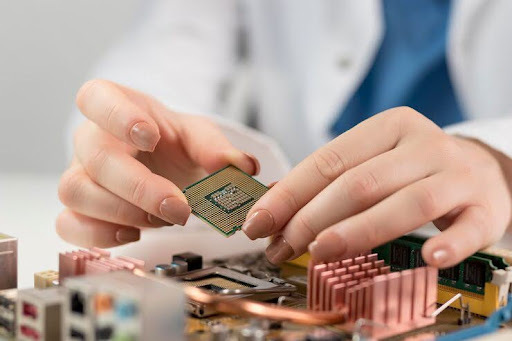
In the modern industrial landscape, the boundary between "hardware" and "software" has effectively vanished. We no longer live in a world of simple mechanical switches; we live in an era of intelligent ecosystems. Whether you are developing a life-saving cardiac monitor, a self-navigating warehouse robot, or a smart thermostat, the internal logic driving that hardware is your most valuable intellectual property.
In my experience working across tech sectors, I’ve seen that the difference between a market-leading product and a costly recall usually comes down to the quality of your embedded software development services. This guide is designed to walk business leaders through the technical labyrinth of creating high-performance, secure, and scalable embedded systems.
The Strategic Importance of Embedded Systems
An Embedded System is a controller programmed and controlled by a real-time operating system (RTOS) with a dedicated function within a larger mechanical or electrical system. Unlike a PC or a smartphone designed for general tasks, an embedded system is purpose-built for efficiency.
For businesses, investing in custom embedded solutions isn't just a technical requirement—it is a strategic moat. When software is optimized for specific hardware, you achieve:
-
Lower Unit Costs: Efficient code allows you to use cheaper, lower-power microcontrollers.
-
Higher Reliability: Real-time embedded programming ensures that the device responds to inputs within predictable timeframes.
-
Brand Differentiation: Custom embedded GUI development creates a unique user experience that off-the-shelf solutions cannot match.
Core Pillars of Embedded Software Development Services
When we talk about developing "brains" for hardware, we aren't just writing code. We are orchestrating a complex stack of technologies that must communicate with zero latency.
1. Low-Level System Programming and Firmware
The foundation of any device is its firmware. This is the persistent memory that tells the hardware how to behave the moment power is applied. Our smart device firmware solutions focus on microcontroller programming services that maximize the potential of the silicon.
Whether you are utilizing ARM Architecture, Intel processors, or chips from NXP Semiconductors and Texas Instruments, the firmware must be lean. We specialize in firmware optimization services to ensure that memory footprints are minimized and execution speed is maximized.
2. Device Driver Development
A Device Driver is the essential software component that allows the operating system to communicate with hardware peripherals. Without expert device driver development, your sensors, cameras, and communication modules are essentially bricks. We focus on creating robust drivers that handle sensor integration software tasks, ensuring that data from the physical world is accurately translated into digital signals.
3. Real-Time Operating Systems (RTOS)
For many industrial embedded systems or medical device software engineering projects, a standard OS like Windows or generic Linux isn't enough. You need determinism.
-
FreeRTOS: Ideal for low-power microcontrollers.
-
VxWorks & QNX: The gold standard for high-reliability sectors like aerospace and automotive embedded solutions.
-
Embedded Linux Development: For more complex devices requiring extensive networking and file system support, custom embedded Linux builds provide the perfect balance of power and flexibility.
Bridging the Gap: Hardware-Software Integration
One of the most common points of failure in product launches is a mismatch between the physical board and the code running on it. This is why hardware-software integration is the most critical phase of the embedded product lifecycle development.
PCB Software Integration
During the design phase, PCB software integration ensures that the circuit board layout supports the intended software architecture. If the software requires high-speed data transfer but the PCB traces aren't optimized for impedance, the system will fail. We treat the board and the code as a single unit, ensuring that low-level system programming aligns perfectly with the physical constraints of the hardware.
ARM-Based System Development
The majority of modern mobile and IoT devices run on ARM Architecture. Specializing in ARM-based system development allows businesses to tap into a massive ecosystem of tools and libraries while maintaining extreme power efficiency. This is particularly vital for wearable device software development, where every milliamp of battery life counts.
The IoT Revolution and Edge Computing
The Internet of Things (IoT) has fundamentally changed the requirements for embedded product development services. It is no longer enough for a device to function in isolation; it must be part of a connected device software solutions network.
IoT Device Software Development
Modern IoT device software development involves more than just adding a Wi-Fi chip. It requires:
-
Custom IoT firmware development that handles intermittent connectivity.
-
Embedded cloud connectivity solutions to sync data with AWS, Azure, or private servers securely.
-
Secure embedded system design to prevent your devices from becoming entry points for hackers.
Edge Device Software Engineering
As data volumes grow, sending everything to the cloud is becoming too slow and expensive. Edge device software engineering moves the processing power to the device itself. By performing data analytics at the "edge," businesses can achieve near-instantaneous response times, which is a requirement for automation system programming and self-driving technologies.
Advanced Tech: AI and High-Performance Interfaces
We are currently seeing a surge in demand for AI-powered embedded systems. By integrating machine learning models directly into the firmware, we can create devices that "see" and "hear" without external servers.
AI and Machine Learning at the Edge
When you integrate AI into embedded systems, you unlock:
-
Predictive Maintenance: Industrial machines that signal for repair before they break.
-
Voice Recognition: High-fidelity consumer electronics embedded development with localized voice control.
-
Medical Diagnostics: Medical devices that can identify arrhythmias or anomalies in real-time.
For companies looking to scale their digital intelligence, integrating ai agent development services into their broader business workflow can complement the "on-device" intelligence of their hardware.
Human Machine Interface (HMI)
The way a human interacts with a machine determines its success. Embedded GUI development has evolved from simple character displays to high-resolution touchscreens. Our focus is on creating intuitive Human Machine Interface (HMI) solutions that are as responsive as a high-end smartphone, even when running on resource-constrained hardware.
Industry-Specific Embedded Solutions
Every sector has its own set of "unbreakable" rules. Our embedded software development services are tailored to meet these unique regulatory and functional demands.
|
Industry |
Primary Focus |
Key Technology |
|
Automotive |
Functional Safety (ISO 26262) |
Automotive Embedded Systems, QNX |
|
Medical |
Compliance (IEC 62304) |
Medical Device Software Engineering |
|
Industrial |
Ruggedness & Longevity |
Industrial Control Systems, RTOS |
|
Consumer Tech |
UX & Battery Life |
Wearable Device Software Development |
Automotive Embedded Solutions
In the automotive world, software is the new horsepower. From ADAS (Advanced Driver Assistance Systems) to infotainment, we utilize cross-platform embedded applications to ensure that different vehicle components communicate flawlessly over CAN or Automotive Ethernet.
Medical Device Software Engineering
Failure is not an option in healthcare. We implement secure embedded system design and rigorous testing protocols to ensure that medical devices remain reliable, patient-compliant, and shielded from cyber threats.
Scalability and Future-Proofing
One of the biggest mistakes a business can make is building a "siloed" product that cannot be updated or scaled. We advocate for scalable embedded architectures. This means writing modular code that can be easily ported when you decide to move from a Texas Instruments chip to a more powerful Intel platform in the next generation of your product.
The Value of Embedded Application Engineering
Beyond the low-level drivers, embedded application engineering focuses on the business logic layer. By keeping this layer separate from the hardware-dependent code, we ensure your software remains an asset that can outlive a single hardware cycle.
Why Choose Professional Embedded Product Development Services?
Building an in-house team for embedded product development services is a massive undertaking. It requires specialized knowledge in electrical engineering, computer science, and cybersecurity. By partnering with experts, you gain access to:
-
Accelerated Time-to-Market: Proven libraries and frameworks speed up the development of connected device software solutions.
-
Risk Mitigation: Deep expertise in RTOS development solutions prevents the "race conditions" and memory leaks that crash products.
-
Cost Efficiency: Firmware optimization services allow you to use more cost-effective hardware components without sacrificing performance.
If you are looking to integrate high-level digital logic with your physical products, you may also find that embedded product development services provide the end-to-end support needed to go from napkin sketch to mass production.
Conclusion: Building the Future, One Bit at a Time
The "Complete Guide" to embedded software development services is never truly finished because the technology moves so fast. However, the fundamentals remain: focus on hardware-software integration, prioritize secure embedded system design, and always build with scalable embedded architectures in mind.
At the end of the day, your software is the soul of your machine. In a competitive US market, businesses that prioritize high-salience, optimized, and intelligent custom embedded solutions are the ones that will define the next decade of innovation.
Whether you are deep in microcontroller programming services or looking to launch a fleet of AI-powered embedded systems, the goal is clear: create hardware that isn't just "connected," but truly intelligent.
Next Steps for Your Business:
Would you like me to create a technical roadmap for your specific hardware platform or perhaps generate a detailed comparison of RTOS options for your next project?