The Benefits of Science Kits for Hands-On Learning
Posted by Home Science Tools
Filed in Business 21 views
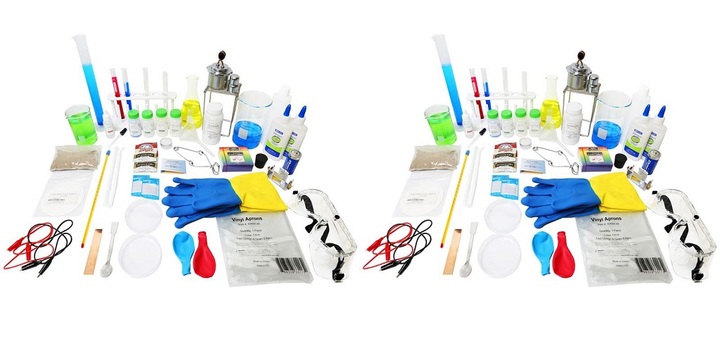
Hands-on learning gives scientific ideas a practical context that can make lessons easier to remember. Science kits support this approach with experiments that encourage observation, testing, problem-solving, and curiosity. Instead of reading about a concept alone, you can explore it through activities that produce visible results and useful questions.
Turning Scientific Concepts Into Experiences
Science becomes easier to explore when abstract ideas connect with physical activities. A chemistry experiment can demonstrate how substances react. A circuit-building project can show how electricity moves through a system. A nature activity can encourage closer observation of rocks, plants, insects, or soil.
These experiences give you opportunities to see scientific principles in action. You can follow instructions, make predictions, observe changes, and document what happens. Each step provides information that can support a clearer grasp of the concept being studied.
Hands-on activities also create natural opportunities to ask questions. What caused a reaction? Why did one sample behave differently? What could change the result? Questions like these encourage learners to investigate rather than memorize isolated facts.
Building Critical Thinking Skills
Scientific activities require careful attention to detail. You may need to measure ingredients, compare samples, organize observations, or record results. These tasks encourage precision and help develop logical thinking.
Experiments also introduce the value of testing ideas. A prediction may produce the expected outcome, or the results may suggest another explanation. Either result provides useful information.
As you work through an experiment, you can practice several steps associated with scientific investigation:
- Making a prediction before testing an idea
- Following directions in a specific sequence
- Observing changes during an experiment
- Recording measurements and other findings
- Comparing results with the original prediction
- Considering possible explanations for unexpected outcomes
These skills can support learning across science subjects and other academic areas.
Encouraging Independent Exploration
A structured experiment can give learners a clear starting point while leaving room for curiosity. Once the basic activity is complete, you may begin thinking about related questions or possible variations.
For younger learners, this process can encourage confidence with simple observations. Older students can take greater responsibility for measurements, data collection, and conclusions. The level of independence can grow alongside scientific knowledge.
This approach also gives learners opportunities to work at their own pace. A student interested in biology might spend extra time examining specimens, while another may prefer experiments involving physics or chemistry.
Supporting Different Learning Styles
Scientific information can be presented through reading, discussion, diagrams, demonstrations, and practical activities. Hands-on experiments provide another way to explore the same subject.
Physical activities can help learners connect written instructions with observable results. A student studying density, for example, can read about the concept and then compare how different materials behave in water. Seeing the result can give the written explanation a concrete reference.
This flexibility can make science activities useful for homeschooling, classroom enrichment, independent study, and home-based educational activities.
Making Science Memorable
A memorable experiment can give learners a specific experience to associate with a scientific concept. Mixing substances, examining a specimen, growing crystals, or building a working circuit creates details that can remain connected to the lesson.
Science also becomes easier to discuss after an experiment. Learners can explain what happened, compare observations, and describe what they would test next. These conversations reinforce vocabulary and encourage clear communication.
Creating Opportunities for Continued Discovery
Hands-on science can lead naturally from one question to another. An experiment may introduce a new concept, which can inspire further reading or another investigation.
That process supports curiosity while giving learners practical reasons to keep exploring. With activities suited to different ages and interests, science can become an active part of learning rather than a subject encountered only through textbooks.
Home Science Tools provides educational resources designed to support practical science learning. Its science kits offer structured activities that can help learners explore subjects such as chemistry, biology, physics, and earth science through direct experimentation. For more information, please visit Home Science Tools.
For more information about Science Projects For Kids and Rock Tumbler Please visit: Home Science Tools.