Offshore Wind O&M Services: New Technologies Driving European Growth
Posted by Swapna Supekar
Filed in Business 23 views
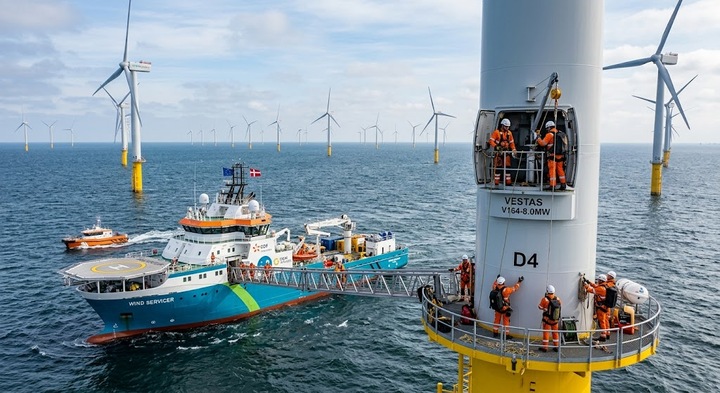
Europe Offshore Wind O&M Services Market Analysis
Europe's offshore wind sector is entering a stage where reliable operation matters as much as new capacity additions. Offshore wind farms face saltwater, high winds, waves, limited access, and complex electrical systems. These conditions make operations and maintenance services essential for preserving turbine availability, controlling lifecycle costs, protecting workers, and extending asset performance. As Europe's installed fleet grows, owners are paying greater attention to planned inspections, rapid repairs, remote monitoring, spare parts, and vessel coordination.
The maintenance model is changing with turbine scale. Modern machines are substantially larger than early offshore turbines, while many projects are positioned farther from shore. A component failure can therefore create significant downtime and require specialized lifting equipment or vessels. Service providers are developing larger logistics capabilities, regional warehouses, improved transfer systems, and trained teams able to respond within narrow weather windows. These capabilities can reduce delays between fault identification and physical intervention.
Digitalization is another major development. Condition monitoring systems continuously collect information about vibration, temperature, power output, lubrication, and other operating parameters. Analytics can identify unusual behavior and support predictive maintenance before a defect becomes a major failure. Drones and remote inspection technologies can also examine blades, towers, and offshore structures while reducing the number of people required to work in difficult conditions. Better data integration can help operators coordinate maintenance across entire fleets.
Long term service agreements are also gaining importance. Developers and asset owners may seek contracts covering scheduled maintenance, technical support, component replacement, and performance management. Such arrangements can provide clearer budgeting and access to specialist expertise. At the same time, independent service companies are creating alternatives to manufacturer-led maintenance, increasing choice for owners. Competition can encourage more flexible contracts, specialized services, and technology-focused solutions.
The supply chain remains critical. Bearings, generators, converters, transformers, cables, blades, and other components may have different lead times and technical requirements. Strategic spare parts planning can limit the consequences of unexpected failures. European ports are becoming important service hubs, providing storage, workshops, crew facilities, vessels, and engineering support. Close coordination between ports, suppliers, vessel operators, and wind farm teams can improve response times.
Safety and environmental management are equally important. Offshore technicians work around heavy equipment, moving vessels, electrical systems, and changing weather. Strong training, procedures, communication, and emergency planning are necessary for safe operations. Maintenance activity must also consider marine traffic, fishing, environmental monitoring, and other users of offshore space. Efficient scheduling can reduce unnecessary vessel movements while maintaining required inspection standards.
Economic conditions influence maintenance decisions too. Asset owners increasingly evaluate O&M through total lifecycle value rather than annual operating expenditure alone. Preventive work may cost money today but can avoid larger repair bills and prolonged generation losses later. This encourages maintenance strategies that combine reliability engineering, digital monitoring, logistics planning, and targeted intervention. For investors, the quality of an asset's O&M framework can become an important consideration when evaluating long term operating performance.
The Europe Offshore Wind O&M Services Market Analysis landscape reflects this shift toward more sophisticated lifecycle management. Demand is being shaped by expanding capacity, aging assets, larger turbines, digital technologies, and increasingly complex offshore logistics. Providers that can combine technical expertise, data capabilities, safety, vessel access, and responsive supply chains are positioned to participate in this evolving service ecosystem. Future opportunities will increasingly center on improving availability while making offshore maintenance safer, faster, and more predictable.
Inspection technology is also creating new service models. Robotic systems, drones, and advanced imaging can collect repeatable evidence from difficult locations. Comparing inspection data over time can help teams recognize deterioration earlier, prioritize interventions, and improve maintenance records for long term asset management and assurance.