Custom Office Furniture: The Co-Design Process Explained
Posted by Pabitra Giri
Filed in Music 250 views
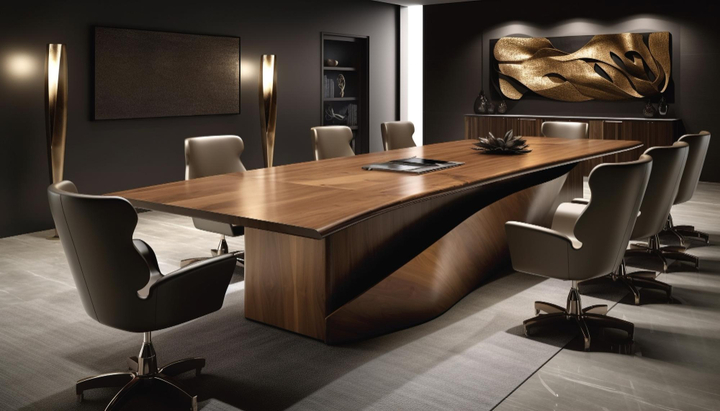
Most Businesses Don't Know What They're Missing Until They See It
There's a moment that happens in almost every Studio Other project. It usually comes during the co-design phase, when the first real concepts start taking shape and the client sees, maybe for the first time, what their space could actually look like when the furniture is built specifically for it.
The reaction is consistent: they didn't know it was possible to get exactly this, and they're trying to figure out why they spent years settling for something that only approximately fit.
This isn't a pitch. It's a pattern that plays out project after project — with technology companies, law firms, creative agencies, entertainment businesses, and consulting groups across the United States. The gap between what catalog furniture can offer and what purpose-built, co-designed custom office furniture delivers is significant. It's just not visible until you've seen both options placed side by side against the same space and the same set of needs.
This blog walks through how that co-design process actually works at Studio Other — the steps, the decisions, and the thinking behind an approach that has produced furniture for companies like Google, BCG, and the Boston Celtics, as well as for law firms, biotech companies, and creative studios that needed solutions that simply didn't exist in any catalog.
Starting With Behavior, Not Aesthetics
The first conversation in a Studio Other engagement is almost never about what the furniture will look like. It's about how the space will be used.
This is an important distinction, and it's one of the core things that separates genuine custom furniture design from interior styling. Studio Other's team is composed of industrial designers and engineers who approach workspace problems the way product designers approach hardware — by studying the people who will use the product, understanding their behavior patterns, and designing from those insights outward.
In practice, this means the early stages of a project focus on questions like: How do teams currently move through this space, and how would they ideally move through it? Where does collaboration happen spontaneously, and where is it forced? What are the pain points in the current configuration? What does a successful version of this space look like two years from now, when headcount has grown or workflows have shifted?
The furniture that results from that investigation serves the space — not the other way around. A conference table gets designed for the actual dimensions of the room and the actual number of people who need to sit at it, with cable management that reflects how the team presents, and proportions that don't make the room feel cramped or cavernous. A collaborative bench gets designed for the specific kind of side-by-side working that happens in that particular office, not for a theoretical "open plan" concept borrowed from a design magazine.
The Material Selection Process: No Limits, No Compromises
One of the phrases Studio Other uses is that no material is off limits. This isn't a marketing line — it's an operational commitment that has real consequences for what's possible in a custom engagement.
Standard catalog furniture is designed around materials that are economical at mass production scale. That's a legitimate constraint for companies selling at volume. But it means the material selection for any given piece isn't driven by what's best for the space, the brand, or the durability requirements — it's driven by what works at production scale.
Custom furniture design inverts that logic. Material selection is driven by the design requirements, and the fabricator is selected based on who is best suited to work with those materials. Studio Other works with a network of specialist fabricators rather than a single manufacturer, which means the right craftsperson is on every project regardless of how unusual the material or process requirements are.
Steel, which has high recycled content and excellent post-lifecycle recyclability, is a common choice for structural elements. Greenguard-certified finishes are standard, protecting indoor air quality without sacrificing appearance. Unique textiles, custom laminates, reclaimed wood, specialty metals — if the design calls for it, the material conversation starts from what's right, not what's available off a standard option list.
How Digital Fabrication Makes Custom Scalable
There's a misconception worth addressing directly: that custom furniture means each piece is a one-off, artisanal object that takes forever to produce and can never be replicated. That's not how Studio Other works.
The firm uses digital fabrication methods — CNC machining, laser cutting, automated production processes — that allow designs to be encoded as precise digital programs once they're finalized. The result is furniture that is both genuinely custom in its conception and highly repeatable in its production. Once a design exists as a digital file, it can be reproduced with consistent accuracy across any quantity.
This matters enormously for growing companies. A startup that furnishes its first 50-person office with custom studio office furniture built around its specific brand and space doesn't have to abandon that design language when it opens a second location or expands its headcount. The design scales. The digital program gets run again. The result is furniture that looks intentional and cohesive across multiple locations, not mismatched collections of whatever was available at the right time.
Studio Other has demonstrated this at significant scale — delivering thousands of seats across multi-location rollouts for clients that needed consistency and quality maintained simultaneously.
First Impressions and the Front-of-House Investment
Within any custom office furniture engagement, there are pieces that carry more perceptual weight than others. The front of house — the entry, the lobby, the first space a visitor experiences — is where the design investment returns the most.
A custom reception desk is the single piece of furniture in most offices that does the most communicative work. It's the first object a client, partner, candidate, or visitor encounters. Its scale, its material, its finish, and its relationship to the surrounding space all communicate something about the company before a single word is spoken.
Getting this piece right — designing it specifically for the entry footprint, integrating the brand visual language into its form, selecting materials that hold up under daily use while looking considered — is one of the decisions that has the most lasting impact on how a workspace is perceived. A generic reception desk in a beautifully designed lobby is a jarring discontinuity. A custom reception desk that feels like it belongs there, like it couldn't have been anything else, elevates everything around it.
Responsible Manufacturing That Actually Means Something
Studio Other's commitment to responsible manufacturing is woven into the process rather than bolted on as an afterthought. Partnering with regional manufacturers keeps the supply chain short, reduces transportation emissions, and maintains quality control by keeping design, engineering, and production in close geographic proximity.
Parts are intentionally sized for optimal sheet yield, which reduces material waste at the cut level. Low-VOC Greenguard-certified materials are standard — not premium options — because indoor air quality is a health issue, not just a certification achievement. These commitments shape the material selection, the fabricator relationships, and the design decisions throughout every project.