What Makes Healthcare Interior Design Actually Work
Posted by Pabitra Giri
Filed in Other 260 views
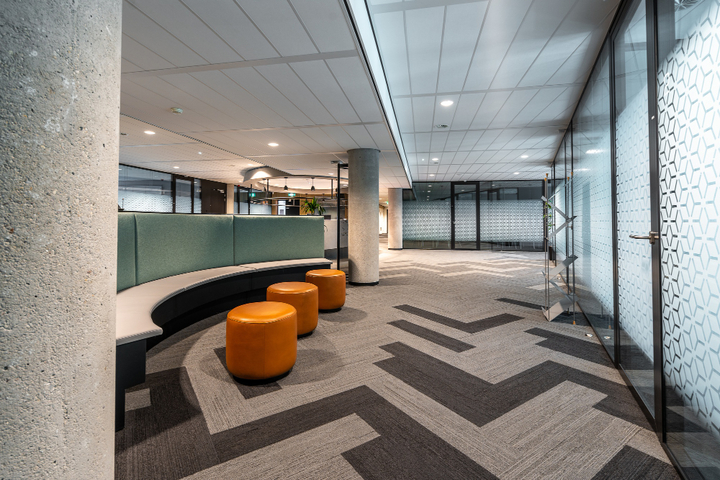
The Spaces That Shape How People Feel Before a Word Is Spoken
Walk into a well-designed healthcare facility and you feel it immediately — even if you can't quite articulate what's different. The light is warm without being dim. The layout makes sense without being labeled. The seating is comfortable without being institutional. There's a quality to the space that communicates: you're cared for here.
Walk into a poorly designed one and you feel that too. The fluorescent overhead lights hum faintly. The seating is arranged for density rather than comfort. The nurse station looks like a fortress. The corridors feel like a maze. Whatever confidence you arrived with starts to erode.
Neither of those experiences is accidental. They're the result of specific design decisions — made or not made, considered or defaulted to — that accumulate into a space that either serves the people in it or burdens them. In healthcare, where patients are often at their most vulnerable and staff are often operating under significant cognitive and emotional load, those design decisions have consequences that extend well beyond aesthetics.
Healthcare Interior Design as a Clinical Tool
The idea that physical environment is a clinical variable — not just a backdrop to care — is supported by decades of research and has shaped how the most sophisticated healthcare organizations in the US approach their facilities. But it hasn't yet become standard thinking across the industry. Many healthcare leaders still treat facility design as a support function, something managed by facilities teams and purchasing departments rather than clinical leadership.
That's a missed opportunity. Healthcare interior design done at its best is a clinical tool — one that reduces infection risk, supports staff cognitive performance, improves patient outcomes, shortens lengths of stay, and increases patient and staff satisfaction simultaneously. It does this through decisions that aren't visible to most people walking through the space, which is exactly the point.
The Decisions That Most People Never Notice — and Why They Matter
Consider acoustics. In clinical settings, noise is a persistent problem. Open nurse stations broadcast conversations that compromise patient privacy and violate HIPAA. High ambient noise levels in patient rooms disrupt sleep, which impairs healing. Staff exposed to chronic high noise levels experience cognitive fatigue more quickly, which affects decision quality. Acoustic design — absorptive ceiling panels, sound-dampening partition systems, thoughtful workstation layout — addresses all of this invisibly. When it's done well, nobody notices the quiet. When it's done poorly, everybody notices the noise.
Consider infection control surfaces. Healthcare environments require furniture and finishes that can be cleaned with the disinfecting agents clinical staff actually use — and that can be cleaned repeatedly without degrading. Many commercial furniture products that look appropriate in a clinical environment fail under repeated exposure to hospital-grade disinfectants. Surfaces crack, delaminate, or develop micro-abrasions that harbor bacteria. Specifying products that meet actual clinical cleaning requirements — not just general commercial durability standards — is a category of expertise that only healthcare-specialized design partners reliably bring.
Consider wayfinding. Patients who are unwell, anxious, or unfamiliar with a facility navigate differently from healthy people in a familiar building. Wayfinding in healthcare environments needs to be intuitive at a level that standard commercial signage systems don't typically address. Floor patterns, color transitions, architectural sightlines, and spatial landmarks all contribute to wayfinding before a single sign is read. When wayfinding is designed into the space rather than added on top of it, patients move through facilities more efficiently, with less anxiety, and with fewer demands on staff time for direction-giving.
Different Healthcare Environments, Different Design Requirements
One of the most important things to understand about healthcare space design is how dramatically the requirements vary across different care settings. A framework that works beautifully for an acute care hospital is wrong for a behavioral health facility. A life sciences environment has requirements that have nothing in common with a senior living community.
Behavioral health spaces require particular attention to ligature risk — the elimination of any architectural feature that could be used for self-harm. This affects everything from door hardware and towel bar configuration to furniture selection, window treatment, and electrical outlet placement. It's a design discipline with specific technical requirements that general commercial designers don't navigate regularly and that healthcare generalists may not specialize in.
Life sciences environments — biotech research facilities, pharmaceutical manufacturing, clinical laboratories — require compliance with highly specific regulatory standards, specialized ventilation and air quality systems, and product specifications that support contamination control. The furniture and fixtures in these environments need to withstand both the physical demands of laboratory use and the cleaning and sterilization protocols that regulatory compliance requires.
Senior living and long-term care facilities need to balance clinical functionality with residential warmth — a balance that's harder to achieve than it sounds. Institutional environments signal to residents that they've left ordinary life behind, which affects mood, cognitive engagement, and quality of life. The best senior living design creates spaces that feel like home while delivering the accessibility, safety, and clinical support that residents need.
Tangram Interiors has built specialized teams around each of these subsectors — not generalist healthcare practitioners who can serve any clinical environment, but specialists who have deep, repeated experience in specific care settings and understand the nuances that determine whether a design works in clinical practice or only in a presentation.
The Operational Benefits That Drive the Business Case
Clinical outcomes are the right frame for healthcare design investment, but they're not the only frame. There are direct operational benefits that make the business case independently of the clinical case.
Staff retention is one of the most significant. Nursing turnover costs health systems an estimated $30,000 to $60,000 per departing nurse, when recruitment, training, and productivity loss are fully accounted for. Physical environment is a documented factor in nurse satisfaction and retention — staff who work in environments that support their clinical workflow, provide adequate recharge space, and communicate respect for their work are less likely to leave. Space investment that improves retention pays for itself repeatedly.
Patient experience scores, which tie directly to CMS value-based purchasing reimbursements, are measurably influenced by the physical environment. Facilities that score higher on patient experience dimensions related to communication, responsiveness, and environment receive higher reimbursement. The connection between design investment and revenue is direct and calculable.
Operational efficiency improvements — reduced travel distances for staff through thoughtful floor plan optimization, reduced callback rates through better patient room design, reduced environmental services time through surface specification that cleans more quickly — all translate into direct cost savings that can be modeled before a project begins.
Where Healthcare Design Meets the Broader Workplace
Healthcare organizations are complex employers with spaces that span the full range from clinical to administrative. The administrative and support functions that enable clinical care — finance, HR, IT, scheduling, strategy — operate in environments that need to function as well as any commercial interior design environment, and that need to feel coherent with the clinical spaces they support.
Tangram Interiors' breadth across sectors means healthcare clients get a partner who can design the nurse station and the CFO's office with equal competence — and who understands how to create a design language that holds together across both. For organizations that also occupy non-clinical real estate — a headquarters, a regional administrative office, a physician recruitment and onboarding center — the same expertise that drives exceptional corporate office interior design in other sectors is available within the same trusted relationship.