Best Practices for Implementing Remote Patient Monitoring Solutions
Posted by synergytop Inc
Filed in Technology 188 views
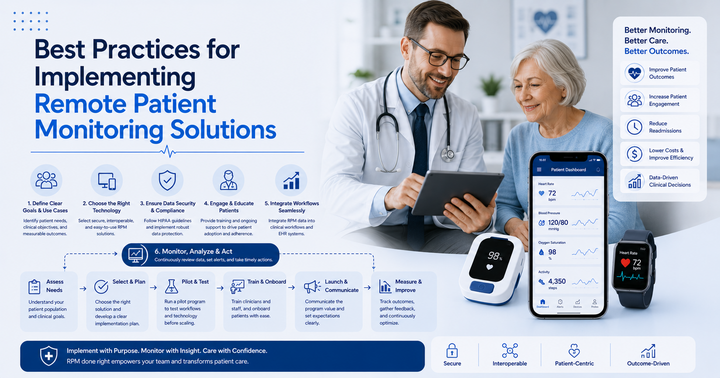
Healthcare organizations are increasingly adopting digital technologies to improve patient care, enhance operational efficiency, and reduce healthcare costs. Among these innovations, remote patient monitoring has emerged as one of the most effective tools for delivering continuous care beyond traditional healthcare settings. By enabling healthcare providers to track patient health data in real time, remote monitoring helps identify risks earlier and supports more proactive clinical decision-making.
The growing demand for connected healthcare has encouraged hospitals, clinics, specialty practices, and home healthcare providers to invest in remote patient monitoring solutions. These technologies support chronic disease management, post-discharge care, preventive healthcare, and patient engagement initiatives. However, implementing a successful monitoring program requires more than simply purchasing devices and software.
Healthcare organizations must establish clear goals, choose the right technology, train staff effectively, and create workflows that support long-term success. Organizations that follow proven implementation strategies are more likely to achieve positive clinical outcomes and maximize their return on investment. Understanding the best practices for implementation can help healthcare providers avoid common challenges and build sustainable monitoring programs.
Understanding the Importance of Remote Patient Monitoring
Before implementing any technology solution, healthcare organizations should understand the value that remote monitoring can provide. A clear understanding of the benefits helps stakeholders align expectations and create realistic implementation goals.
Remote monitoring extends healthcare beyond clinical walls by enabling continuous communication and oversight between patients and providers. This capability improves healthcare delivery while supporting more personalized care models.
Improving Patient Outcomes Through Continuous Monitoring
Traditional healthcare often relies on periodic appointments that provide only limited visibility into patient health. Remote monitoring offers continuous access to health data, allowing providers to identify changes in patient conditions much earlier.
By using remote patient monitoring solutions, healthcare teams can intervene proactively and reduce the likelihood of serious complications. Early intervention often leads to improved outcomes and more effective treatment plans.
Supporting Modern Healthcare Delivery Models
Healthcare is increasingly moving toward value-based care models that prioritize outcomes and efficiency. Remote monitoring supports these objectives by helping providers manage patient populations more effectively while reducing unnecessary hospital visits.
Organizations implementing RPM technologies can improve quality metrics while enhancing patient satisfaction and operational performance.
Establishing Clear Goals Before Implementation
One of the most common mistakes healthcare organizations make is implementing technology without defining clear objectives. Successful programs begin with a thorough assessment of organizational goals and patient care priorities.
Establishing measurable objectives creates a roadmap for implementation and helps organizations evaluate success over time.
Defining Clinical Objectives
Healthcare providers should identify the specific clinical outcomes they hope to achieve through remote monitoring. These goals may include reducing readmissions, improving chronic disease management, increasing treatment adherence, or enhancing preventive care.
Clearly defined objectives ensure that implementation efforts remain aligned with patient care priorities and organizational strategies.
Identifying Operational Goals
Beyond clinical improvements, remote patient monitoring solutions can support operational objectives such as improving staff productivity, reducing administrative workloads, and optimizing resource allocation.
Organizations should establish both clinical and operational benchmarks before launching their monitoring programs.
Selecting the Right Patient Population
Not every patient requires remote monitoring services. Healthcare organizations should carefully identify which patient groups are most likely to benefit from continuous monitoring and digital care support.
A targeted approach helps maximize the effectiveness of monitoring programs while ensuring efficient use of resources.
Focusing on Chronic Disease Patients
Patients with diabetes, hypertension, heart disease, COPD, and other chronic conditions often benefit significantly from remote monitoring. These individuals require ongoing oversight and frequent adjustments to treatment plans.
Implementing remote patient monitoring solutions for chronic disease populations can help reduce complications and improve long-term health outcomes.
Supporting High-Risk and Post-Discharge Patients
Patients recovering from surgery or serious illnesses often require additional supervision after leaving healthcare facilities. Remote monitoring helps providers track recovery progress and identify warning signs before complications occur.
This approach supports safer transitions from hospital care to home-based recovery.
Choosing Technology That Aligns With Organizational Needs
Technology selection is one of the most important decisions in any RPM initiative. The chosen platform should support both current operational requirements and future growth opportunities.
Organizations should evaluate software vendors carefully to ensure long-term success.
Prioritizing Ease of Use
Healthcare providers and patients are more likely to adopt systems that are intuitive and user-friendly. Complex platforms can create barriers that reduce engagement and limit program effectiveness.
The best remote patient monitoring solutions provide simple interfaces while maintaining advanced functionality behind the scenes.
Evaluating Scalability and Flexibility
Healthcare organizations should select platforms that can accommodate future growth. As patient populations expand and healthcare needs evolve, the technology should be able to scale without requiring significant redevelopment.
Flexible systems support long-term sustainability and protect technology investments.
Integrating Monitoring Systems With Existing Healthcare Infrastructure
Remote monitoring should complement existing healthcare systems rather than creating isolated technology silos. Integration plays a critical role in maximizing efficiency and ensuring seamless workflows.
Organizations should prioritize solutions that connect easily with their existing infrastructure.
Connecting With Electronic Health Records
Integration with EHR systems allows healthcare providers to access monitoring data alongside patient histories, medications, and treatment plans.
This unified view improves clinical decision-making and reduces the need for manual data entry.
Streamlining Information Flow
Advanced remote patient monitoring solutions support automated data synchronization across multiple systems. This ensures that healthcare professionals always have access to current and accurate information.
Seamless information flow contributes to better care coordination and improved operational performance.
Training Healthcare Staff for Successful Adoption
Technology implementation is only successful when healthcare professionals understand how to use the system effectively. Staff training should be considered a critical component of every RPM initiative.
Comprehensive training helps increase adoption rates and reduce implementation challenges.
Educating Clinical Teams
Clinicians should understand how to interpret monitoring data, respond to alerts, and integrate RPM insights into care planning.
Proper training ensures that healthcare providers can maximize the value of remote monitoring technologies.
Supporting Administrative Staff
Administrative teams often play a key role in patient onboarding, device management, and workflow coordination. Training these team members helps ensure smooth daily operations.
Organizations implementing remote patient monitoring solutions should provide role-specific training programs tailored to different responsibilities.
Encouraging Patient Engagement From the Beginning
Patient participation is essential for the success of any monitoring program. Even the most advanced technology cannot deliver meaningful outcomes if patients fail to engage consistently.
Healthcare organizations should create strategies that encourage ongoing participation and trust.
Simplifying the Patient Experience
Patients are more likely to use monitoring devices and applications when the technology is easy to understand. Clear instructions and intuitive interfaces reduce frustration and improve adoption.
A positive user experience encourages long-term participation and better health management.
Building Trust Through Communication
Healthcare providers should explain the benefits of monitoring programs and address patient concerns regarding privacy, security, and technology usage.
Effective communication helps strengthen confidence in remote patient monitoring solutions and encourages patient commitment.
Creating Effective Alert Management Strategies
One of the primary advantages of remote monitoring is the ability to identify health concerns quickly. However, poorly managed alert systems can overwhelm healthcare teams and reduce efficiency.
Organizations should establish clear processes for handling alerts and prioritizing responses.
Defining Alert Thresholds
Healthcare providers should determine which health metrics require intervention and establish appropriate thresholds for notifications.
Properly configured alerts help clinicians focus on meaningful events while minimizing unnecessary interruptions.
Establishing Response Protocols
Healthcare teams should have clear procedures for responding to alerts, documenting interventions, and communicating with patients when issues arise.
Well-defined workflows maximize the effectiveness of remote patient monitoring solutions and improve patient safety.
Measuring Program Performance and Outcomes
Continuous evaluation helps organizations identify opportunities for improvement and demonstrate the value of monitoring programs.
Healthcare providers should track both clinical and operational metrics throughout implementation.
Monitoring Clinical Results
Organizations should measure outcomes such as hospitalization rates, readmissions, treatment adherence, and disease management improvements.
These metrics provide valuable insights into the effectiveness of monitoring initiatives.
Evaluating Operational Impact
Healthcare organizations should also assess staff productivity, workflow efficiency, and cost savings generated through remote patient monitoring solutions.
Understanding operational outcomes helps justify continued investment and expansion.
Conclusion
Implementing remote monitoring technology successfully requires careful planning, strong leadership, effective training, and ongoing evaluation. Healthcare organizations that take a strategic approach are more likely to achieve positive outcomes and maximize the value of their investments.
Modern remote patient monitoring solutions offer significant opportunities to improve patient care, strengthen engagement, reduce healthcare costs, and support proactive clinical decision-making. However, achieving these benefits requires more than technology alone. Success depends on selecting the right platform, integrating it effectively, training users properly, and continuously optimizing workflows.
As healthcare continues embracing connected care models, organizations that follow these implementation best practices will be better positioned to deliver high-quality, patient-centered care while maintaining operational excellence.