The App for Volleyball Coaches in Spain and Latin America: a Guide to Koach
Posted by Engine Optimization
Filed in Other 22 views
Volleyball has a passionate following across the Spanish-speaking world. In Spain, clubs run teams from the youngest school-age categories up to national competitions, and across Latin America the sport is played everywhere from school gyms to packed professional arenas. Behind all of these teams are coaches who give their evenings and weekends to the game. Many of them juggle coaching with a job, studies or family, and much of their time disappears into organization rather than coaching. This guide explains what a coaching app can do for them and how Koach fits into the everyday reality of coaching volleyball in Spain and Latin America.
What Coaches Across the Region Have in Common
Whether you coach a youth team in Valencia, a club side in Buenos Aires or a school team in Lima, some challenges are the same. Court time is limited and often shared with other sports. Rosters change as players move up categories or combine volleyball with school. Parents and players expect fair decisions about playing time. Koach was designed around these shared needs, bringing teams, lineups and rotations, live stats and training plans together in one place. Instead of juggling notebooks, spreadsheets and group chats, coaches have one tool that keeps the whole season organized and easy to follow from week to week.
Managing Your Team and Players
Everything starts with the roster. Each player is added once with their position and jersey number, and that roster feeds lineups, attendance and stats. When a player joins mid-season or switches from outside hitter to libero, you update it in one place and the change carries through everywhere. For coaches in clubs with many categories, this saves a lot of time. When players move up from one age group to the next, their information can move with them, giving the new coach a head start instead of beginning from zero with a group of unfamiliar names.
Planning Lineups and Rotations
Lineups are where volleyball coaching becomes tactical. In the app, you place players on a visual court, choose a system such as 5-1 or 4-2 and step through all six rotations. Weak spots become obvious, like two less confident passers standing side by side in serve receive or a setter with a long path to the target. You can save different lineups for different opponents or for when a key player is missing. On match day, the plan is ready, and you're not redrawing positions on the back of a scoresheet while your team warms up.
Stats and Training Plans That Work Together
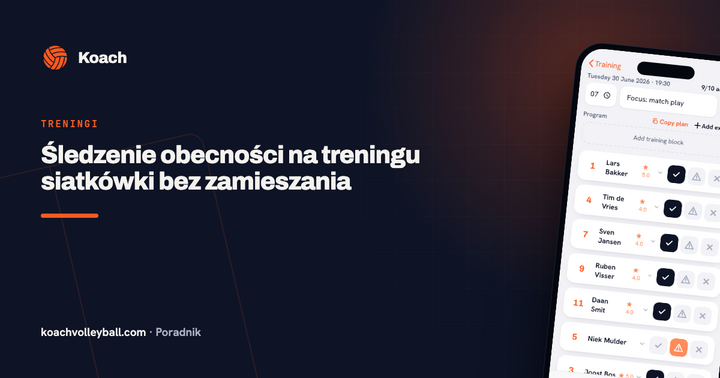
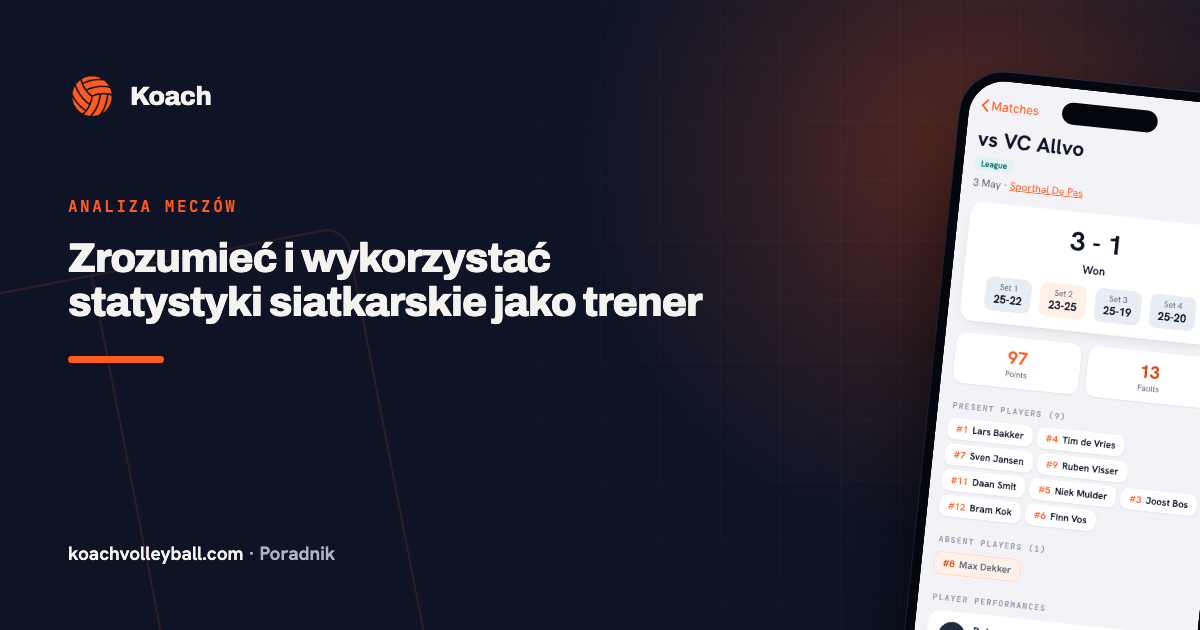
During matches, live stats show where points are won and lost. You can record serves, passes and attacks with a few taps, linked to each player and rotation. After the match, the numbers point straight to what your team needs to practice. If the serve receives struggles, the next session can focus on passing under pressure. Training plans are saved and reused, so planning gets faster over the season. This connection between matches and training is what helps teams improve steadily, because every practice responds to what really happened in competition rather than repeating the same drills out of habit.
A Tool Built for Busy Coaches
The biggest benefit for coaches in Spain and Latin America is time. When the organizational side of coaching takes less effort, there's more energy for the players, the drills and the conversations that make a real difference. Coaches often start with the roster and lineups, then add training plans and stats as they get comfortable. There's no need to use everything at once. Over a season, the app becomes a clear record of how the team developed, which players improved and which approaches worked. For coaches who love the sport but have limited time, that clarity makes coaching more enjoyable and more effective.