How Pawn Shops Work: Jewelry Loans Explained
Posted by DIGITAL MARKETING
215 views
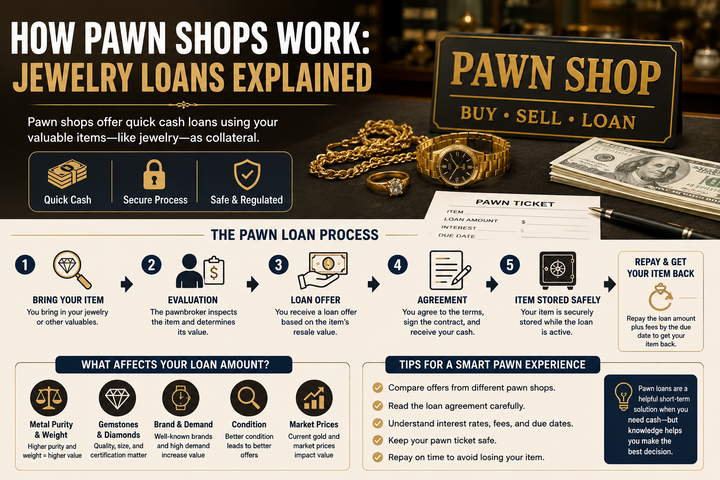
Jewelry can hold significant value, but selling it is not always the best choice when you need quick access to cash. Understanding how pawn shops work can help you decide whether a pawn loan suits your situation. These businesses offer short-term loans secured by valuable personal property, including gold jewelry, watches, diamonds, and coins.
Unlike many traditional loans, pawn transactions usually focus on the value of the item rather than your credit history. However, loan terms, fees, and regulations vary by location. Knowing what happens during the process can help you protect your valuables and make an informed decision.
How Pawn Shops Work With Jewelry
The basic pawn process starts when you bring an item of value to a pawnbroker. The shop examines the item and estimates how much it could recover if the borrower does not repay the loan. Based on that assessment, the pawnbroker makes a loan offer.
If you accept, you leave the jewelry with the shop as collateral. You receive the agreed loan amount and a pawn ticket or contract showing the repayment terms.
The shop keeps your property securely during the loan period. Once you repay the principal and applicable charges, the pawnbroker returns your item. If you do not repay according to the agreement, the shop may eventually sell the collateral, subject to local laws.
Pawn Loans Are Different From Selling
Pawning and selling are separate transactions. When you sell jewelry, ownership transfers permanently to the buyer in exchange for payment.
A pawn loan allows you to retain ownership while the item serves as security. This option may appeal to someone who needs temporary funds but wants to recover a family necklace, engagement ring, or luxury watch later.
How Pawnbrokers Determine Jewelry Value
A pawnbroker does not usually base an offer on the original retail price. Instead, the shop considers the item's current resale potential and how easily it could be sold.
For gold jewelry, the evaluation often starts with purity and weight. Gold marked 10K, 14K, 18K, or 22K contains different amounts of pure gold. Higher purity generally increases the metal value when other factors remain equal.
Current precious metal prices also affect valuations. Businesses such as gold buyers Melbourne may use prevailing gold prices as part of their assessment, although individual offers can differ based on testing methods, condition, and resale demand.
Branded jewelry may receive additional consideration. Pieces from recognized luxury makers can sometimes have resale value above their raw metal content.
How Diamonds and Gemstones Are Assessed
Diamonds require a different evaluation. Pawnbrokers may consider carat weight, color, clarity, cut quality, certification, and current resale demand.
A grading report from a respected gemological laboratory can provide useful information about a stone. However, having a certificate does not guarantee a particular loan amount.
Colored gemstones may also add value, especially if they are natural, high quality, or accompanied by reliable documentation. Treatments, damage, and uncertain origin can affect the assessment.
Why the Loan Offer Is Lower Than Retail Value
One common surprise is the difference between a jewelry store price and a pawn loan offer. Retail prices include expenses such as manufacturing, store operations, marketing, and profit margins. Those costs do not represent the item's immediate resale value.
A pawnbroker must also account for risk. If a customer does not repay, the shop may need to store, market, and sell the item. The final selling price is never guaranteed.
For example, a ring originally purchased for $3,000 may not support a $3,000 pawn loan. Its secondhand market value could be much lower. The loan itself may represent only a portion of that estimated resale value.
What Happens During a Pawn Transaction?
Knowing how pawn shops work before visiting one can make the transaction easier. The process usually includes identification, appraisal, an offer, paperwork, and secure storage.
You normally need valid identification. Requirements depend on local regulations and the shop's policies.
The pawnbroker then inspects the item. Gold may be weighed and tested for purity. Watches may be checked for authenticity, model details, condition, and functionality. Diamonds and gemstones may receive additional testing.
If the shop wants the item as collateral, it presents an offer. You can accept, decline, or ask questions before signing anything.
Read the Agreement Carefully
A pawn agreement should explain the amount borrowed, repayment deadline, interest or other charges, and conditions for recovering the item.
Review every cost before accepting the money. Ask what happens if you need more time and whether extensions or renewals are available.
Keep your pawn ticket and payment records somewhere safe. These documents provide essential details about the transaction and can help when you return to collect your property.
Understanding Interest, Fees, and Repayment
The total cost of a pawn loan can include more than the amount you borrow. Interest and other permitted charges may apply depending on local laws and the agreement.
Suppose you borrow $500 against a gold bracelet. You will generally need to repay the $500 principal plus the agreed charges to recover the bracelet. The exact total should appear in your contract.
Before accepting a loan, calculate how much you will need to repay. A short-term cash solution can become expensive if repeated extensions add extra costs.
Rules differ between jurisdictions. Check the contract and applicable consumer protection requirements rather than assuming every pawn business follows identical terms.
What Happens If You Cannot Repay?
One reason people research how pawn shops work is concern about missing repayment. With a typical pawn transaction, the pledged item provides security for the loan.
If you fail to repay within the required period, you may lose the right to reclaim the item. The pawnbroker can then sell it according to the contract and applicable regulations.
This makes sentimental value especially important. Pawning a replaceable gold chain presents a different personal risk than pledging an inherited ring.
Before using sentimental jewelry as collateral, consider whether you could handle losing it if your financial circumstances changed.
How to Prepare Jewelry Before Visiting a Pawnbroker
Preparation can help you understand what you own and evaluate an offer more confidently. Gather receipts, certificates, original boxes, service records, and authenticity documents if you have them.
Research basic details about your jewelry. Check hallmarks, approximate weight, brand, model numbers, and gemstone certificates. Current precious metal prices can also provide useful context.
Avoid aggressive cleaning before an appraisal. Harsh chemicals or abrasive methods can damage gemstones, finishes, plating, or antique pieces.
For expensive jewelry, consider obtaining more than one assessment. Comparing offers can reveal differences in how businesses value the same item.
Questions Worth Asking Before Accepting an Offer
Do not focus only on how much cash you can receive. The repayment conditions matter just as much.
Ask for the total amount required to recover your jewelry by the due date. Find out whether additional storage, administration, or renewal charges apply. You should also understand what happens immediately after the loan expires.
Ask how the shop stores valuable property and what documentation you will receive. A professional pawnbroker should explain the transaction clearly before asking you to commit.
Pawn Loan or Direct Sale: Which Makes Sense?
A pawn loan may suit someone facing a temporary cash shortage who expects to repay within the agreed period. It provides access to funds without permanently giving up the jewelry at the start.
Selling may make more sense if you no longer want the item or cannot confidently repay a loan. A direct sale avoids future repayment obligations, although you permanently surrender ownership.
The best choice depends on your finances, the item's sentimental value, and the offers available. Compare pawn offers with specialist jewelry purchasers or gold buyers Melbourne if you are considering a permanent sale.
Making a More Informed Pawn Decision
Understanding how pawn shops work removes much of the uncertainty from using jewelry as collateral. The pawnbroker evaluates your item, offers a loan based largely on resale potential, and holds the property until you meet the repayment terms.
Before agreeing, check the valuation, total repayment amount, deadline, fees, and rules for extensions. Consider the emotional value of the jewelry as carefully as its financial value. A clear understanding of the agreement helps you choose whether pawning, selling, or keeping the item best fits your needs.