PRP Hair Restoration: Waking Up Dormant Follicles for Thicker, Healthier Hair
Posted by Enfield royal Medspa
Filed in Health 207 views
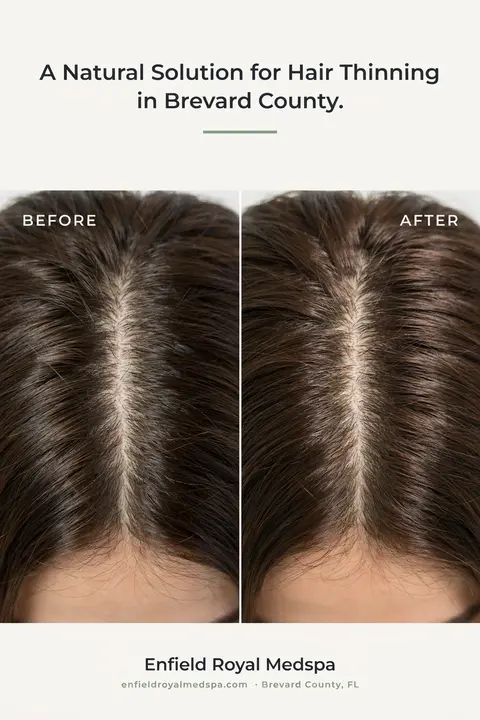
Hair loss arrives quietly. It’s the extra strands circling the shower drain. The widening part that catches your eye in a photograph. The ponytail that feels thinner between your fingers. For something so common, the experience can be deeply isolating. Hair is woven into identity in ways that are hard to articulate until it starts to slip away. PRP hair restoration has emerged as one of the most grounded, biologically sensible responses to early and moderate hair thinning—not by transplanting anything foreign, but by concentrating and redirecting the healing signals your own body already produces. At Enfield Royal Medspa, this non-surgical treatment is used to strengthen existing follicles, revive those that have gone dormant, and slow the progression of shedding with a method that feels more like regenerative support than medical intervention.
The treatment goes by a clinical-sounding name, but the concept behind it is elegantly simple. It harnesses the same platelet-rich plasma that has been used for decades in orthopedics and wound healing, and applies it to the scalp, where a rich supply of growth factors can reawaken follicles that have gradually shrunk into silence.
What Is PRP Hair Restoration?
PRP stands for platelet-rich plasma. It is a concentrated preparation of platelets derived from your own blood. Platelets are best known for their role in clotting, but they are also biochemical powerhouses, carrying dense granules packed with growth factors, cytokines, and proteins that signal tissue repair. When injected into the scalp, this concentrated signal tells aging or dormant hair follicles to shift back into an active growth phase.
The process is autologous, meaning nothing synthetic or foreign enters your body. A small sample of blood is drawn from your arm, much like a routine lab test. That blood is spun in a centrifuge to separate the plasma and concentrate the platelets to several times their baseline level. The resulting golden liquid is rich in platelet-derived growth factor, transforming growth factor-beta, vascular endothelial growth factor, and other signaling molecules that have been shown to improve follicular function, increase blood supply to the scalp, and extend the anagen—or active growth—phase of the hair cycle.
PRP hair restoration is a minimally invasive, drug-free alternative for those who are not ready for surgical hair transplantation but want something more powerful than topical solutions alone. It does not create new follicles; rather, it resuscitates follicles that have miniaturized but are still alive.
How the Procedure Works
To understand why PRP can help, it’s useful to know how pattern hair loss unfolds. In androgenetic alopecia, the most common form of progressive thinning in both men and women, hair follicles become sensitive to dihydrotestosterone (DHT). Over time, affected follicles shrink, producing thinner, shorter, and less pigmented hairs until they eventually stop producing visible hair altogether. The follicles don’t die immediately; they enter a prolonged dormant state, still tethered to a blood supply but functionally asleep.
PRP works at this critical juncture. When the platelet concentrate is injected into the dermis of the scalp at the level of the hair bulbs, growth factors bind to receptors on follicular stem cells and dermal papilla cells. This signaling cascade increases cell proliferation, encourages new blood vessel formation around the follicle, and reduces local inflammation. The follicle, receiving a fresh surge of metabolic support, begins to transition from the resting telogen phase into the active anagen phase. Hairs that were thinning may start to thicken, and follicles that had stopped producing may begin to grow again.
Unlike oral medications that systemically alter hormone levels, or topical minoxidil that requires daily application indefinitely, PRP addresses the local environment of the follicle directly. It is often combined with microneedling of the scalp—where tiny needles create micro-channels that further stimulate growth factors and enhance PRP absorption—but it can also serve as a powerful standalone treatment.
Key Benefits: What Patients Notice Over Time
PRP hair restoration is not a quick fix. It is a cumulative biological process that gradually shifts the health of the scalp and the quality of hair. Patients who respond well often describe changes like these:
- Reduced hair shedding: Within weeks, many notice fewer hairs in the brush and shower, a sign that follicles are holding onto their strands longer.
- Increased hair density: Over several months, new growth fills in sparse areas, and the overall volume thickens, making the scalp less visible.
- Stronger, healthier strands: Existing hairs become more resilient, with improved texture and diameter, less prone to breakage.
- Revival of dormant follicles: Miniaturized follicles that were still alive but producing barely visible vellus hairs can reawaken, contributing to a fuller hairline or crown.
- Improved scalp health: PRP’s anti-inflammatory properties can soothe a distressed scalp, reducing flaking, redness, and itching associated with some forms of hair thinning.
- Natural-looking results: Because the regrowth is your own hair, the outcome blends seamlessly. There’s no pluggy appearance, no surgical scar, no artificial line.
The treatment is particularly well-suited to the early and moderate stages of androgenetic alopecia in both men and women. It can also benefit those experiencing telogen effluvium, a temporary, stress-related shedding, by accelerating the return to a normal growth cycle. What it will not do is create hair on a completely bald scalp where follicles have been absent for years. That distinction is key: PRP revitalizes what’s still there.
The Treatment Experience
A PRP hair restoration session typically begins with a straightforward blood draw, much like a wellness panel. The vial is placed in a centrifuge for about ten minutes while you rest comfortably. During this time, a topical numbing cream may be applied to the scalp to minimize any discomfort during the injections. Once the platelet-rich plasma is separated and drawn into a syringe, the provider uses a very fine needle to deliver small deposits across the areas of thinning.
The sensation is often described as a series of tiny pinpricks or a mild stinging feeling that fades almost immediately. The scalp may feel slightly warm or tight during the injections, but most patients tolerate the session easily—especially with numbing. The entire appointment, from blood draw to final injection, takes roughly 45 to 60 minutes.
Afterward, there is virtually no downtime. The scalp may be slightly pink, and you might feel a mild tenderness similar to the feeling after a firm scalp massage, but these effects typically resolve within a day. You can return to work, drive yourself home, and go about your daily routine without interruption. Because the treatment uses your own blood, there is no risk of allergic reaction or rejection.
Who Is a Good Candidate? When Is Caution Needed?
The ideal candidate for PRP hair restoration is someone in the early to moderate stages of hair thinning who still has active follicles present. It works equally well for men experiencing male pattern baldness and for women with diffuse thinning across the crown. Patients with telogen effluvium triggered by stress, illness, or postpartum hormonal shifts may also be good candidates, as PRP can help shorten the shedding phase.
Contraindications do exist, and a thorough medical review is essential. PRP is generally not recommended for individuals with blood disorders, clotting abnormalities, or active infections on the scalp. Those on high-dose anticoagulant therapy may need to consult their prescribing physician before treatment. Pregnant or breastfeeding women are usually advised to wait. A history of certain autoimmune conditions, such as alopecia areata in its active, unpredictable phase, requires careful evaluation, as PRP may or may not be appropriate depending on the inflammatory status. Patients who are completely bald in the treatment area, with no signs of vellus hair or follicular openings under magnification, are unlikely to benefit, as there are few viable follicles left to stimulate.
A candid consultation includes a close look at the scalp, often with a dermatoscope, to assess follicular health, and a detailed health history to ensure the treatment aligns with your specific pattern of hair loss.
Aftercare and Maintaining Scalp Health
After a PRP session, the scalp is in a sensitive but receptive state. The injected growth factors need an undisturbed environment to bind to follicular cells and begin their signaling work. Post-treatment care is refreshingly simple:
- Avoid washing your hair for at least 24 hours. After that, use a gentle, sulfate-free shampoo and avoid scalding hot water.
- Skip any harsh hair products, such as chemical dyes, bleaching agents, or strong styling sprays, for at least 48 to 72 hours.
- Refrain from intense physical activity, saunas, and steam rooms for 24 hours, as excessive sweating may irritate the injection sites and increase inflammation.
- Avoid non-steroidal anti-inflammatory drugs like ibuprofen for a day or two, as they can interfere with the platelet-driven repair cascade; your provider will give you a specific window.
- Do not apply topical minoxidil or other active scalp treatments for the first day, then resume as directed by your provider.
- Protect your scalp from direct sun exposure with a hat or non-comedogenic mineral sunscreen, especially in the days immediately after treatment.
- Be gentle on your scalp. Avoid vigorous brushing, scratching, or the use of abrasive scalp scrubs.
These small sacrifices help ensure that the concentrated growth factors have the best possible chance of taking effect. Most people find the aftercare minimally disruptive, and any tenderness fades quickly.
How Many Sessions and What to Expect
PRP hair restoration is a therapy, not a one-time procedure. A series of sessions is needed to build momentum. A common initial protocol includes three to four treatments, spaced four to six weeks apart. This timing aligns with the natural hair cycle, ensuring that follicles are stimulated repeatedly as they enter different phases. After the foundational series, maintenance sessions are typically scheduled every four to six months, depending on how your scalp responds and the pattern of your hair loss.
Visible changes take patience. Shedding may temporarily increase in the first few weeks as weak hairs are pushed out to make way for stronger ones—this is a positive sign, though it can feel unsettling without the right expectation. Real improvements in texture, thickness, and density usually become noticeable around three to six months after the first session. Some patients see subtle results earlier, but the full regenerative effect builds gradually. Photographs taken under consistent lighting are often the best way to track progress, as daily changes can be easy to miss.
It’s important to keep expectations realistic. PRP will not give you the hairline of your teenage years, nor will it rival the density achieved through surgical transplantation. What it can offer is a meaningful, natural-looking improvement that strengthens what you have, slows further loss, and in many cases, brings back enough hair to restore a sense of normalcy and confidence.
A Natural Ally in the Fight Against Thinning Hair
The impulse to take action when hair begins to thin is not vanity; it’s a deeply human response to seeing a part of yourself change unexpectedly. PRP hair restoration offers a path forward that doesn’t rely on daily medications, invasive surgery, or products that promise more than they can deliver. It works from within, using the very signals your body already trusts to renew and repair.
If you’re looking for a thoughtful, evidence-based approach to hair thinning—one that begins with a clear-eyed assessment and a personalized plan—the team at Enfield Royal Medspa in Melbourne, FL, can help you understand whether PRP is the right fit for your stage, your scalp, and your goals.