Best IVF Hospital in Calicut: What Makes a Fertility Center Excellent?
Posted by DR Aravind IVF
168 views
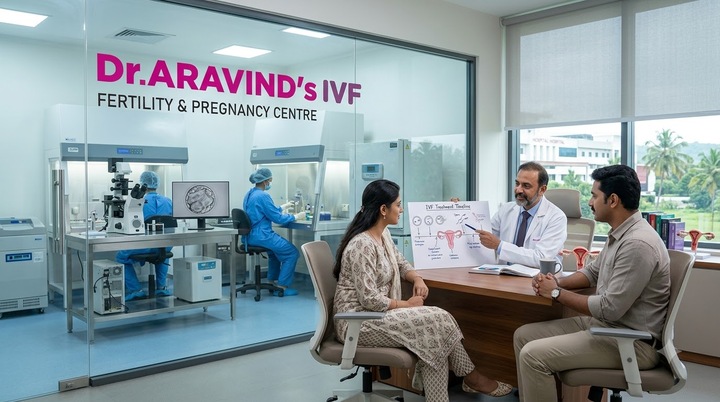
Best IVF Hospital in Calicut is a phrase many couples use when beginning their search for fertility care. But choosing a suitable center should involve more than looking at advertisements, online ratings, or a single success-rate figure.
Fertility treatment can involve several stages, from initial testing and diagnosis to medication, laboratory procedures, embryo transfer, and follow-up. A good center should provide coordinated care throughout this process while helping patients understand why each step is recommended.
Start With Proper Evaluation
A reliable fertility service should begin by understanding the couple's medical history rather than immediately suggesting IVF.
The evaluation may consider:
-
Age of both partners
-
Duration of trying to conceive
-
Menstrual history
-
Previous pregnancies
-
Previous fertility treatment
-
Semen parameters
-
Ovulation
-
Ovarian reserve
-
Uterine and tubal factors
-
Existing medical conditions
Not every couple needs the same tests. Investigations should be selected according to individual circumstances.
Experienced Medical Guidance Matters
Fertility treatment involves decisions that can affect both partners.
An experienced reproductive team should be able to explain the possible causes of delayed conception, available treatment options, expected outcomes, and limitations.
Good communication is particularly important when couples are considering procedures such as IUI, IVF, or ICSI.
Patients should feel free to ask why a particular treatment is recommended and expect a clear explanation.
Laboratory Standards Are Important
IVF is not only about consultations and medications.
The embryology laboratory plays an important role in procedures involving egg collection, fertilization, embryo culture, freezing, and storage.
Laboratory quality control, equipment maintenance, trained embryology staff, and appropriate handling procedures are important parts of fertility care.
Couples can ask about laboratory practices instead of judging a center solely by its reception area or advertising.
Success Rates Need Context
Many couples naturally want to know the IVF success rate before starting treatment.
However, one percentage cannot predict the outcome for every patient.
Results can vary according to:
-
Female age
-
Egg quality
-
Ovarian reserve
-
Sperm quality
-
Embryo development
-
Uterine health
-
Previous treatment
-
Underlying fertility conditions
When comparing centers, ask whether the published figure refers to pregnancy, ongoing pregnancy, or live birth, and whether it is calculated per cycle or per embryo transfer.
Treatment Should Be Individualized
A center should not treat every patient according to the same protocol.
For example, a woman with PCOS may require a different stimulation strategy from someone with reduced ovarian reserve.
Similarly, significant male-factor infertility may lead to consideration of ICSI, while conventional IVF may be appropriate in other circumstances.
Personalized treatment does not mean using the most advanced procedure for everyone. It means selecting an approach that fits the clinical situation.
Male Fertility Should Not Be Overlooked
Infertility is not exclusively a female concern.
Male factors can involve low sperm concentration, reduced motility, abnormal morphology, varicocele, hormonal problems, or other conditions.
Semen analysis is commonly used to evaluate sperm-related factors.
A good fertility service should encourage appropriate assessment of both partners instead of placing responsibility on only one person.
Transparent Communication Builds Trust
Fertility treatment can involve emotional, physical, and financial considerations.
Patients should receive clear information about treatment stages, possible risks, medication requirements, additional procedures, and expected costs.
Promises of guaranteed pregnancy should be treated cautiously.
No fertility treatment can guarantee a successful pregnancy for every patient.
Emotional Support Also Matters
Repeated appointments, injections, waiting periods, and uncertain outcomes can be stressful.
A patient-centered environment should allow couples to discuss concerns without feeling judged.
Counseling or psychological support can be useful when fertility treatment becomes emotionally difficult.
Supporting mental wellbeing does not replace medical treatment, but it can make the treatment journey more manageable.
Look Beyond Location
When searching for a Best Fertility Centre in Kerala, location and accessibility are certainly practical considerations.
However, couples should also consider medical expertise, laboratory standards, transparency, treatment options, communication, and follow-up care.
The nearest center is not necessarily the right one, and the center with the strongest advertising is not automatically the best choice.
Questions to Ask Before Starting
Before committing to treatment, consider asking:
-
What factors may be affecting our fertility?
-
Which tests do we actually need?
-
Why are you recommending this treatment?
-
How do you report your success rates?
-
What happens after the initial IVF attempt is unsuccessful?
-
Are there any additional expenses we should be aware of?
-
How are embryos handled and stored?
-
What follow-up is provided after treatment?
Clear guidance can help couples make well-informed fertility decisions.
Conclusion
An excellent fertility center is not defined by a building, advertisement, or headline success rate alone. Medical expertise, appropriate diagnosis, laboratory quality, individualized treatment, transparent communication, and respectful patient care all matter.
If you are comparing fertility treatment options in Calicut, Book an appointment with a qualified fertility team and discuss your medical history, treatment choices, expected outcomes, and concerns before making a decision.