Solving Everyday Wellness Challenges with Organic Loose Leaf Tea
Posted by SAHIL Singh
299 views
Introduction: When Everyday Health Feels Overwhelming
Modern life presents a relentless stream of wellness challenges. Persistent fatigue that coffee cannot fix. Digestive discomfort that disrupts daily productivity. Stress and anxiety that accumulate quietly until they become impossible to ignore. Poor sleep that leaves you running on empty day after day.
Many people find themselves reaching for quick fixes — energy drinks, over-the-counter remedies, synthetic supplements — only to discover that these solutions address symptoms without touching the underlying imbalances that create them in the first place.
There is a quieter, more sustainable approach that has supported human wellness for thousands of years across virtually every culture on earth. Organic loose leaf tea — whole, unprocessed, and grown without synthetic chemicals — offers a genuinely powerful yet gentle tool for addressing the most common wellness challenges of everyday modern life.
If you are looking for a natural, enjoyable, and evidence-supported daily wellness practice, understanding the full scope of what organic loose leaf tea for everyday wellness can offer may reshape how you think about your health routine entirely.
What Sets Organic Loose Leaf Tea Apart?
Before exploring specific wellness benefits, it is worth understanding precisely why organic loose leaf tea represents a fundamentally superior choice compared to conventional tea bags.
Whole Leaf Integrity
Standard commercial tea bags typically contain broken tea dust and fannings — the lowest grade of processed tea leaves left over after whole leaves are sorted and sold. These fragments have a dramatically reduced surface area of intact cell structure, meaning the majority of beneficial compounds — polyphenols, antioxidants, amino acids, and volatile aromatic oils — have already degraded or been lost.
Organic loose leaf tea uses whole or large-cut leaves that retain their full complement of bioactive compounds. When steeped, these intact leaves unfurl and release a far richer, more complete spectrum of wellness-supporting constituents.
The Organic Distinction
Conventional tea cultivation frequently involves heavy pesticide use. A 2014 investigation by Greenpeace found that 29 out of 35 tested tea brands contained pesticide residues, with some samples showing multiple chemical contaminants simultaneously.
Certified organic loose leaf tea is grown without synthetic pesticides, herbicides, or chemical fertilizers. For a product consumed daily in hot water — a solvent that efficiently extracts both beneficial compounds and unwanted chemicals — this organic certification is not a marketing distinction. It is a meaningful health consideration.
The Bioactive Compounds That Make Organic Loose Leaf Tea Work
The wellness benefits of organic loose leaf tea are not mystical — they are biochemical. The key active compounds include:
-
Polyphenols and catechins — particularly EGCG (epigallocatechin gallate), among the most studied antioxidants in nutritional science
-
L-theanine — a unique amino acid found almost exclusively in tea that promotes calm alertness
-
Flavonoids — a broad class of plant compounds with anti-inflammatory and cardiovascular-protective properties
-
Tannins — astringent polyphenols with antimicrobial and digestive-supporting properties
-
Theaflavins and thearubigins — oxidized polyphenols in black and oolong teas with their own distinct health benefits
-
Volatile aromatic compounds — responsible for the complex flavors and some adaptogenic properties of specific tea varieties
The combination and concentration of these compounds varies across different tea types, which is why different varieties of organic loose leaf tea address different wellness needs.
Solving Common Wellness Challenges with Organic Loose Leaf Tea
1. Combating Chronic Fatigue and Low Energy
Persistent low energy is one of the most universal wellness complaints of modern life. Unlike coffee, which delivers a sharp caffeine spike followed by a crash, organic loose leaf tea provides a more measured and sustained energy experience.
This is largely due to L-theanine, which modifies the stimulating effect of caffeine in tea by promoting alpha brain wave activity — the brain state associated with relaxed, focused alertness. A study published in Nutritional Neuroscience found that the combination of L-theanine and caffeine in tea produced superior cognitive performance and sustained attention compared to caffeine alone, without the jitteriness or energy crash that coffee often produces.
For those struggling with energy consistency throughout the day, replacing morning coffee with a quality organic loose leaf tea — particularly green or white varieties for lower caffeine — represents a meaningful and evidence-supported upgrade.
2. Supporting Digestive Wellness
Digestive discomfort — bloating, irregular bowel movements, post-meal heaviness, and gut sensitivity — affects a substantial portion of the population. Organic loose leaf tea offers targeted support depending on the variety chosen:
-
Peppermint loose leaf tea has demonstrated clinical effectiveness for reducing IBS symptoms, including abdominal pain and bloating, in multiple randomized controlled trials
-
Ginger tea supports gastric motility and reduces nausea through its active gingerol content
-
Chamomile tea calms intestinal spasms and reduces gut inflammation through its apigenin and bisabolol content
-
Fennel tea effectively reduces post-meal bloating and gas through its volatile oil compounds
The tannins in black organic loose leaf tea also have mild antimicrobial properties that help maintain a balanced gut microbiome environment — increasingly recognized as central to overall health beyond just digestion.
3. Managing Stress and Supporting Mental Wellness
Chronic stress is arguably the defining wellness challenge of contemporary life, with consequences that ripple through virtually every system in the body. Organic loose leaf tea addresses stress through several complementary mechanisms.
L-theanine increases GABA, dopamine, and serotonin levels in the brain — neurotransmitters directly involved in mood regulation and stress response. A systematic review published in Plant Foods for Human Nutrition confirmed that L-theanine supplementation significantly reduced stress and anxiety markers in human subjects.
Beyond biochemistry, the ritual of preparing and drinking organic loose leaf tea itself has documented psychological benefits. The mindful, multi-sensory act of steeping whole leaves engages present-moment awareness in a way that activates the parasympathetic nervous system — the body's rest and recovery mode — even before the first sip.
For those navigating high-stress professional or personal environments, a consistent organic loose leaf tea practice offers both immediate biochemical relief and a daily mindfulness anchor.
4. Improving Sleep Quality
Poor sleep quality has reached epidemic proportions, with the CDC reporting that 1 in 3 American adults do not get sufficient sleep regularly. While caffeine-containing teas are best avoided in the evening, certain organic loose leaf tea varieties are specifically supportive of healthy sleep architecture:
-
Chamomile tea contains apigenin, which binds to GABA receptors in the brain, producing mild sedative effects that reduce sleep onset time
-
Valerian root tea has demonstrated clinical effectiveness for improving sleep quality in multiple studies
-
Passionflower tea has shown meaningful results for reducing anxiety-driven sleep disruption in clinical trials
-
Lemon balm tea supports GABA activity and has demonstrated sleep-improving effects in combination with other herbs
Incorporating an evening cup of one of these organic loose leaf tea varieties into a consistent pre-sleep routine can meaningfully improve both sleep onset and overall sleep quality over time.
5. Cardiovascular and Metabolic Support
Heart health and metabolic wellness are long-term concerns for most adults, and organic loose leaf tea offers some of the most compelling evidence-based benefits in this area.
A comprehensive meta-analysis published in the European Journal of Epidemiology analyzing data from over 856,000 participants found that regular green tea consumption was associated with a 31% lower risk of cardiovascular disease mortality. The EGCG and other catechins in green organic loose leaf tea support healthy blood pressure, reduce LDL oxidation, improve endothelial function, and support healthy blood sugar regulation.
Black tea polyphenols similarly demonstrate cardiovascular benefits, with research showing improvements in arterial stiffness and blood pressure with regular consumption.
For those managing metabolic wellness alongside conventional medical care, organic loose leaf tea represents a genuinely impactful daily dietary addition.
6. Immune System Support
The immune-supporting properties of organic loose leaf tea are particularly relevant in an era of heightened awareness around immune health. The polyphenols in tea have demonstrated direct antimicrobial activity against a range of pathogens, while the antioxidant content helps reduce oxidative stress that would otherwise compromise immune function.
Specific varieties offer targeted immune benefits:
-
Elderflower and elderberry teas — rich in flavonoids shown to reduce cold and flu duration
-
Echinacea tea — among the most studied herbal immune supporters in clinical literature
-
Green tea — EGCG has demonstrated antiviral properties in laboratory studies
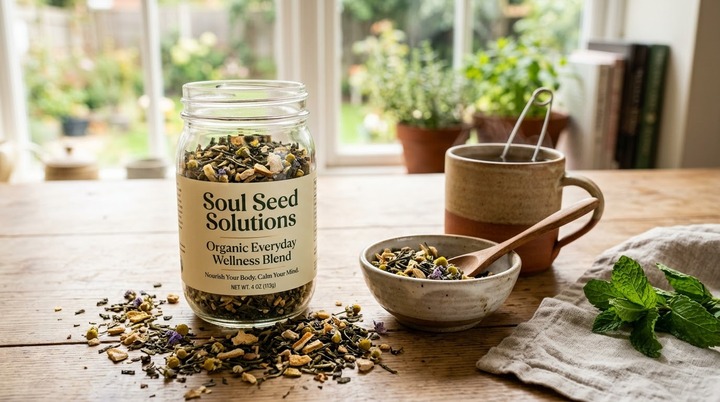
For premium quality, ethically sourced organic loose leaf tea and a comprehensive range of natural wellness products, Soul Seed Solutions offers thoughtfully curated options for those serious about natural, everyday health support.
A Guide to Choosing the Right Organic Loose Leaf Tea for Your Needs
|
Wellness Goal |
Recommended Tea Variety |
|
Sustained energy and focus |
Green or white loose leaf tea |
|
Digestive comfort |
Peppermint, ginger, or fennel |
|
Stress reduction |
L-theanine-rich green tea or chamomile |
|
Better sleep |
Chamomile, valerian, or passionflower |
|
Cardiovascular support |
Green or black loose leaf tea |
|
Immune support |
Elderflower, echinacea, or green tea |
|
Antioxidant protection |
White or green loose leaf tea |
How to Brew Organic Loose Leaf Tea for Maximum Benefit
The way you brew organic loose leaf tea significantly affects the concentration and bioavailability of its beneficial compounds:
Water Temperature Matters:
-
Green and white teas: 75–85°C (too hot destroys delicate catechins)
-
Oolong teas: 85–90°C
-
Black and herbal teas: 90–100°C
Steeping Time:
-
Green tea: 2–3 minutes
-
White tea: 3–5 minutes
-
Black tea: 3–5 minutes
-
Herbal infusions: 5–10 minutes for maximum extraction
Leaf Quantity:
Use approximately 1 teaspoon of organic loose leaf tea per 250ml cup, adjusting to personal taste preference.
Multiple Infusions:
Quality whole-leaf organic loose leaf tea can typically be steeped 2–4 times, with each subsequent infusion releasing different layers of flavor and bioactive compounds.
Building a Daily Organic Loose Leaf Tea Wellness Routine
Consistency transforms organic loose leaf tea from an occasional pleasure into a genuine wellness practice:
Morning: Green or white tea for calm, focused energy to start the day
Midday: Peppermint or ginger tea to support digestion after lunch
Afternoon: Oolong tea for a gentle energy lift without late-day caffeine excess
Evening: Chamomile, passionflower, or lemon balm for relaxation and sleep preparation
This simple four-cup daily framework addresses energy, digestion, stress, and sleep — four of the most common everyday wellness challenges — through one accessible, enjoyable, and evidence-supported natural practice.
Conclusion: Simple, Sustainable, and Profoundly Effective
In a wellness landscape crowded with complicated protocols, expensive supplements, and conflicting advice, organic loose leaf tea stands apart as something elegantly simple and genuinely effective. Backed by thousands of years of traditional use and an increasingly robust body of modern clinical research, it addresses the full spectrum of everyday wellness challenges — from energy and digestion to stress, sleep, and long-term cardiovascular health.
The shift from conventional tea bags to high-quality organic loose leaf tea is a small change with disproportionately large benefits. It is an investment in daily ritual, in nutritional quality, and in a form of self-care that is both deeply pleasurable and meaningfully health-supporting.
For anyone seeking a natural, sustainable foundation for everyday wellness, organic loose leaf tea is not just a beverage — it is one of the wisest daily health choices available.
This article is for informational purposes only and does not constitute medical advice. Please consult a qualified healthcare professional before making significant changes to your wellness routine, particularly if you have existing health conditions or take medications.