One Piece of Equipment That Solves Five Different Protection Problems
Posted by SAHIL Singh
Filed in Sports 9 views
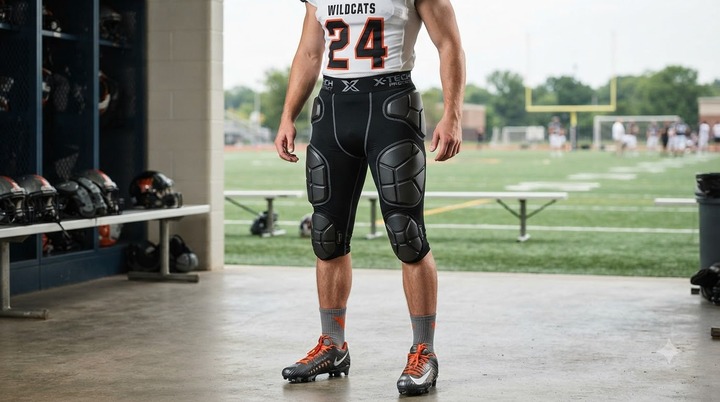
Putting together a youth or high school football player's gear list often turns into a longer and more expensive process than parents and coaches expect. Thigh pads, hip pads, tailbone protection, knee pads — each piece needs to fit correctly, stay in place during play, and hold up through a full season. Buying and managing them separately creates fitting problems, equipment that shifts out of position mid-game, and a pregame routine that takes longer than it should.
An integrated football girdle consolidates all of that into a single garment, and for players at every level from youth leagues through high school, it's one of the most practical equipment decisions you can make before a season starts. If you're evaluating your options, a 7-piece integrated football girdle covers the full range of lower body protection zones in one pull-on design that stays put and performs consistently.
What "Integrated" Actually Means — and Why It Matters
The word integrated gets used loosely in football equipment marketing. In practical terms, it means the padding is built directly into the girdle shell rather than inserted into separate pockets or worn as standalone pieces underneath.
This distinction has real consequences for how the equipment performs.
Separate pads inserted into a base layer tend to shift. Hip pads ride up. Thigh pads rotate inward. Tailbone pads slide down during play. Every time a player goes to the ground and gets back up, the pad position has changed slightly. Over the course of a game, that accumulates into meaningful gaps in coverage.
Padding that's sewn or bonded directly into the garment doesn't move independently. It moves with the player because it's part of the garment structure. That consistency is what makes a true integrated football girdle functionally different from a compression short with pad pockets.
The Seven Protection Zones and What Each One Does
A 7-piece design covers every major lower body impact zone a football player faces. Understanding what each pad is protecting helps clarify why skipping any one of them is a risk.
Hip Pads — Left and Right
Hip pointers are one of the most common and most painful football injuries at the youth and high school level. A direct hit to the iliac crest — the bony ridge at the top of the hip — without padding causes immediate pain and can limit a player's mobility for days. Integrated hip pads sit directly over this area and stay there.
Thigh Pads — Left and Right
The quadriceps take repeated impact in football — helmet contact during tackles, knee contact during blocks, turf impact on falls. Thigh pads positioned correctly over the quad absorb that repeated impact and reduce bruising and muscle soreness that accumulates over a long season.
Tailbone Pad
Falls to the turf, blocks from behind, and tackles that bring a player straight down onto the ground all put direct force on the coccyx. A tailbone pad positioned at the base of the spine cushions those impacts and prevents the kind of bruising that makes sitting — let alone playing — uncomfortable for days.
Knee Pads — Left and Right
Knee pads in an integrated girdle sit above the knee joint, protecting the lower quad and the area around the patella. Falls to turf, particularly on hard artificial surfaces, make knee protection relevant for every position — not just linemen.
Why Players Resist Wearing Separate Pads — and How Integration Fixes It
This is a practical reality that coaches deal with constantly. Players, especially at the youth and middle school level, will quietly skip pads that are uncomfortable, take too long to put on, or feel like they're getting in the way.
Separate hip pads that have to be threaded into a base layer before pulling on football pants are annoying to deal with. Thigh pads that require individual positioning before every practice are the first thing a rushed player leaves in their bag. Knee pads that slide down during warmups get pulled out and left on the bench.
An integrated football girdle eliminates every one of these friction points. The player pulls on one garment and every pad is already in the correct position. There's nothing to thread, nothing to position individually, and nothing that shifts enough during play to require mid-game adjustment.
For coaches managing a roster of youth players who are still developing equipment habits, this is not a minor convenience — it's the difference between a player who's consistently protected and one who's skipping pads three practices out of five.
Fit Is Everything With an Integrated Girdle
The consolidation advantage of an integrated design only delivers if the girdle fits correctly. A girdle that's too large allows the entire structure to shift, which is the same problem it was designed to solve. One that's too small restricts hip flexion and leg drive, which affects performance.
How to Measure for the Right Size
Measure the player's waist at the natural waistline and their hip circumference at the widest point. Use whichever measurement puts them in the larger size if they fall between two options — a slightly looser fit is preferable to one that restricts movement.
Check that the hip pad panels sit directly over the iliac crest when the girdle is pulled up to its natural position. Check that the thigh pads cover the bulk of the quadriceps, not the knee or the lower groin. These are the two panels that most often reveal a sizing problem.
Compression Level
The girdle shell should apply enough compression to hold the pads firmly in position without cutting into the hip flexors or restricting blood flow during intense activity. Players should be able to sprint, cut, squat, and get up from the ground without feeling the garment fighting against their movement.
Material and Durability Across a Full Season
A football season involves daily practice contact, multiple games per week at some levels, and regular laundering. The integrated football girdle needs to hold up across all of it.
Key durability factors to evaluate:
-
Pad bonding or stitching — padding that's glued in may separate from the shell over time; sewn integration holds longer under repeated washing and physical stress
-
Fabric weight — heavier fabric wears longer but adds warmth; consider the season and climate when evaluating this tradeoff
-
Waistband elasticity — the waistband needs to retain its stretch through a full season without becoming loose and allowing the girdle to drop during play
-
Seam construction — flat-locked seams reduce chafing during high-movement activities and hold better under repeated stress than standard seaming
Position-Specific Considerations
While an integrated football girdle benefits every position, the way different players experience the protection varies.
Skill positions — running backs, receivers, defensive backs — take hits from unpredictable angles at high speed. Hip and thigh protection is especially critical because these players absorb open-field tackles that come from the side and behind.
Linemen — offensive and defensive — spend every play engaged in physical battles at close range. Their knees and hips take repeated low-level contact that accumulates across a game. The girdle's consistent pad positioning matters here because the contact never stops.
Linebackers and tight ends — hybrid positions that combine blocking with open-field play — benefit from the full seven-zone coverage because they're regularly exposed to both types of contact.
Frequently Asked Questions
Can an integrated girdle be worn under standard football pants?
Yes. An integrated football girdle is designed to be worn under football pants, functioning as the pad layer that sits between the compression garment and the outer shell. Most football pants are designed with this layering in mind and have enough room in the cut to accommodate a padded girdle underneath.
Do integrated girdles work for both youth and adult players?
Yes, though sizing systems differ. Youth integrated girdles are sized for smaller body proportions, and the pad dimensions are scaled accordingly. An adult girdle on a youth player won't position the pads correctly regardless of waist size — always use age-appropriate sizing.
How do you wash an integrated girdle without damaging the padding?
Most integrated girdles can be machine washed on a gentle cycle in cold water. Avoid high heat in the dryer — heat degrades foam padding and elastic over time. Air drying or low heat tumble drying extends the life of the garment significantly.
Is a 7-piece design noticeably heavier than wearing fewer pads?
The weight difference is minimal when modern foam padding materials are used. The practical weight of seven integrated pads is comparable to wearing three or four separate pads, and the distribution across the garment means no single area feels heavy or unbalanced.
Can players wear additional padding on top of the girdle if needed?
Yes. The integrated girdle provides baseline lower body protection, but position-specific additions — thicker thigh guards for linemen, for example — can be worn over the girdle inside the football pants if a player or coach determines additional coverage is warranted.
Lower body protection in football doesn't need to be complicated or time-consuming to put on. A well-designed integrated football girdle handles the full range of impact zones in a single garment, stays in position throughout play, and removes the equipment management friction that causes players to skip pads in the first place. It's a straightforward solution to a problem that shows up on every roster, at every level.