Skill Position Players Need Different Shoulder Pads — Here's Why Most Teams Get It Wrong
Posted by SAHIL Singh
Filed in Sports 13 views
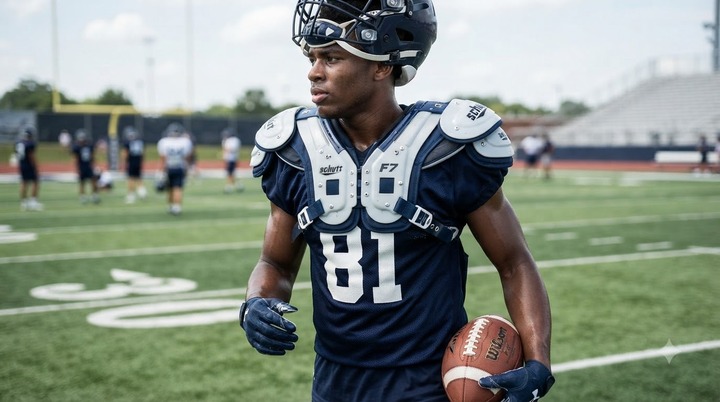
A linebacker and a wide receiver are wearing the same brand of shoulder pads from the team equipment room. On the surface, this looks efficient — uniform gear across the roster. In reality, it's a mismatch that compromises both players' safety and performance. The linebacker needs maximum shoulder protection to absorb repeated point-of-contact impacts at the line of scrimmage. The receiver needs arm mobility to make catches in tight coverage and extend the ball away from their body. The same pad can't optimally do both jobs.
The best shoulder pads for skill positions are engineered differently — slimmer profiles, extended rib coverage instead of bulky shoulder caps, and harness designs that prioritize range of motion without sacrificing protection. If you're evaluating equipment for running backs, wide receivers, cornerbacks, or safeties, understanding what separates skill position shoulder pads from general-purpose designs will help you make decisions that actually support how these players perform and stay safe.
Why Off-the-Rack Linebacker Pads Don't Work for Receivers
Standard shoulder pad designs are built around linebackers and linemen — positions that prioritize protection for direct, predictable contact at a fixed line of scrimmage. These pads feature:
-
Large, extended shoulder caps (epaulets) that cover maximum surface area
-
Heavy front plates that extend down to the sternum
-
Thick, dense foam throughout the shoulder region
-
Harness designs that prioritize pad stability over arm mobility
For a linebacker, these features are essential. For a wide receiver running a deep route or making a catch in a crowd, they become liabilities. The bulk restricts the throwing motion, the heavy shoulder caps limit lateral arm movement, and the extended front plate can interfere with ball security and catching technique.
When you put linebacker pads on a skill position player, you're forcing them to choose between protection and performance. Most will sacrifice some protection to maintain the mobility they need to do their job — which is exactly the wrong direction for safety.
The Three Core Differences in Skill Position Pad Design
Shoulder Cap Size and Shape
Standard linebacker pads feature large epaulets — the padded caps that sit over the shoulder joint and extend outward. These provide maximum coverage for head-on contact.
Skill position pads use smaller, more contoured shoulder caps that sit directly over the AC joint without extending as far laterally. This gives receivers and defensive backs the arm mobility they need for throwing and catching while still protecting the most vulnerable shoulder structures.
Harness System and Weight Distribution
A linebacker pad harness is designed to keep the pad locked in place during violent contact. The straps are snug, the overall structure is rigid, and the goal is zero movement.
Skill position harnesses are designed with more flexibility. The pads still stay in place during contact, but the harness allows for greater freedom of motion through the shoulders and arms. The weight distribution is shifted lower — more protection for the ribs and chest, less for the upper shoulder.
Front Plate Configuration
Standard pads have extended front plates that protect the full sternum and upper abdomen. Skill position pads often feature a split front plate design — a narrower central panel protecting the sternum, with cutaways on the sides that allow greater arm swing and freedom.
Position-Specific Protection Needs
Understanding what each skill position actually faces on the field helps clarify why one generic pad design doesn't work across positions.
Wide Receivers and Tight Ends
Receivers take high-speed impacts from multiple angles — often from the side or from behind. They need excellent arm mobility to catch and extend the ball, but they also need rib protection because hits often come to the torso, not the shoulders. A well-designed receiver pad prioritizes side protection and arm freedom over front-plate coverage.
Running Backs
Running backs face the widest range of contact types. They take hits from blockers, defenders, and the occasional pile-up on the ground. They need balance between protection and mobility because they both run routes (requiring arm freedom) and need to protect the football. A running back pad should feature good overall torso coverage without being so bulky that it restricts lateral movement.
Defensive Backs
Cornerbacks and safeties are the closest thing football has to pure position-based mobility. They need maximum shoulder and arm freedom to cover receivers and make tackles from angles. They also take hits at high speed in open space. Their pads should be low-profile, with protection concentrated on the shoulder joint and ribs, not on extended front plates.
How Skill Position Pads Impact Performance
This isn't just about comfort or preference — pad design measurably affects how well skill position players can perform their roles.
Throwing Motion: A quarterback or receiver throwing on a broken play needs full shoulder rotation and arm extension. Heavy front-plate pads restrict this. Slimmer skill position designs allow the arm to move through its natural range of motion without the pad fighting against the movement.
Catch Extension: A receiver making a catch away from their body — the hallmark of elite receiving — needs shoulders and arms that can move independently of the torso. Standard linebacker pads don't allow this level of mobility.
Lateral Agility: Defensive backs cutting and pivoting to stay with receivers need shoulder mobility. A pad that restricts side-to-side arm movement makes these cuts less fluid and puts stress on the shoulder joint because the pad structure is fighting against natural movement.
Tackling Angles: Running backs and defensive backs making tackles often need to approach from angles where a large shoulder cap or extended front plate becomes a liability rather than a feature. Skill position pads allow players to engage from the positions and angles that their role actually requires.
Building a Skill Position Gear Strategy for Your Team
If you're equipping a team, the temptation is to buy one model and outfit everyone. This is cost-efficient in the short term and inefficient in terms of actual player safety and performance.
A better approach:
-
Identify position groups — linemen and linebackers in one category; skill positions in another
-
Select position-appropriate models — standard cantilever designs for heavy-contact positions; slim-profile designs for skill positions
-
Within each category, fit to individual measurements — don't assume all receivers are the same size or build
This requires more equipment management, but it results in players who are better protected for what they actually face and better able to execute their position responsibilities.
Material and Construction Standards for Skill Position Pads
Because skill position pads are slimmer and use less material overall, the quality of the materials becomes more critical. There's less foam to absorb a given impact, so what foam is there needs to be premium.
Look for:
-
High-density closed-cell or open-cell foam — cheap foam compresses permanently and loses protective value mid-season
-
Reinforced stitching — particularly around the armholes, where the stress of arm mobility is highest
-
Quality elastic in straps — skill position harnesses need to remain flexible without losing their grip; cheap elastic becomes loose and frayed
-
Durable outer shell material — the shell takes repeated contact and needs to maintain structural integrity through a full season
The Common Compromise: When Teams Buy Mid-Range "All-Purpose" Pads
Many programs buy mid-range, "all-purpose" shoulder pads thinking they'll work for everyone. These designs typically:
-
Have moderate shoulder caps — not huge, but still larger than skill position pads need
-
Feature standard front plates — not extended like linebacker pads, but not as cut-away as receiver pads
-
Use medium-weight foam and harnesses — somewhere between linebacker protection and receiver mobility
For youth players under 12U who haven't settled into specific positions, this approach makes sense. For high school and upper youth players playing defined positions, all-purpose pads generally satisfy no one fully. You end up with linemen who are under-protected and receivers who are restricted.
Frequently Asked Questions
Can a defensive back wear the same pad as a running back?
They have similar priorities — mobility plus protection — so there's more overlap than between a receiver and a linebacker. A good running back pad often works for defensive backs, though defensive backs might prefer an even slimmer profile. The fit matters more than the exact model.
Do skill position pads provide less protection than standard pads?
Not necessarily less protection — different protection. A well-designed skill position pad protects the shoulder joint, AC joint, and ribs very effectively. It just does so with less bulk and with harness designs that allow greater mobility. The key is choosing quality skill position pads, not budget models that cut corners on foam density.
What happens if a skill position player grows mid-season and needs larger pads?
Most teams have a few sets of replacement pads available. The challenge is finding the right size in a skill position model — they're less commonly stocked than general-purpose pads. This is why having backup equipment in multiple sizes at the start of the season saves headaches later.
Can you add a backplate to a slim-profile skill position pad?
Most modern skill position pads are designed with connection points for optional accessories like backplates. Adding a backplate increases protection but also adds weight and can slightly restrict mobility. For running backs and quarterbacks, a backplate is often worth the tradeoff.
Are there college or NFL-level skill position pads available for high school players?
Yes. Many manufacturers produce scaled-down versions of college and NFL player gear. High school skill position players can access professional-level pad technology, though cost is typically higher than standard youth models.
Equipping skill position players with gear designed for their actual role — not a generic one-size-fits-all model — is an investment in both their safety and their ability to perform. The best shoulder pads for skill positions give these athletes the mobility they need while maintaining the protection that keeps them healthy across a full season.