How to Stop Wasting Money on Shoulder Pads That Fall Apart Mid-Season
Posted by SAHIL Singh
Filed in Sports 16 views
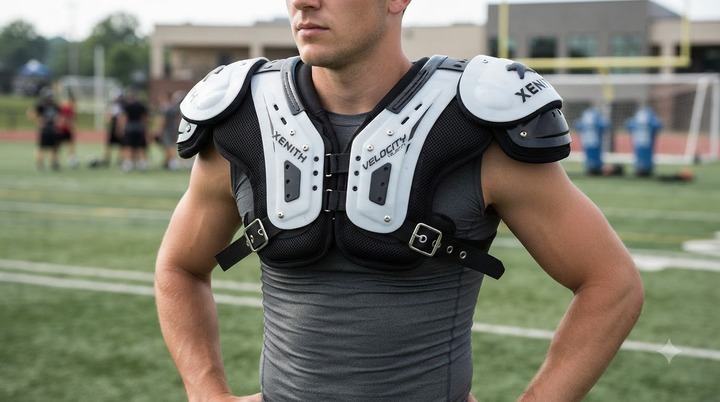
Every program has a story about shoulder pads that looked fine in August and were barely functional by October. Straps that lost their stretch, foam that compressed permanently, seams that started separating, harnesses that wouldn't stay tight. Teams spent money on equipment that was supposed to last a season and ended up replacing pads in week five because they stopped performing.
The problem isn't always that cheap pads are inherently low-quality — it's that durability isn't being factored into the purchase decision at all. Coaches buy based on price or appearance, not on material specifications, construction methods, or how the equipment actually holds up under repeated use and washing. Understanding what actually determines whether football quarterback shoulder pads will maintain their protective function and fit consistency across a full season is the difference between making smart equipment investments and repeatedly replacing gear that should have lasted.
Why Shoulder Pad Durability Is a Financial and Safety Issue
Durability isn't a luxury feature — it's a fundamental requirement for equipment to serve its intended purpose. A shoulder pad that degrades mid-season becomes less protective and less functional, both of which create problems.
From a financial perspective, buying cheap pads that need replacement by mid-season is more expensive than buying higher-quality pads upfront. A $80 pad that lasts one season costs more per season than a $140 pad that lasts three seasons.
From a safety perspective, pads with degraded foam, loose straps, and separated seams don't provide the protection they're supposed to. A quarterback wearing deteriorating pads is at higher injury risk than one wearing well-maintained, quality equipment.
The Durability Chain: What Actually Determines Lifespan
Shoulder pad durability isn't one factor — it's a chain of factors. Weakness at any point compromises the entire system's longevity.
Foam Material Selection
This is where durability starts. The foam determines how well the pad absorbs impact initially and, more importantly, whether it retains that capacity over time.
Low-density closed-cell foam — the cheapest option — compresses easily and permanently. Within 10-15 practice sessions of regular use, the foam in high-impact zones (shoulder caps, front plate) is permanently compressed and provides almost no protection. By mid-season, it's essentially just fabric over hard plastic.
High-density closed-cell foam — a middle-ground option — resists compression better and takes longer to degrade, but it still permanently compresses over a season. It's better than low-density foam, but it's not a permanent solution.
Open-cell foam with TPU bonding — the premium option — maintains its shape and rebound properties through repeated impacts. It doesn't degrade noticeably over multiple seasons. The material cost is higher, but the durability advantage is significant and measurable.
Stitching and Bonding Methods
How the foam is attached to the shell and how the shell pieces are joined together determines whether the pad holds together or starts separating mid-season.
Glued attachment — foam is adhered to the shell using adhesive. This is cost-effective initially but fails under repeated stress and moisture. Over a season of practice contact, sweat exposure, and washing, the glue breaks down. Foam panels start peeling away from the shell.
Sewn attachment — foam is stitched to the shell material, creating a mechanical bond in addition to any adhesive. This holds better than glued-only attachment but adds manufacturing cost.
Combo approach — glue plus stitching, creating redundant bonding systems. If the glue fails, the stitching still holds. If the stitching starts to come loose, the glue maintains the bond. This is the most durable approach and the one used in highest-quality gear.
Seam Construction
The edges where different pad sections meet or where shell sections are joined are high-stress areas prone to separation.
Overlapped seams — two pieces overlap and are stitched together. This creates a stronger joint because there's more material to stitch through.
Flat-lock seams — edges are pressed flat and stitched. This looks cleaner but creates less surface area for the stitch to hold. Under repeated stress, flat-lock seams fail faster than overlapped seams.
Reinforced seams — stitching is done multiple times or with thicker thread. This adds durability at high-stress points, particularly around armholes and harness attachment points.
Elastic and Strap Quality
Harness straps use elastic to maintain tension while allowing movement. The quality of this elastic determines how long the harness remains functional.
Budget elastic — cheap polyester-based elastic that loses stretch rapidly. By week four, the elastic that was tight in week one is noticeably loose. By week eight, it's essentially non-functional — the pad shifts constantly because the harness isn't maintaining tension.
Performance elastic — higher-grade materials that resist degradation and maintain stretch properties longer. Still not permanent, but a significant step up from budget elastic.
Premium elastic — specialty materials like spandex blends that maintain stretch through hundreds of washing cycles. This is expensive but provides durability that spans multiple seasons.
How Washing and Care Affect Durability
Even quality pads degrade faster if they're not cared for properly. This is an area where team protocol and individual player habits create massive variability in pad lifespan.
Washing Temperature
Hot water accelerates foam degradation and breaks down elastic much faster than cold water. High-heat dryers do the same — they literally cook the materials, degrading them rapidly.
Pads washed in cold water and air-dried last noticeably longer than pads washed in hot water and machine-dried. This seems like a minor protocol difference, but it's measurable in months-long lifespan differences.
Detergent and Disinfectant Selection
Harsh chemicals break down elastic and can degrade foam materials. Specialized sports gear detergents are formulated to clean without damaging materials. Using regular laundry detergent or bleach accelerates degradation.
Drying Method
Air drying preserves elastic and foam better than any heating method. Tumble drying on low heat is a compromise — better than high heat, but not as good as air drying. Pads that are line-dried in shade or hung in ventilated spaces maintain durability better than those machine-dried.
Storage Between Uses
Pads stored in sealed, damp environments develop mold and mildew that rot stitching and foam. Pads stored in hot, unventilated spaces degrade faster. Ideal storage is in a cool, ventilated space where the pads can air between uses.
Durability Red Flags: What to Inspect During the Season
Rather than waiting until pads fail, regular inspection throughout the season catches durability problems early and allows for repair or replacement before the gear stops functioning.
Foam Compression Testing
Every two weeks, do a simple compression test on each pad. Press your thumb firmly into the shoulder cap, front plate, and back areas. The foam should compress and immediately spring back. If it stays compressed or springs back slowly, the foam is degrading and the pad's protective value is declining.
Strap and Elastic Inspection
Check harness straps for fraying, color fading (which indicates UV or chemical degradation), or looseness. Pull gently on the elastic — it should resist the pull and spring back. If it stretches easily and doesn't spring back, the elastic is degraded.
Seam Integrity
Inspect all seams, particularly around armholes, harness attachment points, and shell joints. Loose stitches, separated seams, or visible gaps indicate the pad structure is failing.
Shell Cracks or Splits
Look for hairline cracks in the plastic shell, particularly around stress points like the shoulder caps and front plate edges. Small cracks can be temporarily reinforced with strong tape, but they indicate the shell material is stressed and may fail.
When to Repair vs. When to Replace
Not all durability problems require replacement. Some can be cost-effectively repaired, extending pad life and saving money.
Repairable Issues
-
Loose stitching — can be re-stitched by equipment staff or a tailor
-
Minor foam delamination — can be glued back or reinforced with tape temporarily
-
Loose harness straps — can be re-tightened or re-stitched
-
Small shell cracks — can be reinforced with athletic tape or plastic epoxy for temporary repair
Non-Repairable Issues
-
Permanent foam compression — replacing the foam is difficult and often more expensive than buying new pads
-
Widespread seam separation — indicates structural failure; repair won't restore functionality
-
Multiple simultaneous failures — if a pad has several durability problems at once, it's usually time to replace
-
Elastic degradation across the entire harness — replacing all straps is often more expensive than buying new pads
Calculating True Cost: Initial Price vs. Total Cost of Ownership
Making durability-informed equipment decisions requires thinking about total cost, not just initial purchase price.
Budget pad example: $80 purchase price, lasts one season, needs replacement = $80 per season cost.
Mid-range pad example: $130 purchase price, lasts 1.5 seasons, needs replacement mid-way through year two = $87 per season cost.
Premium pad example: $180 purchase price, lasts three seasons reliably = $60 per season cost.
Over a multi-year period, premium pads are often significantly cheaper on a per-season basis than budget options, even though the upfront cost is higher.
Frequently Asked Questions
How can you tell if a pad's foam will degrade quickly just by looking at it?
Low-density foam is usually softer and compresses more easily when you press on it. High-quality foam feels firmer and springs back immediately. Holding two pads side by side and comparing the compression resistance gives a good indication of material quality. Also check the specifications — manufacturers of quality pads will explicitly state foam density, while budget manufacturers often omit this information.
Is it worth paying more for premium elastic if the pads will only be used one season?
For single-season use, probably not. The premium elastic advantage shows up over multiple seasons. However, if the pads are likely to be used for more than one season or shared among multiple players, the cost difference is quickly recovered through longer useful life.
Can damaged pads be returned for warranty coverage?
Most manufacturers offer limited warranties covering manufacturing defects, but not damage from use or improper care. Check warranty terms before purchase. Some higher-quality manufacturers offer extended warranties or repair programs that can justify their higher prices.
What's the most common durability failure point in shoulder pads?
Harness strap degradation is probably the most common. Elastic loses its stretch faster than foam degrades or seams fail, and when the harness stops working, the pad becomes unreliable even if the protective structure is still intact.
Should a school or team invest in individual pads for each player, or is sharing and rotating pads acceptable?
Sharing pads among multiple players doesn't inherently shorten lifespan, but it creates fitting and hygiene challenges. If sharing, rotate players through similar-sized pads rather than expecting one player's custom-fitted pad to work for multiple people. Also establish clear post-use cleaning and storage protocols.
Durability in shoulder pads is built in at the manufacturing stage through material choice, construction method, and quality control. It's then maintained or destroyed through care and storage protocols. Understanding both sides of this equation — choosing quality equipment and maintaining it properly — is what separates programs that waste money on replacement gear and programs that get consistent, reliable protection across multiple seasons.