Roadway and Bridge Inspection Services NYC Metro: Why Structural Oversight Can't Wait
Posted by Meyers Wires
Filed in Business 211 views
Why Infrastructure Inspection Matters More Than Ever
Every day, millions of vehicles cross bridges, overpasses, and elevated roadways throughout the five boroughs and surrounding counties. Most drivers never think twice about the steel beams, concrete decks, and expansion joints beneath their tires. Yet behind every safe commute lies a rigorous system of oversight that keeps deteriorating infrastructure from becoming a public hazard. That's where professional roadway and bridge inspection services NYC metro area engineers rely on come into play.
The region's infrastructure is aging. Many bridges and elevated highways were built decades ago, engineered for traffic volumes far lower than what they carry today. Salt exposure during winter months, constant freeze-thaw cycles, and heavy truck traffic all accelerate wear on structural components. Without consistent, qualified inspection, small issues like hairline cracks or corroded rebar can quietly evolve into serious safety risks. Municipalities, transportation authorities, and private property owners alike have a responsibility to stay ahead of these problems, and that responsibility starts with a well-executed inspection program.
What a Comprehensive Inspection Program Actually Involves
A thorough inspection isn't a quick visual walk-through. It's a structured, documented process that follows established engineering protocols, often guided by state and federal guidelines for structural safety. Inspectors examine load-bearing elements, drainage systems, expansion joints, bearings, and deck surfaces. They look for spalling concrete, exposed or corroded reinforcement, fatigue cracking in steel members, and signs of scour around piers and abutments.
Roadway inspections extend this scrutiny to pavement conditions, guardrails, signage, drainage culverts, and retaining walls. Every finding gets logged, rated according to condition assessment scales, and compiled into a report that engineers and asset managers use to prioritize repairs. This is not paperwork for its own sake. It's the foundation that determines which structures need immediate attention and which can be scheduled for routine maintenance down the line.
Technology has changed how this work gets done. Many firms now incorporate drone-assisted visual surveys for hard-to-reach spans, ground-penetrating radar to assess subsurface deck conditions, and digital reporting platforms that allow real-time data sharing between field inspectors and project engineers. These tools don't replace the trained eye of an experienced inspector, but they add a layer of precision that makes findings more reliable and easier to track over time.
Why Independent Oversight Changes the Outcome
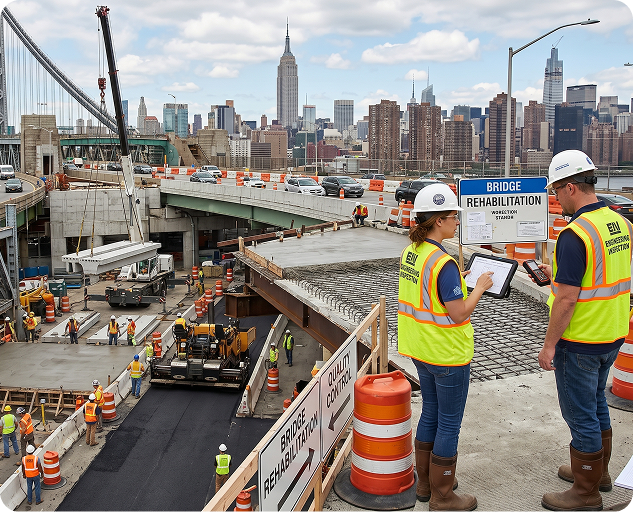
Here's where things get interesting for anyone managing large-scale infrastructure projects. Inspection alone tells you what condition a structure is in today. Bridge inspection and oversight NYC project managers depend on goes a step further by ensuring that repair work, new construction, and rehabilitation projects are executed correctly from start to finish.
Oversight means having an independent, qualified engineering presence on-site during construction and repair activities, verifying that contractors follow approved plans, use specified materials, and meet quality standards at every phase. It's a safeguard against shortcuts, whether intentional or accidental, that could compromise structural integrity years down the line. Given the scale of investment involved in major infrastructure projects across the metro area, this kind of oversight protects both public safety and the financial interests of the agencies and municipalities funding the work.
Think of it this way: a contractor might be skilled and well-intentioned, but construction is a complex process with countless variables. Weather delays, material substitutions, unexpected site conditions, and scheduling pressures can all introduce risk. An independent oversight team acts as a check against those pressures, ensuring that speed never comes at the expense of safety. For public agencies accountable to taxpayers, this kind of documented, third-party verification is often not just good practice but a contractual requirement.
The Regulatory Landscape Driving Inspection Standards
Bridge and roadway inspections in the region don't happen in a vacuum. They're shaped by federal standards set through the National Bridge Inspection Standards, along with state Department of Transportation requirements that dictate inspection frequency, qualified personnel credentials, and reporting formats. Most highway bridges require inspection at regular intervals, though structures showing signs of distress or carrying unusually heavy loads may need more frequent evaluation.
Firms providing these services typically employ licensed professional engineers alongside certified bridge inspectors who've completed specialized training programs. This credentialing matters because inspection reports often carry legal and regulatory weight. If a structure fails and an inadequate or fraudulent inspection is later discovered, the consequences extend well beyond the immediate safety incident. Choosing a firm with a strong track record and proper certifications isn't just a box to check. It's a decision that carries real accountability.
Choosing the Right Partner for Long-Term Infrastructure Health
For municipalities, engineering firms, and private developers throughout the tri-state area, selecting an inspection and oversight partner comes down to a few key factors: depth of local experience, familiarity with regional soil and weather conditions, responsiveness during emergency assessments, and a demonstrated history of clear, actionable reporting.
The best firms don't just hand over a report and move on. They work collaboratively with asset owners to develop long-term maintenance strategies, helping prioritize capital spending based on real risk rather than guesswork. This kind of partnership approach turns inspection from a compliance exercise into a genuine asset management tool, one that extends the useful life of infrastructure while controlling costs over time.
As traffic volumes continue to grow and infrastructure across the region continues to age, the demand for skilled, dependable inspection and oversight services will only increase. Whether it's a small municipal overpass or a major interstate crossing, the underlying principle stays the same: consistent, professional evaluation is the difference between reactive crisis management and proactive infrastructure stewardship.