How to Register for VAT in Dubai: Complete Step-by-Step Guide
Posted by Adan Bailey
124 views
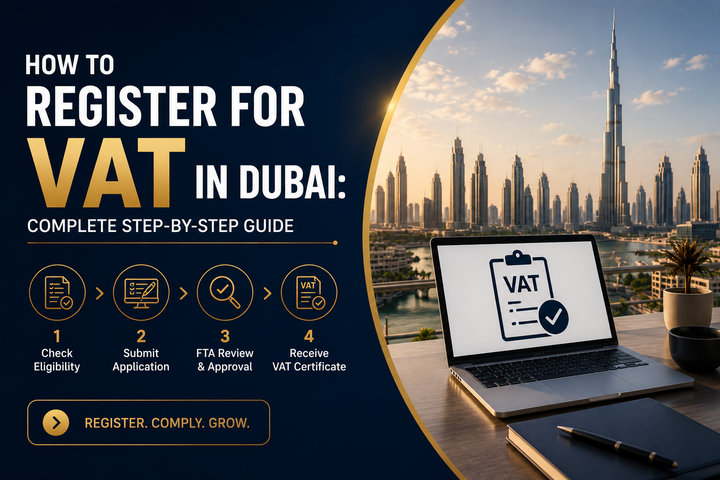
Value Added Tax (VAT) registration is an important compliance requirement for many businesses operating in Dubai and across the UAE. Since VAT was introduced in the UAE at a standard rate of 5%, businesses that meet the applicable registration criteria must register with the Federal Tax Authority (FTA), obtain a Tax Registration Number (TRN), charge VAT where applicable, maintain proper records and submit VAT returns on time.
If you are a business owner wondering how to register for VAT in Dubai, the process is completed online through the FTA's EmaraTax platform. This guide explains the eligibility requirements, documents, application process, deadlines and important considerations.
Who Needs to Register for VAT in Dubai?
Before applying, businesses should determine whether VAT registration is mandatory or voluntary.
For a UAE-resident business, VAT Registration is generally mandatory when the value of taxable supplies and imports exceeds AED 375,000 during the previous 12 months, or when the business expects to exceed AED 375,000 during the next 30 days.
Businesses that do not meet the mandatory threshold may still be eligible for voluntary VAT registration if their taxable supplies, imports or taxable expenses exceed AED 187,500 over the relevant period or are expected to exceed that amount within the next 30 days.
Non-UAE-resident businesses can have different VAT registration obligations. In particular, a non-resident business making taxable supplies in the UAE may be required to register regardless of the AED 375,000 threshold when no other person is responsible for accounting for the VAT.
Step 1: Determine Your VAT Registration Eligibility
The first step is to review your business turnover and taxable activities. Calculate taxable supplies and imports for the previous 12 months and consider whether your business expects to cross the applicable threshold within the next 30 days.
Businesses should also distinguish between taxable, zero-rated and out-of-scope transactions because VAT treatment can affect the registration assessment. If you are unsure whether your business has reached the threshold, professional VAT advice can help you make the correct determination.
Step 2: Prepare the Required Documents
Having the correct documents ready can make the application process smoother. Depending on the legal structure of your business, the FTA may require documents such as the trade or business licence, certificate of incorporation, Memorandum of Association or partnership agreement, commercial registration documents, Emirates ID and passport copies of owners or authorised signatories, and other supporting information where applicable.
The FTA specifies that documents submitted through the service should be in PDF format, with a maximum file size of 15 MB per document.
Step 3: Create an EmaraTax Account
VAT registration in Dubai is handled electronically through the FTA's EmaraTax platform. You first need to create and activate an account, after which you can access the tax services available for your business.
Make sure the information in your account matches your company's official registration documents. Incorrect or inconsistent information can create delays during the review process.
Step 4: Create Your Taxable Person Profile
After logging into EmaraTax, access the dashboard and create a New Taxable Person Profile. Select the appropriate legal type and provide the requested business information.
You will then access your Taxable Person Account and select the VAT registration option. The FTA's current registration procedure follows this sequence: create or access the EmaraTax profile, select the taxable person account, choose Register under Value Added Tax and complete the application.
Step 5: Complete the VAT Registration Application
The application requires detailed information about your business, including business activities, financial information, contact details, customs-related information where applicable and other details requested by the FTA.
Review every section carefully before submission. Your turnover figures and supporting documents should accurately reflect your business records because the FTA may review the information provided as part of the registration process.
Step 6: Submit the Application to the FTA
Once all required information has been entered and supporting documents uploaded, review the application and submit it through EmaraTax.
The VAT registration service itself is currently listed as free of charge by the FTA. The FTA states an estimated submission time of around 45 minutes and an estimated processing period of up to 20 business days from receipt of a completed application.
Step 7: Receive Your VAT Registration Certificate and TRN
If the application is approved, your VAT registration certificate will become available through your taxpayer e-Services account. The registration provides your business with a Tax Registration Number (TRN), which is used for VAT compliance and related interactions with the FTA.
After registration, your responsibilities do not end. Your business must properly account for VAT, maintain appropriate records, issue compliant tax invoices where required, submit VAT returns and pay any VAT due within the applicable deadlines.
VAT Registration Deadline in Dubai
Businesses that become legally required to register for VAT must submit their registration application within 30 days of becoming required to register, according to the FTA. Failure to apply within the applicable deadline can result in a late-registration penalty under the relevant tax legislation.
For this reason, businesses should monitor their turnover regularly rather than waiting until the end of the financial year to determine whether registration is required.
Can a Dubai Free Zone Company Register for VAT?
Yes. Being established in a free zone does not automatically mean that a business is outside the UAE VAT system. The VAT treatment depends on the nature of the business activities and supplies and whether the applicable registration criteria are met. The FTA specifically notes that businesses in free zones may be required to register depending on their taxable activities and circumstances.
How Takween Advisory Can Help
Understanding VAT registration requirements, gathering the correct documents and completing the EmaraTax application accurately can be challenging, particularly for new businesses and companies with complex transactions. Takween Advisory can assist businesses with understanding VAT registration requirements, preparing documentation and navigating the registration process so that business owners can approach their UAE tax obligations with greater confidence.
Frequently Asked Questions About VAT Registration in Dubai
Is VAT registration mandatory in Dubai?
VAT registration is generally mandatory for UAE-resident businesses when taxable supplies and imports exceed AED 375,000 in the previous 12 months or are expected to exceed that amount within the next 30 days.
What is the VAT registration threshold in the UAE?
The mandatory VAT registration threshold is AED 375,000, while the voluntary registration threshold is AED 187,500 for eligible UAE-resident businesses.
How can I register for VAT in Dubai online?
VAT registration is completed through the FTA's EmaraTax platform. You need to create or access your taxable person profile, select VAT registration and complete the online application with the required supporting documents.
How long does VAT registration take in Dubai?
The FTA currently states that it may take up to 20 business days to complete a VAT registration application after receiving a completed application.
Is there a fee for VAT registration in Dubai?
The FTA currently lists the VAT registration service as free of charge.
What documents are required for VAT registration?
Depending on the legal structure, documents can include the trade licence, incorporation documents, commercial registration, Emirates ID and passport copies of relevant owners or authorised signatories, along with other supporting information where applicable.
Can a small business voluntarily register for VAT?
Yes. An eligible UAE-resident business may voluntarily register when its taxable supplies, imports or taxable expenses exceed AED 187,500 over the relevant period or are expected to exceed that amount within the next 30 days.
Do free zone companies need VAT registration?
A free zone company may need to register for VAT depending on its activities, supplies and applicable VAT registration criteria. Free zone status alone does not automatically remove a business from VAT registration requirements.
What happens after VAT registration?
After obtaining VAT registration, a business must comply with its ongoing VAT obligations, including maintaining appropriate records, accounting for VAT, issuing compliant tax invoices where applicable, filing VAT returns and paying VAT due within the prescribed deadlines.
Conclusion
VAT registration in Dubai is a structured online process, but determining eligibility and maintaining ongoing compliance requires careful attention. Businesses should monitor taxable turnover, understand the AED 375,000 mandatory threshold and AED 187,500 voluntary threshold, prepare accurate documentation and complete the EmaraTax application correctly.
For businesses that need professional assistance, working with an experienced UAE business advisory firm such as Takween Advisory can make the VAT registration process more organized and help business owners better understand their tax compliance responsibilities.