Categories
Archives
Blogs » Technology » MPLS WAN Network for Reliable and Scalable Business Connectivity
MPLS WAN Network for Reliable and Scalable Business Connectivity
Posted by Vinakom Communications 2 hours ago
Filed in Technology 7 views

Modern businesses often operate across multiple offices, branches, remote locations, data centers, and cloud environments. Keeping these locations securely and consistently connected is essential for smooth communication and efficient operations. An MPLS WAN network provides a structured networking solution that enables organizations to connect geographically distributed locations through a managed and reliable communication infrastructure.
What Is an MPLS WAN Network?
An MPLS WAN network uses Multiprotocol Label Switching technology to direct data efficiently across a service provider's network. Instead of relying only on traditional IP routing, MPLS uses labels to determine how traffic should move through the network. This approach can help organizations establish predictable connectivity between offices and business locations.
MPLS WAN is commonly used by organizations that require dependable communication between branches, headquarters, data centers, and other important network locations. It can support business applications, voice communication, video conferencing, file transfers, enterprise software, and other services that depend on stable connectivity.
Why Businesses Use MPLS WAN
As companies expand, connecting multiple locations through separate internet connections can make network management more complex. An MPLS WAN network can provide a centralized connectivity framework that helps businesses manage communication between different sites.
With a properly designed MPLS network, organizations can establish dedicated communication paths for business traffic and manage network resources according to operational requirements. This can be particularly useful for businesses that depend on consistent connectivity between offices and centralized applications.
Managed Network Services for Reliable Business Connectivity
Modern businesses rely on stable, secure, and well-managed networks to connect employees, applications, offices, cloud platforms, and essential business systems. As network environments become more complex, managing connectivity internally can require significant time, technical expertise, and resources. Managed network services provide businesses with professional support for monitoring, maintaining, and optimizing their network infrastructure.
What Are Managed Network Services?
Managed network services involve outsourcing the monitoring, administration, maintenance, and optimization of business network infrastructure to a specialized service provider. These services can cover routers, switches, firewalls, WAN connections, wireless networks, network monitoring, and other connectivity components.
A managed approach allows businesses to maintain greater visibility over their network while reducing the operational workload associated with day-to-day network administration.
Why Businesses Need Managed Network Services
Network performance directly affects communication, productivity, application access, and customer-facing operations. Connectivity issues can interrupt workflows and make it difficult for employees to access important systems.
With managed network services, businesses can receive ongoing monitoring and technical support designed to identify network issues and maintain efficient connectivity. This approach can be particularly useful for organizations operating multiple offices, remote teams, cloud applications, and distributed IT environments.
Key Components of Managed Network Services
Network Monitoring
Continuous monitoring can help identify unusual activity, connectivity problems, performance issues, and infrastructure failures. Proactive monitoring gives IT teams greater visibility into network conditions.
Network Maintenance
Regular configuration checks, updates, troubleshooting, and infrastructure maintenance help keep network components operating efficiently. Professional management can also help organizations maintain consistent network configurations across multiple locations.
WAN Management
Businesses with geographically distributed offices often require reliable wide area connectivity. Managed WAN services can help organizations monitor and manage communication between branches, headquarters, data centers, and cloud environments.
Performance Optimization
Network traffic can change as businesses add applications, users, devices, and locations. Managed services can help analyze network performance and identify opportunities to improve bandwidth utilization and traffic management.
Security Support
Network infrastructure is closely connected to an organization's overall security environment. Managed network services can incorporate appropriate security technologies and monitoring practices to help protect network resources and business data.
Benefits of Managed Network Services
A professionally managed network can provide several operational benefits. Businesses can gain access to specialized networking expertise without having to handle every infrastructure requirement internally.
Managed network services can help organizations:
- Improve network visibility
- Monitor connectivity continuously
- Reduce the burden on internal IT teams
- Identify network problems more efficiently
- Support multiple business locations
- Optimize network performance
- Maintain organized network infrastructure
- Adapt connectivity as business requirements change
Managed Networks for Multi-Location Businesses
Organizations with multiple branches often face additional networking challenges. Each location may have different connectivity requirements, devices, applications, and users.
A centralized managed network approach can simplify the administration of these environments. It can provide a structured way to monitor connectivity and coordinate network resources across different locations.
Technologies such as MPLS, SD-WAN, dedicated internet access, and fiber connectivity can also be incorporated into broader business networking strategies depending on organizational requirements.
Managed Network Services and Cloud Connectivity
Cloud applications have become an important part of modern business operations. Employees may depend on cloud-based productivity platforms, enterprise applications, communication tools, storage services, and hosted business systems.
Reliable network connectivity is therefore essential for maintaining access to these resources. Managed network services can help businesses monitor connections between offices, users, cloud platforms, and other critical destinations.
Vinakom for Managed Network Connectivity
Vinakom provides connectivity and managed networking solutions designed to support modern business infrastructure. Its services include areas such as managed IT services, fiber connectivity, dedicated internet access, MPLS, SD-WAN, and other network solutions.
By combining appropriate connectivity technologies with professional network management, Vinakom can help businesses establish and maintain network environments that support their operational requirements.
Supporting Long-Term Network Growth
Business networks need to evolve as organizations expand. New locations, cloud applications, employees, devices, and digital services can all increase network demands.
A scalable managed network services strategy can help businesses respond to these changes while maintaining visibility and control over their infrastructure. Instead of treating networking as a one-time setup, organizations can approach it as an ongoing operational function that requires monitoring, maintenance, and optimization.
With the right technology and professional network management, businesses can build a dependable connectivity environment that supports daily operations and future expansion. Vinakom's networking solutions provide businesses with options for managing connectivity across offices, applications, and distributed IT environments.
Managed Network Services for Reliable Business Connectivity
Modern businesses rely on stable, secure, and well-managed networks to connect employees, applications, offices, cloud platforms, and essential business systems. As network environments become more complex, managing connectivity internally can require significant time, technical expertise, and resources. Managed network services provide businesses with professional support for monitoring, maintaining, and optimizing their network infrastructure.
What Are Managed Network Services?
Managed network services involve outsourcing the monitoring, administration, maintenance, and optimization of business network infrastructure to a specialized service provider. These services can cover routers, switches, firewalls, WAN connections, wireless networks, network monitoring, and other connectivity components.
A managed approach allows businesses to maintain greater visibility over their network while reducing the operational workload associated with day-to-day network administration.
Why Businesses Need Managed Network Services
Network performance directly affects communication, productivity, application access, and customer-facing operations. Connectivity issues can interrupt workflows and make it difficult for employees to access important systems.
With managed network services, businesses can receive ongoing monitoring and technical support designed to identify network issues and maintain efficient connectivity. This approach can be particularly useful for organizations operating multiple offices, remote teams, cloud applications, and distributed IT environments.
Key Components of Managed Network Services
Network Monitoring
Continuous monitoring can help identify unusual activity, connectivity problems, performance issues, and infrastructure failures. Proactive monitoring gives IT teams greater visibility into network conditions.
Network Maintenance
Regular configuration checks, updates, troubleshooting, and infrastructure maintenance help keep network components operating efficiently. Professional management can also help organizations maintain consistent network configurations across multiple locations.
WAN Management
Businesses with geographically distributed offices often require reliable wide area connectivity. Managed WAN services can help organizations monitor and manage communication between branches, headquarters, data centers, and cloud environments.
Performance Optimization
Network traffic can change as businesses add applications, users, devices, and locations. Managed services can help analyze network performance and identify opportunities to improve bandwidth utilization and traffic management.
Security Support
Network infrastructure is closely connected to an organization's overall security environment. Managed network services can incorporate appropriate security technologies and monitoring practices to help protect network resources and business data.
Benefits of Managed Network Services
A professionally managed network can provide several operational benefits. Businesses can gain access to specialized networking expertise without having to handle every infrastructure requirement internally.
Managed network services can help organizations:
- Improve network visibility
- Monitor connectivity continuously
- Reduce the burden on internal IT teams
- Identify network problems more efficiently
- Support multiple business locations
- Optimize network performance
- Maintain organized network infrastructure
- Adapt connectivity as business requirements change
Managed Networks for Multi-Location Businesses
Organizations with multiple branches often face additional networking challenges. Each location may have different connectivity requirements, devices, applications, and users.
A centralized managed network approach can simplify the administration of these environments. It can provide a structured way to monitor connectivity and coordinate network resources across different locations.
Technologies such as MPLS, SD-WAN, dedicated internet access, and fiber connectivity can also be incorporated into broader business networking strategies depending on organizational requirements.
Managed Network Services and Cloud Connectivity
Cloud applications have become an important part of modern business operations. Employees may depend on cloud-based productivity platforms, enterprise applications, communication tools, storage services, and hosted business systems.
Reliable network connectivity is therefore essential for maintaining access to these resources. Managed network services can help businesses monitor connections between offices, users, cloud platforms, and other critical destinations.
Vinakom for Managed Network Connectivity
Vinakom provides connectivity and managed networking solutions designed to support modern business infrastructure. Its services include areas such as managed IT services, fiber connectivity, dedicated internet access, MPLS, SD-WAN, and other network solutions.
By combining appropriate connectivity technologies with professional network management, Vinakom can help businesses establish and maintain network environments that support their operational requirements.
Supporting Long-Term Network Growth
Business networks need to evolve as organizations expand. New locations, cloud applications, employees, devices, and digital services can all increase network demands.
A scalable managed network services strategy can help businesses respond to these changes while maintaining visibility and control over their infrastructure. Instead of treating networking as a one-time setup, organizations can approach it as an ongoing operational function that requires monitoring, maintenance, and optimization.
With the right technology and professional network management, businesses can build a dependable connectivity environment that supports daily operations and future expansion. Vinakom's networking solutions provide businesses with options for managing connectivity across offices, applications, and distributed IT environments.
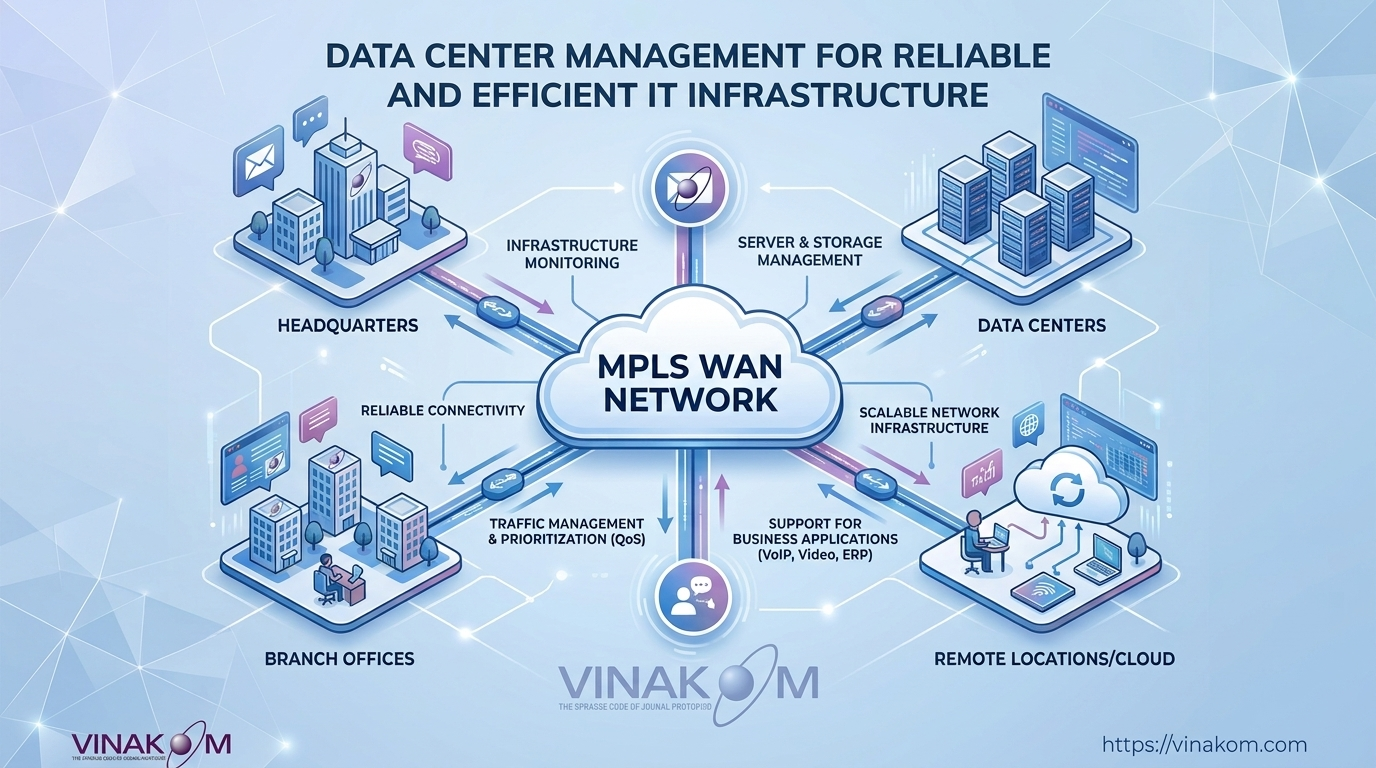
Key Features of MPLS WAN Networks
An MPLS WAN network can offer several capabilities that support enterprise networking requirements.
Reliable Site-to-Site Connectivity
MPLS can connect headquarters, branch offices, data centers, and other business locations through a managed network. This helps employees and systems communicate efficiently across geographically separated sites.
Traffic Management
Different types of business traffic can have different network requirements. MPLS can support traffic-management strategies that prioritize important applications and help organizations use available network resources efficiently.
Support for Business Applications
Enterprise applications often depend on consistent network connectivity. MPLS WAN can support applications such as enterprise resource planning, customer management platforms, voice services, video conferencing, and centralized business systems.
Scalable Network Infrastructure
As businesses add new branches or locations, their connectivity requirements can increase. A well-planned MPLS WAN network can be expanded to accommodate additional sites and changing business requirements.
Centralized Network Management
Organizations with multiple locations need effective ways to monitor and manage their connectivity. A managed MPLS environment can simplify network administration by providing a structured approach to connecting different business sites.
MPLS WAN for Multi-Location Businesses
Businesses with multiple offices often need more than basic internet connectivity. Employees may need to access applications hosted at headquarters, communicate with other branches, share files, access centralized databases, and use voice or video services.
An MPLS WAN network creates a framework for connecting these locations through a managed wide area network. This can help organizations maintain consistent communication between offices while reducing the complexity associated with managing separate connectivity solutions at every location.
For industries and businesses where network availability and predictable performance are important, MPLS can remain a valuable component of the overall connectivity strategy.
MPLS WAN and Network Performance
Network performance depends on several factors, including bandwidth, latency, routing, infrastructure quality, traffic volume, and application requirements. MPLS can help organizations manage traffic more systematically by providing defined paths through the service provider's network.
Businesses can also combine MPLS with other connectivity technologies when developing a broader networking strategy. Depending on the organization's requirements, this may include dedicated internet access, Ethernet services, cloud connectivity, or SD-WAN.
MPLS WAN and Modern Network Requirements
Although networking environments continue to evolve, MPLS remains relevant for organizations that require managed connectivity between important business locations. Many businesses are also evaluating hybrid networking approaches that combine MPLS with broadband, dedicated internet, wireless connectivity, and SD-WAN technologies.
The right approach depends on factors such as the number of locations, application requirements, existing infrastructure, security needs, traffic patterns, and budget.
Vinakom for Business Network Connectivity
Vinakom provides networking and connectivity solutions designed to support the requirements of modern businesses. Its portfolio includes services related to business connectivity, fiber infrastructure, managed networking, MPLS, SD-WAN, and other network technologies.
By working with a network service provider such as Vinakom, organizations can evaluate their connectivity requirements and develop an infrastructure that supports communication between offices, applications, users, and business resources.
Building a Connected Business Network
A reliable wide area network is an important part of modern business infrastructure. Whether an organization operates a few branches or a large network of geographically distributed locations, dependable connectivity helps employees access essential resources and communicate efficiently.
An MPLS WAN network can provide a managed framework for connecting business locations while supporting traffic management, application connectivity, scalability, and centralized network operations. For organizations considering MPLS as part of their connectivity strategy, understanding existing network requirements and future growth plans is an important first step.
With the right network architecture and professional connectivity services from Vinakom, businesses can build a structured networking environment designed to support reliable communication and evolving operational requirements.