Artificial Intelligence in Supply Chain: From Planning to Execution
Posted by scott bang
Filed in Business 551 views
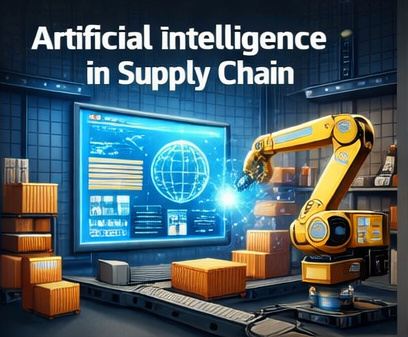
Artificial Intelligence Reshaping Modern Supply Chains
Artificial intelligence in supply chain operations has moved from experimental pilots to mission-critical deployment. Organizations across manufacturing, retail, logistics, and distribution are embedding AI-driven systems to improve visibility, resilience, and responsiveness in increasingly complex global networks. As supply chains face persistent disruptions—from demand volatility to geopolitical uncertainty—AI is emerging as a foundational technology that enables faster decisions and more adaptive planning.
From Data Silos to Intelligent Decision-Making
At the core of this transformation is AI supply chain management, which leverages machine learning, predictive analytics, and natural language processing to convert vast data streams into actionable insights. Traditional supply chains relied heavily on historical data and manual forecasting. In contrast, AI-enabled platforms continuously learn from real-time inputs such as sales signals, supplier performance, weather data, and transportation conditions.
This shift allows companies to move beyond reactive management toward anticipatory decision-making. Demand forecasting models now adjust dynamically, inventory levels are optimized automatically, and procurement teams receive AI-generated recommendations for sourcing and supplier selection. As data integration improves, AI systems are becoming more accurate, reducing both excess inventory and costly stockouts.
Driving Efficiency Through Optimization and Automation
One of the most impactful areas of adoption is AI in supply chain optimization. Advanced algorithms are used to balance cost, speed, service levels, and sustainability objectives simultaneously—something that is nearly impossible with rule-based systems alone. AI-powered optimization engines can simulate thousands of scenarios, helping organizations choose the most efficient production schedules, warehouse layouts, and replenishment strategies.
Automation also plays a growing role. Intelligent robots, computer vision systems, and autonomous planning tools are streamlining warehouse operations and manufacturing flows. These technologies not only improve throughput but also enhance accuracy and safety, particularly in high-volume fulfillment environments. As AI models mature, they are increasingly capable of explaining their recommendations, which builds trust among supply chain professionals.
Smarter Logistics and Real-Time Visibility
AI supply chain logistics is another area seeing rapid advancement. Transportation management systems enhanced with AI can predict delays, optimize routing in real time, and dynamically select carriers based on cost and performance. By analyzing traffic patterns, fuel prices, port congestion, and weather disruptions, AI helps logistics teams respond proactively rather than reactively.
Computer vision and IoT sensors further enhance shipment visibility, enabling real-time tracking of goods across global networks. When combined with AI, these technologies can detect anomalies such as temperature deviations or unexpected route changes and trigger automated responses. This level of intelligence is especially valuable for industries handling perishable, high-value, or regulated products.
Strategic Implications
The accelerating adoption of artificial intelligence in supply chain systems is also reflected in strong market growth. Recent analysis indicates that the global artificial intelligence in supply chain market is on a steep expansion trajectory, driven by enterprise digital transformation and the need for resilient operations. In fact, the market is anticipated to reach USD 51.12 billion by 2030, growing at a CAGR of 38.9% from 2024 to 2030, according to Grand View Research. This growth underscores how AI is transitioning from a competitive differentiator to a strategic necessity.
For organizations, this momentum signals a clear imperative: investing in AI capabilities is no longer optional. Companies that delay adoption risk falling behind in efficiency, customer responsiveness, and cost control. At the same time, successful implementation requires more than technology alone—it demands data readiness, cross-functional collaboration, and workforce upskilling.
The Road Ahead for AI-Enabled Supply Chains
Looking forward, artificial intelligence in supply chain ecosystems will become more autonomous, interoperable, and sustainability-focused. Emerging trends include self-healing supply chains that automatically reroute around disruptions, generative AI tools that support scenario planning, and AI-driven carbon optimization to meet environmental goals.
As these capabilities evolve, AI will increasingly serve as the central nervous system of the supply chain—connecting planning, execution, and analytics into a unified, intelligent framework. Organizations that align strategy, data, and technology around AI will be best positioned to navigate uncertainty and achieve long-term operational excellence.