Modular Cleanrooms and Their Role in Fast-Changing Operations
Posted by scott bang
Filed in Business 594 views
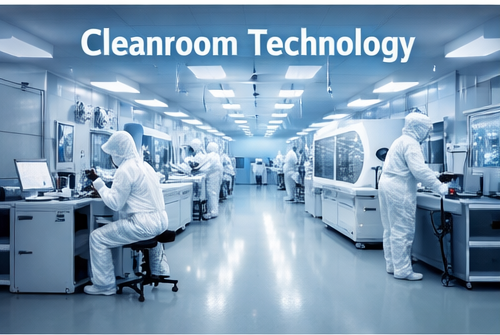
Cleanroom Technology Trends Shaping High-Precision Industries
Cleanroom technology continues to evolve as industries demand tighter contamination control, higher operational efficiency, and greater flexibility in controlled environments. From pharmaceuticals and biotechnology to semiconductors and medical devices, cleanrooms are no longer static facilities. They are becoming intelligent, modular, and sustainability-driven spaces designed to meet both regulatory rigor and rapid production cycles.
Smart and Adaptive Cleanroom Design
One of the most notable shifts in cleanroom technology is the move toward smarter and more adaptive cleanroom design. Facilities are increasingly integrating IoT-enabled sensors to continuously monitor airborne particles, humidity, pressure differentials, and temperature. These real-time insights allow operators to optimize performance, reduce downtime, and ensure compliance without relying solely on periodic manual validation.
Cleanroom design is also becoming more user-centric. Ergonomic layouts, improved airflow modeling through computational fluid dynamics (CFD), and better segregation of personnel and material flows are helping reduce contamination risks while improving productivity. As manufacturing processes become more complex, cleanrooms are being tailored to specific workflows rather than built as one-size-fits-all environments.
Modular Cleanrooms and Flexible Deployment
The growing preference for modular cleanrooms reflects the industry’s need for speed and scalability. Modular cleanrooms are pre-engineered, prefabricated systems that can be rapidly installed, expanded, or reconfigured with minimal disruption to ongoing operations. This approach is particularly attractive for startups, contract manufacturers, and facilities facing fluctuating production volumes.
Modularity also supports global expansion strategies. Companies can replicate standardized cleanroom solutions across multiple locations while maintaining consistent quality and compliance. Additionally, modular cleanrooms often require less upfront capital investment and shorter validation timelines, making them an efficient alternative to traditional stick-built cleanrooms.
As adoption accelerates across end-use sectors, the economic outlook for cleanroom technology remains strong. The global cleanroom technology market size is projected to reach USD 10.82 billion by 2030, growing at a CAGR of 5.9% from 2025 to 2030, according to Grand View Research. This growth reflects rising pharmaceutical production, increased semiconductor fabrication, and expanding biologics and cell therapy pipelines that demand stringent contamination control.
This market momentum underscores why organizations are investing in advanced cleanroom solutions that balance compliance with operational agility. Rather than viewing cleanrooms as fixed infrastructure, companies are treating them as strategic assets that can evolve alongside product innovation.
Sustainability and Integrated Cleanroom Solutions
Sustainability is emerging as a critical consideration in modern cleanroom technology. Energy-efficient HVAC systems, low-energy fan filter units, and optimized air change rates are helping reduce the traditionally high energy footprint of cleanrooms. Material selection is also evolving, with recyclable panels and longer-life filtration systems gaining traction.
At the same time, vendors are offering more integrated cleanroom solutions that combine design, construction, validation, and ongoing maintenance into a single service model. This end-to-end approach simplifies project management and ensures alignment between cleanroom design intent and real-world performance. It also supports faster regulatory approvals, as documentation and validation protocols are built into the solution from the outset.
Looking ahead, cleanroom technology will continue to converge with digitalization, modular construction, and sustainable engineering. As regulatory expectations tighten and production timelines compress, organizations that invest in flexible, intelligent, and future-ready cleanroom solutions will be best positioned to maintain quality, compliance, and competitive advantage in high-precision manufacturing environments.