Wearable Exoskeleton Advances in Power and Sensor Integration
Posted by scott bang
Filed in Business 640 views
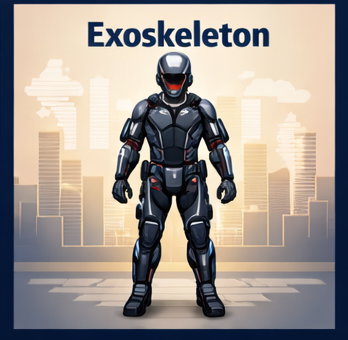
Exoskeleton Technology Moves from Concept to Practical Adoption
The evolution of the exoskeleton has accelerated rapidly over the past few years, driven by advances in robotics, lightweight materials, and sensor intelligence. Once associated mainly with science fiction or experimental labs, modern exoskeleton systems are now finding practical use across healthcare, manufacturing, logistics, and even defense. As organizations look for ways to improve productivity while reducing physical strain and injury, wearable robotics are increasingly seen as a viable, scalable solution rather than a niche innovation.
At its core, an exoskeleton is a mechanical structure worn externally on the body to augment, support, or restore human movement. Today’s designs focus less on brute strength and more on ergonomic assistance, precision control, and long-term comfort. This shift is opening the door for wider adoption across both medical and industrial environments.
Key Technology Trends Shaping Modern Exoskeletons
One of the most important trends is the move toward lightweight, energy-efficient designs. Early systems were bulky and power-hungry, limiting mobility and user acceptance. Modern wearable exoskeleton platforms increasingly rely on advanced composites, soft robotics, and compact actuators that reduce overall weight while maintaining structural support. In parallel, battery technology and power management systems have improved, enabling longer operating times without frequent recharging.
Another major trend is the integration of artificial intelligence and real-time sensing. Sensors embedded in joints and frames allow the exoskeleton to interpret user intent, adapt assistance levels, and respond dynamically to different movements. This is particularly valuable in an industrial exoskeleton, where tasks may vary from lifting and overhead work to repetitive bending. By adjusting support in real time, these systems enhance safety without restricting natural motion.
Expanding Applications in Healthcare and Industry
The medical exoskeleton remains one of the most impactful application areas. In rehabilitation settings, these systems are helping patients with spinal cord injuries, stroke, or neuromuscular disorders regain mobility and rebuild muscle memory. Clinicians increasingly favor robotic-assisted therapy because it enables consistent, repeatable movement patterns while reducing physical strain on therapists. Beyond rehabilitation, medical exoskeleton solutions are also being explored for long-term mobility assistance, supporting aging populations and individuals with chronic mobility impairments.
At the same time, adoption of the industrial exoskeleton is growing steadily across manufacturing, warehousing, construction, and logistics. Employers are under pressure to reduce workplace injuries and improve worker retention, particularly in physically demanding roles. Passive and powered wearable exoskeleton devices are being deployed to support the back, shoulders, and lower limbs, helping workers perform repetitive or heavy tasks with reduced fatigue. Importantly, many of these systems are designed to be worn for an entire shift without disrupting workflow.
Outlook and Commercial Momentum
As these technologies mature, the commercial outlook for the exoskeleton sector continues to strengthen. Market momentum is supported by rising awareness of workplace ergonomics, growing healthcare needs, and favorable regulatory developments in several regions. According to Grand View Research., the global exoskeleton market size is projected to reach USD 1.25 billion by 2030, growing at a CAGR of 16.27% from 2025 to 2030. This growth reflects increasing investment in both medical exoskeleton solutions and wearable exoskeleton platforms tailored for industrial use.
This projected expansion highlights a broader shift: exoskeleton technology is no longer limited to pilot programs or research trials. Instead, it is becoming a strategic tool for organizations seeking long-term gains in productivity, safety, and workforce sustainability.
Challenges and the Road Ahead
Despite strong progress, challenges remain. Cost, user training, and long-term comfort are still key considerations, particularly for small and mid-sized enterprises. However, as production scales and designs become more modular, prices are expected to decline. Future development is also likely to focus on soft exoskeleton systems that blend seamlessly with clothing, further improving user acceptance.
Looking ahead, the convergence of robotics, AI, and human-centered design will continue to redefine what an exoskeleton can achieve. Whether enhancing mobility through a medical exoskeleton or reducing physical strain with an industrial exoskeleton, these systems are poised to play a significant role in shaping the future of work and healthcare.