Who Should Oversee Your Construction Project? A Practical Guide for Owners
Posted by Raaiha Jannat
Filed in Other 29 views
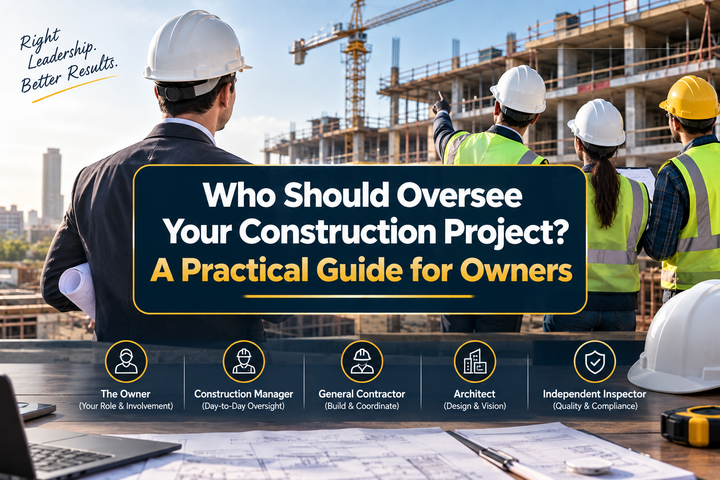
Every construction project reaches a point where someone has to ask a deceptively simple question: who is actually in charge of making sure this building gets done right? For owners and developers stepping into a new project, that question is rarely as straightforward as it sounds. There are architects reviewing submittals, contractors juggling crews, and consultants weighing in on budgets and it's easy to assume they're all doing the same job. They aren't.
Getting this wrong doesn't just cause confusion in meetings. It can quietly derail a project's timeline, inflate costs, and open the door to disputes that could have been avoided with a clearer chain of oversight. This guide walks through how project oversight actually works, who typically holds which responsibilities, and how to set your project up so nothing falls through the cracks.
Why Oversight Confusion Costs Owners More Than They Realize
Construction projects rarely fail because of one big mistake. They fail because of a hundred small gaps, a change order that nobody caught in time, a design detail that got lost between the architect's office and the job site, a schedule slip that snowballed because no one was tracking it daily.
Most of these gaps trace back to the same root cause: unclear ownership. When everyone assumes someone else is watching a particular detail, that detail goes unwatched. Owners who take a few minutes early on to map out exactly who is responsible for what tend to avoid the costly surprises that plague the rest.
The Two Roles Owners Often Confuse
On most mid-to-large projects, two distinct functions handle oversight, and they're frequently lumped together even though they serve different purposes. One is focused on protecting the design intent and making sure the finished building matches the contract documents. The other is focused on getting the physical work done on schedule, on budget, with the right crews in the right place at the right time.
These aren't competing roles; they're complementary ones. But treating them as interchangeable is one of the more common and more expensive mistakes an owner can make. If you want a detailed breakdown of how these responsibilities diverge, including who typically fills each role and how their decision-making authority differs, this comparison of construction administration and construction management lays out the distinctions clearly, right down to how each side handles financial oversight and daily communication.
Building an Oversight Structure That Actually Works
Once you understand that design compliance and project execution are two separate jobs, the next step is deciding how to staff them on your specific project. This looks different depending on the size and complexity of what you're building.
Small to Mid-Size Projects
On smaller jobs, it's common for a single general contractor to absorb much of the day-to-day execution role while the architect handles design oversight through periodic site visits and submittal reviews. This works fine as long as everyone is clear on where the architect's authority ends and the contractor's begins, particularly around who has the final say on field changes.
Larger and More Complex Projects
Bigger projects usually need a dedicated construction manager who lives on the job site, tracks the schedule hour by hour, and coordinates dozens of subcontractors simultaneously. Meanwhile, the architect or engineer maintains a separate oversight track focused purely on whether the work matches the drawings and specifications. Keeping these tracks distinct rather than merging them into one person's job description reduces the risk of either function getting shortchanged when things get busy.
Setting Expectations From Day One
Regardless of project size, the smartest owners put oversight responsibilities in writing before the first shovel hits the ground. That means spelling out in the contract who approves payment applications, who signs off on change orders, who has stop-work authority, and how disputes between design intent and field conditions get resolved. A little clarity upfront saves weeks of finger-pointing later.
The Financial Side of Oversight
Money is where oversight gaps show up fastest. A project can be running smoothly on the ground and still bleed budget if nobody is tracking costs against the estimate with real discipline.
Why Accurate Estimating Matters Before Oversight Even Begins
Good oversight is only as effective as the numbers it's measuring against. If the original cost estimate was rushed or incomplete, even the most attentive construction manager or administrator is chasing a moving target. This is why owners who invest in detailed, trade-by-trade estimating at the outset covering everything from concrete and MEP work to finishes and sitework tend to have far smoother oversight down the line. The estimate becomes the baseline that every payment application, change order, and budget review gets measured against.
Tracking Costs Through the Life of the Project
Once construction starts, someone needs to be reviewing invoices, comparing actual spend to the original budget, and flagging variances before they become emergencies. This is typically where the execution-focused side of oversight earns its keep, since it involves daily visibility into labor, materials, and schedule that a purely design-focused reviewer wouldn't normally have.
Common Mistakes Owners Make With Project Oversight
Even experienced owners fall into a few recurring traps:
-
Assuming one party can do both jobs well. Design compliance and daily project execution require different skill sets and different amounts of time on site. Stretching one role to cover both often means something gets neglected.
-
Waiting too long to define authority. If stop-work authority and change-order approval aren't clearly assigned before construction begins, disagreements tend to surface at the worst possible moment.
-
Underestimating the value of formal documentation. RFIs, submittals, and written approvals feel like paperwork until a dispute arises at which point they're often the only thing that settles it.
-
Starting oversight too late. Design-focused oversight should begin as soon as construction starts, not weeks in once problems have already accumulated.
Final Thoughts
Strong project oversight isn't about hiring more people or adding more meetings. It's about being precise regarding who owns which decisions, and making sure that structure is agreed upon before work begins rather than negotiated mid-project. Owners who take the time to separate design-focused oversight from execution-focused management and who back both with solid, realistic cost estimates consistently see fewer surprises, tighter budgets, and smoother handoffs at closeout.
If you're still working out how these two functions apply to your specific project, it's worth reading through a fuller side-by-side comparison of their responsibilities, timing, and financial roles before you finalize your contracts and staffing plan.