Designing Around a Statement Pendant: How One Fixture Can Set the Tone for a Whole Room
Posted by Raaiha Jannat
Filed in Business 12 views
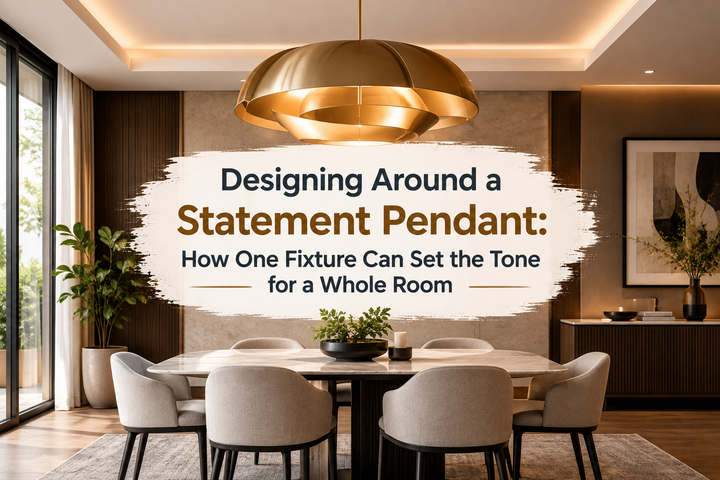
There's a moment in almost every design project residential or commercial where a single decision ends up shaping everything else. Sometimes it's a paint color. Sometimes it's a floor finish. But more often than designers like to admit, it's the lighting. Specifically, it's the one fixture that hangs where everyone will see it: over the island, above the dining table, or centered in an entryway.
Get that fixture right, and the rest of the room seems to organize itself around it. Get it wrong, and no amount of styling elsewhere quite compensates. This piece is about how to think through that decision: what to look for in a statement pendant, where it belongs in a space, and why materials like brass and crystal continue to outlast every passing lighting trend.
Why the Pendant Above You Matters More Than You Think
Most people plan a room from the floor up furniture first, then rugs, then wall color, and lighting almost as an afterthought. But lighting designers tend to work in the opposite direction. They start with the fixture, because a pendant hung at eye level or just above it does something no other element in the room can: it draws the eye immediately and holds it.
The Psychology of Overhead Focal Points
Humans are wired to notice movement and light before almost anything else in a space. A pendant that catches and refracts light through cut crystal, for instance, creates subtle, constant visual interest even when no one is actively looking at it. That's part of why a well-chosen pendant can make a room feel finished even before the furniture arrives.
Scale Is the First Decision, Not the Last
One of the most common mistakes in fixture selection is choosing based on style alone and treating size as a secondary concern. In reality, scale should come first. A pendant that's too small over a large dining table reads as an afterthought; one that's too large in a modest breakfast nook overwhelms the room. The general rule of thumb roughly one-third to one-half the width of the table or island below it is a useful starting point, though it should always be adjusted for ceiling height and the visual weight of the fixture itself.
Why Brass and Crystal Remain the Design World's Safest Bold Choice
Trends in lighting come and go matte black had its decade, as did brushed nickel before it. But brass paired with crystal has proven remarkably durable as a design combination, for reasons that go beyond fashion.
Brass Ages the Way Good Design Should
Unlike painted or plated finishes that can look dated the moment the next trend arrives, brass develops a natural patina over time that most designers and homeowners actually welcome. It softens slightly, picks up warmth, and starts to feel less like a fixture and more like a fixed part of the architecture. That quality, the sense that something belongs rather than was simply installed is difficult to manufacture any other way.
Crystal Does the Work Light Alone Can't
A bare bulb or a simple glass shade diffuses light in one direction. Crystal, particularly in a domed or hemispherical form, bends and scatters it, throwing small, shifting points of brightness across ceilings and walls. This is why crystal-accented fixtures photograph so well and why they tend to read as more expensive than their actual price point, even in relatively restrained silhouettes.
The Hemisphere Silhouette Specifically
Among the many shapes available in statement lighting, the dome or hemisphere form has aged particularly well because it splits the difference between formal and contemporary. It's structured enough to feel intentional, but its curved geometry keeps it from reading as stiff or overly traditional. For anyone weighing options, a well-executed brass and crystal Hemisphere pendant light is a good example of how that silhouette can anchor a room without dominating it substantial enough to feel intentional, restrained enough to sit comfortably in both traditional and more contemporary interiors.
Where This Kind of Fixture Works Best
Not every space calls for a statement pendant, and not every statement pendant belongs in every space. A few placements consistently make sense.
Dining Rooms and Kitchen Islands
This is the most obvious application, and for good reason it's where people gather, linger, and look up. A pendant with brass detailing and crystal accents tends to read as elegant without feeling formal, which makes it flexible enough for both everyday family dinners and more occasion-driven entertaining.
Entryways and Stair Landings
A single dramatic pendant near an entrance sets expectations for the rest of the home before a guest has even stepped past the foyer. Because entryways are often transitional spaces without much furniture to anchor them visually, lighting tends to do a disproportionate share of the design work here.
Primary Bathrooms and Powder Rooms
This one surprises people, but a pendant over a freestanding tub or centered above a vanity mirror has become a favored move in higher-end residential design. The reflective qualities of crystal pair especially well with tile, glass, and mirrored surfaces, multiplying the light's effect.
Practical Considerations Before You Buy
A few things are worth thinking through before committing to any statement fixture, regardless of brand or style.
-
Ceiling height and drop length. Most pendants need adjustable cord or chain length to work in both standard 8-foot ceilings and taller great rooms to confirm this before ordering.
-
Bulb type and dimmability. Crystal fixtures in particular benefit from warm, dimmable lighting; a fixture that only supports harsh, non-dimmable bulbs will undercut the ambiance the design is meant to create.
-
Weight and mounting support. Brass and crystal fixtures are often heavier than they appear. Confirm that the electrical box and mounting hardware can support the fixture's actual weight, not just its listed specifications.
-
Finish consistency. If other hardware in the room cabinet pulls, faucet fixtures, door hardware is already brass, try to match undertones (warm brass vs. antique brass vs. polished brass) so the room doesn't end up with competing metals.
Final Thoughts
A statement pendant isn't just a light source it's a design decision that ripples outward into everything else in the room. Choosing one in brass and crystal is, in many ways, the safest kind of bold choice available: distinctive enough to be memorable, timeless enough not to need replacing when trends shift again. Whether you're outfitting a dining room, an entryway, or a primary bath, starting the design process with the fixture overhead rather than treating it as an afterthought tends to produce rooms that feel more considered from the moment you walk in.