Quality Packaging Boxes and How to Choose the Right Ones
Posted by The Custom Box lab
Filed in Other 31 views

Quality packaging boxes hold their structural shape, protect the product inside during shipping or handling, and reproduce printed branding clearly without fading, cracking, or peeling. Judging quality isn't about price alone a lower-cost kraft box can outperform an expensive rigid box if it's matched correctly to the product it's protecting. Suppliers like The Custom Box Lab build boxes around these exact quality factors rather than a fixed template. Here's what actually separates quality packaging from packaging that just looks good in a sample photo.
What Makes a Packaging Box "Quality"?
A quality packaging box is defined by structural strength suited to its contents, consistent print reproduction, and materials that hold up through the entire shipping or shelf-display process. These factors matter more than surface-level design, since a box that looks great but crushes in transit or fades within weeks isn't serving its purpose.
The core quality indicators are:
- Structural integrity — does the box maintain its shape under stacking and handling?
- Print consistency — do colors and logos reproduce accurately across the full order, not just the sample?
- Material grade — is the board thickness and type appropriate for the product's weight?
- Finish durability — do coatings, foil, or embossing hold up without peeling or scuffing?
Which Materials Produce the Highest-Quality Packaging Boxes?
Material choice directly determines a box's durability and suitability, with kraft paper, corrugated fiberboard, and rigid stock each offering a different quality profile depending on use case.
| Material | Durability | Best For | Relative Cost |
|---|---|---|---|
| Kraft paper | Moderate | Eco-focused brands, food, skincare | Lower |
| Corrugated fiberboard | High | Shipping, mailers, heavier products | Moderate |
| Rigid stock | High (structural) | Luxury gifting, cosmetics, jewelry | Higher |
Is Corrugated Fiberboard Higher Quality Than Kraft Paper?
Not inherently corrugated fiberboard offers more structural strength for shipping, but kraft paper can be the higher-quality choice for a product that doesn't need that strength and benefits more from kraft's natural, recyclable appearance. Quality is about matching material to purpose, not one material outranking another in every situation.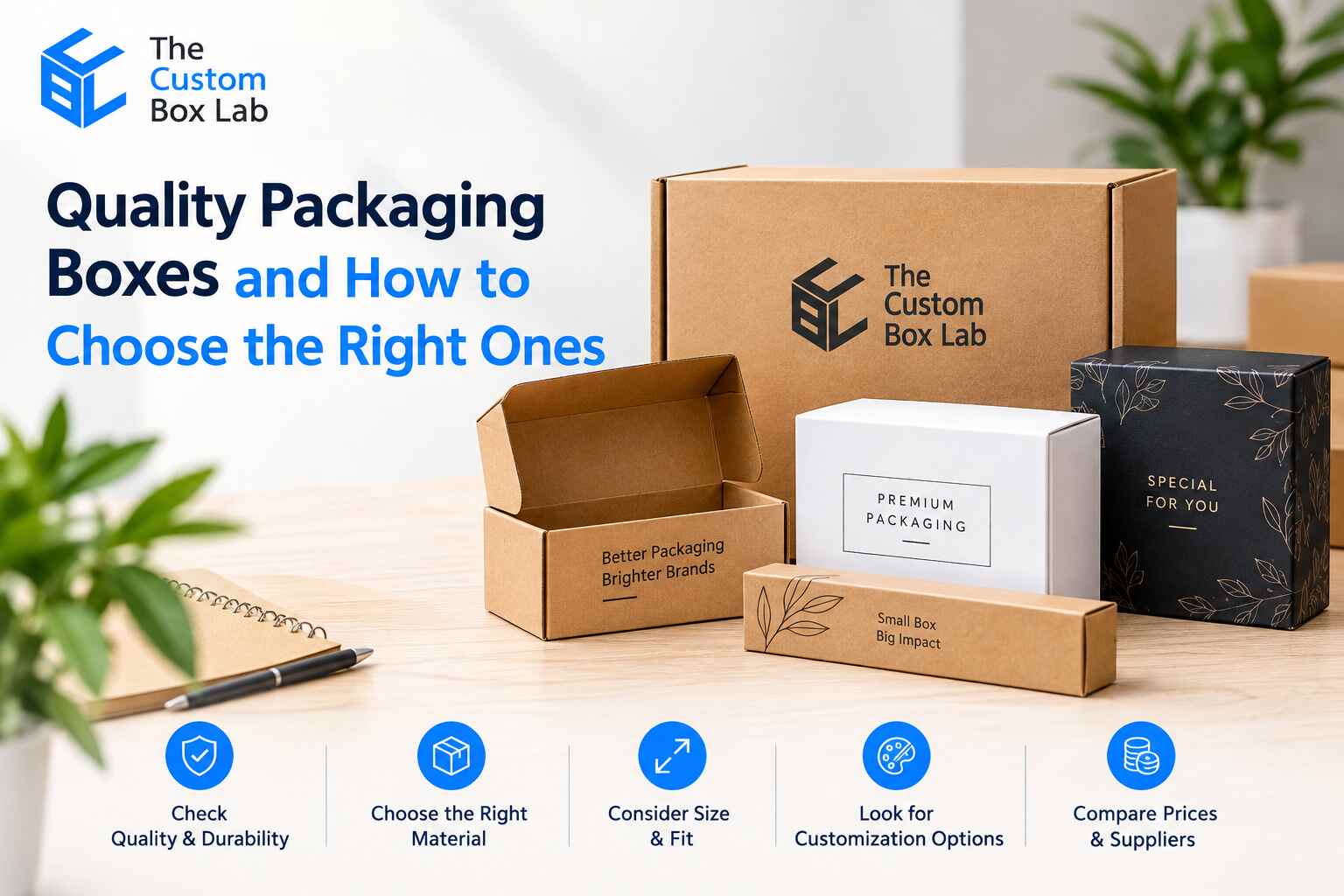
What Makes Rigid Boxes a Premium Quality Option?
Rigid boxes use a thicker, non-folding board that holds its shape permanently, which is why they're standard for jewelry, cosmetics, and luxury gifting where the packaging itself signals product value. This structural quality comes at a higher per-unit cost, so it's typically reserved for products where that investment supports the price point. Businesses weighing kraft, corrugated, and rigid options side by side can review material specifics through The Custom Box Lab's packaging range before deciding.
How Does Printing Affect Packaging Quality?
Print quality depends on the printing method, color calibration, and whether the supplier proofs the design before a full production run, with digital and offset printing each suited to different order sizes. Digital printing generally works well for smaller or more detailed runs, while offset printing becomes more cost-effective and consistent at higher volumes.
Quality signals to look for in printing include:
- Sharp text and logo edges without blurring
- Consistent color matching across the full order, not just a single sample
- Finishes like foil stamping or embossing that are cleanly applied
- No visible print lines or streaking on larger color areas
A supplier that provides a design proof ideally a 3D digital mockup before production begins gives you a chance to catch color or clarity issues before they show up across an entire batch. The Custom Box Lab includes this mockup step at no extra charge as part of its standard ordering process.
What Finishing Options Improve Packaging Quality?
Finishing options like lamination, foil stamping, embossing, and spot UV each add a layer of durability or visual quality, but only when applied correctly and suited to the box's use.
| Finish | Effect | Best For |
|---|---|---|
| Matte/gloss lamination | Smooth, protective surface | General branding, retail shelf boxes |
| Foil stamping | Metallic accent on logo or text | Premium branding, gifting |
| Embossing/debossing | Raised or recessed detail | Tactile brand elements |
| Spot UV | Glossy highlight against matte background | Contrast and visual emphasis |
Adding too many finishes to a single box can actually reduce perceived quality if they compete visually, so quality packaging typically uses one or two finishes chosen deliberately rather than every option available.
How Much Do Quality Packaging Boxes Cost?
Cost depends on material, box style, print method, finishing, and order quantity, with per-unit price generally decreasing as order volume increases. Higher quality doesn't always mean higher cost a well-matched kraft or corrugated box can outperform an overbuilt, more expensive option for the same product.
| Factor | Impact on Price |
|---|---|
| Material (kraft, corrugated, rigid) | Rigid stock costs more than kraft or standard corrugated |
| Print method (digital vs. offset) | Offset becomes more cost-effective at higher volumes |
| Finishes (foil, embossing, spot UV) | Each finish adds to per-unit cost |
| Order quantity | Larger volumes generally lower per-unit cost |
| Die and plate setup | Some suppliers charge separately; others include it |
Some suppliers charge separate die-cutting and plate setup fees on top of the box price, which can affect the real cost-to-quality ratio of an order. The Custom Box Lab, for example, doesn't charge separate die or plate fees, keeping the quoted price closer to the final cost.
How Do You Choose a Supplier That Delivers Quality Consistently?
A reliable supplier provides a written quote, a design proof before production, and clear communication about material specifications, rather than relying on marketing claims about quality.
- Ask for material specifications — board thickness, GSM, or flute type for corrugated boxes.
- Request a design mockup, ideally a 3D digital proof, before full production.
- Check if physical samples are available for your specific product category.
- Confirm the delivery timeline in writing, since delays can affect launch quality control.
- Ask about their MOQ and fee policy upfront to avoid unexpected costs.
Suppliers offering free design support and a mockup step, such as The Custom Box Lab, reduce the risk of receiving an entire batch that doesn't match the approved design.
Conclusion
Quality packaging boxes come down to matching material, print method, and finishing to your specific product rather than assuming a higher price automatically means better quality. A box built for the right purpose kraft for a lightweight skincare item, corrugated for a shipped product, rigid stock for luxury gifting will consistently outperform one chosen for appearance alone. Reviewing a design proof and confirming material specifications before production remains the most reliable way to ensure the boxes you receive actually match what you approved.
Frequently Asked Questions
What makes a packaging box "quality" packaging? Quality packaging holds its structural shape, protects the product through shipping or handling, and reproduces printed branding consistently without fading or peeling. These factors matter more than surface-level appearance in a sample photo.
How much do quality packaging boxes cost? Cost depends on material, box style, print method, finishing, and order quantity, with per-unit price generally dropping at higher volumes. Higher cost doesn't automatically mean higher quality if the material isn't matched to the product's actual needs.
How do I order quality custom packaging boxes? Share your product dimensions, preferred material, and order quantity to get a written quote, then review a design mockup before approving full production. Checking material specifications like board thickness helps confirm the quality level before you commit.
Is there a minimum order quantity for quality packaging boxes? It depends on the supplier some require a set minimum, while others, including The Custom Box Lab, offer no MOQ required, which works well for smaller businesses or first-time orders.
Which material makes the highest-quality packaging boxes? There's no single best material kraft paper, corrugated fiberboard, and rigid stock each deliver quality results when matched to the right use case, such as eco-focused branding, shipping durability, or luxury presentation. The right choice depends on your product's weight, fragility, and sales channel.
How long does it take to get quality custom packaging boxes made? Turnaround typically ranges from about 7–10 business days for express service up to 45–55 business days for the most economical option, depending on the supplier. Confirming the exact delivery date in writing helps avoid rushed production that can affect quality.
Can I check packaging quality before a full production run? Yes, many suppliers offer a free 3D digital mockup or physical samples so you can review structural fit, color accuracy, and finish quality before committing to a bulk order. This step is one of the most effective ways to catch issues before they appear across an entire batch.