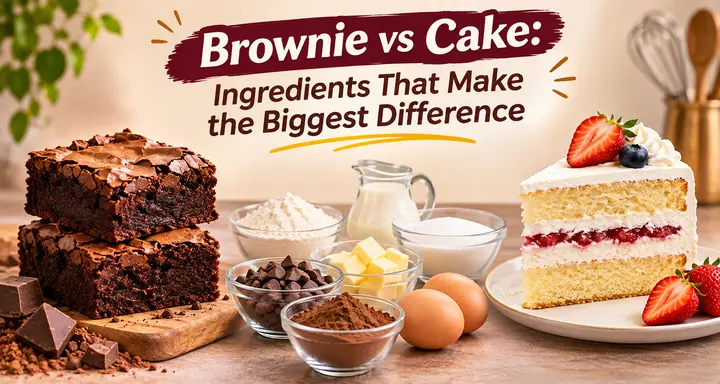
Brownie vs Cake: Ingredients That Make the Biggest Difference
About
Brownie vs Cake: Ingredients That Make the Biggest Difference
Brownies and cakes may share several ingredients, but their proportions and preparation methods create very different textures, flavours, and structures. Brownies are usually dense, while cakes are generally lighter and softer. Understanding how ingredients behave helps bakers choose the right formula and achieve consistent results.
Flour: The Foundation
Flour provides structure in both brownies and cakes, but the quantity makes a difference. Brownie recipes often contain less flour than cake recipes. This creates a rich and dense bite.
Cake recipes generally use more flour because the finished product needs enough structure to rise and hold its shape. Too much flour in brownies can make them dry and cakey, while too little flour in cake can make the crumb weak.
Fat: Butter and Oil
Fat is another important difference. Brownies often contain a generous amount of butter or oil, contributing to their rich, moist, and dense texture. Butter adds flavour, while oil can provide extra moisture.
Cakes may also use butter or oil, but the preparation method changes the result. When butter is creamed with sugar, air is incorporated into the mixture. This can help create a lighter cake crumb.
Sugar and Texture
Sugar does more than provide sweetness. It affects moisture, tenderness, browning, and surface texture. Brownies often contain a substantial amount of sugar, helping create their moist interior and characteristic crust.
Different sugars can also influence moisture, flavour, and surface texture.
Cocoa and Chocolate
Chocolate is one of the defining ingredients in brownies. Recipes may use cocoa powder, melted chocolate, chocolate chips, or combinations of these ingredients.
Cocoa powder provides concentrated chocolate flavour without adding as much fat as melted chocolate. Melted chocolate contributes both cocoa solids and fat, often creating a richer mouthfeel.
Chocolate cakes may also contain cocoa or melted chocolate, but the quantity is usually balanced with flour, liquids, eggs, and leavening ingredients to maintain a softer crumb.
Eggs: Structure and Moisture
Eggs perform several functions in baking. They contribute structure, moisture, richness, and emulsification. Their quantity and incorporation method can significantly change the finished product.
In brownies, eggs can contribute to a chewy or fudgy texture. Beating eggs with sugar can introduce air and produce a lighter, more cake-like brownie. In cakes, eggs help support the structure while contributing to a tender crumb.
Leavening Agents
Baking powder and baking soda are important for many cakes because they help the batter rise and develop a lighter texture.
Many fudgy brownie recipes use little or no chemical leavening. Their dense structure comes primarily from the balance of flour, fat, sugar, chocolate, and eggs. Some brownie recipes include baking powder or baking soda when a more cake-like result is desired.
Milk and Other Liquids
Cakes commonly use milk, buttermilk, cream, or other liquids to create a smooth batter and tender crumb. These ingredients also interact with flour and leavening agents.
Brownies usually require less additional liquid because butter, chocolate, and eggs already provide moisture. Too much liquid can make the mixture softer and move it away from the traditional dense brownie texture.
Mixing Method Matters
Ingredients alone do not determine the final result. Mixing technique is equally important. Overmixing flour can develop gluten and produce a tougher texture.
Cake methods often focus on incorporating air into the batter. The creaming method incorporates air, while brownie methods are often simpler.
Baking Time and Temperature
Baking temperature and duration can change the final texture dramatically. Brownies are often removed from the oven while the centre is still slightly soft because they continue setting as they cool.
Cakes generally need enough baking time for their structure to become stable. Overbaking can make a cake dry, while underbaking may leave the centre unstable.
Understanding these differences is an important part of becoming a confident baker. Structured Baking Classes in Chennai can help learners understand how ingredient ratios, mixing techniques, and baking conditions influence the final result.
Choosing the Right Ingredients
There is no universally better option between brownies and cakes. For a rich, dense, chocolate-forward dessert, brownies are ideal. For a lighter crumb that can support layers, fillings, and frosting, cake is more suitable.
Aspiring bakers benefit from understanding what each ingredient contributes instead of simply memorising recipes. Once they understand the roles of flour, fat, sugar, eggs, chocolate, and leavening agents, they can make informed adjustments and develop their own recipes.
Those exploring Baking classes in Anna nagar can look for practical learning opportunities that explain both recipes and the principles behind them.
Ultimately, the biggest difference between brownies and cakes is not one ingredient. It is the relationship between ingredients, their proportions, preparation methods, and baking. Understanding that balance helps bakers consistently create fudgy brownies or soft, airy cakes.
- Website https://zeroinacademy.com