How the Palestine Scarf Became a Symbol of Identity
Posted by Kuvrd Keffiyeh
411 views
Introduction
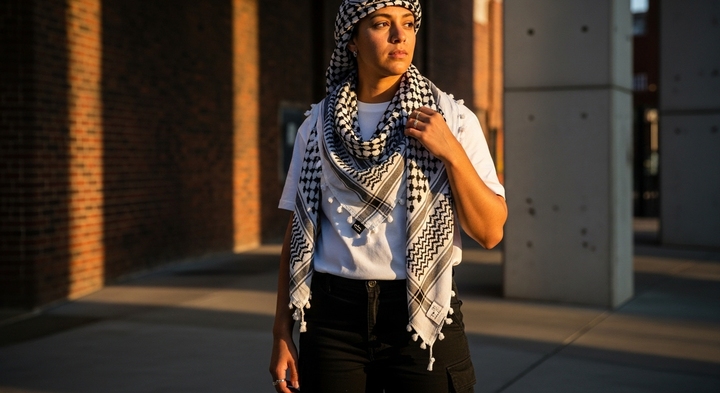
The Palestine Scarf is a checkered or striped cotton headcloth worn throughout the Arab world for generations. Beyond its practical function as protection from the sun and dust, it has evolved into one of the most recognizable symbols of Palestinian heritage, resistance, and cultural continuity in the modern era.
From Desert Necessity to National Emblem
Long before it carried political meaning, this woven square of fabric served purely functional needs. Communities across the Arabian Peninsula and Levantine highlands relied on it to shield against extreme weather, scorching summer heat, biting winter winds, and the relentless sand carried by desert storms. Farmers, herders, and traders all wore it as standard headwear.
The transformation from an everyday garment to a political symbol happened during a critical moment in Palestinian history. The 1936–39 Arab Revolt marked the first widespread use of the scarf as a deliberate marker of national solidarity. When British authorities banned its display, Palestinian villagers and urban dwellers alike began wearing it openly as an act of defiance, cementing its role as more than cloth.
Understanding the Symbolism Behind the Design
Each woven element tells part of the story. The fishnet pattern threading through the fabric honors the fishing communities that once thrived along Palestine's Mediterranean coastline. The bold crossing lines represent the historic trade routes that connected Palestinian cities and villages across the region. Perhaps most significant is the olive leaf motif repeated throughout the weave as a tribute to the olive tree, which holds profound meaning in Palestinian culture as a symbol of permanence and connection to the land.
Color choices are equally deliberate. The black-and-white checkered version became the signature Palestinian pattern, while the red-and-white variation, known as a shemagh, carries stronger associations with Jordanian and Gulf Arab traditions.
The Political Weight It Carries Today
By the 1960s, Palestinian leader Yasser Arafat had turned his daily wearing of the black-and-white keffiyeh into a powerful visual statement seen around the world. It became shorthand for Palestinian national aspirations recognized instantly in photographs, protests, and diplomatic settings. That association persists decades later.
Common question
Why does wearing this scarf outside Palestine sometimes spark debate? The answer lies in its dual nature; it is simultaneously a cultural garment anyone can wear and a loaded political symbol. Those who wear it without understanding both dimensions risk reducing a people's history to a fashion trend. Awareness of context is what separates appreciation from appropriation.
Regional Names and Variations
The garment travels under different names depending on where you are. Kufiya is the classical Arabic term, tracing its roots to the Iraqi city of Kufa, where early versions were reportedly woven. The phrases keffiyeh and shemagh are often used together in international contexts to acknowledge both Palestinian and broader Arab traditions without privileging one over the other.
Despite terminology differences, the physical object remains consistent — a square piece of woven cotton approximately 127 centimeters on each side, finished with hand-knotted fringe. What varies is the pattern, color, and the cultural associations each community brings to it.
Authenticity and the Question of Origin
For much of the 20th century, the West Bank city of Hebron served as the primary production center for what are known as Original Palestinian Keffiyehs. The Hirbawi textile factory, operating since 1961, stands as one of the last remaining producers making them entirely within Palestinian territory. When mass-produced imports from Asia flooded markets in the 1990s, traditional workshops nearly disappeared.
Choosing an authentic Palestinian-made piece carries weight beyond quality. It represents a direct economic link to artisans sustaining a threatened craft tradition. Authentic versions are identifiable by their heavier cotton weight, tighter weave consistency, and precisely knotted fringe details that mass production typically ignores.
Contemporary Brands and Global Markets
Some modern retailers like KUVRD have worked to introduce traditional scarves to new markets while maintaining connections to authentic production sources. When done thoughtfully, such efforts help expand visibility for Palestinian craft heritage rather than diluting it. The Keffiyeh Scarf has found audiences far beyond its geographic origins, from outdoor gear enthusiasts to solidarity movements to urban fashion communities.
The Practical Art of Wearing It
Learning how to wear a keffiyeh connects you to centuries of practice. The traditional method folds the square diagonally into a triangle, positions the flat edge across the forehead, and drapes both ends over the shoulders the way generations have worn it. The desert wrap variation brings one end across the face, covering the nose and mouth for protection against sandstorms. The contemporary neck scarf approach simply loops it loosely around the shoulders, treating it more like a casual accessory.
Each style serves different purposes, but all share one requirement — wearing it with a genuine understanding of what it represents.
The Palestinian Keffiyeh in International Movements
Throughout the late 20th century, solidarity movements across continents adopted the scarf as a visual shorthand for anti-colonial struggle and support for Palestinian self-determination. It appeared at protests in Europe, Latin America, and North America, worn by people who had never set foot in Palestine but recognized its symbolic power.
This globalization brought both benefits and complications. Broader visibility kept Palestinian issues in public consciousness, but commercialization sometimes stripped the symbol of its deeper meaning. The tension between cultural artifact and mass-market product remains unresolved.
Conclusion
The Palestine Scarf carries more history per square inch than almost any garment in modern circulation. From Bedouin camps to international runways, from village markets to political demonstrations, it has traveled extraordinary distances while retaining its core identity. What matters most is not whether you wear it, but whether you understand the weight of what you are putting on and choose to honor that weight through informed, respectful engagement.
Frequently Asked Questions
Are keffiyeh, shemagh, and kufiya the same thing?
Yes, they describe the same style of traditional woven headcloth. The variation in names reflects regional dialects and usage. Keffiyeh is Palestinian and Levantine, shemagh is common in the Gulf states and military contexts, and kufiya is the classical Arabic form. Patterns and colors may differ by region, but the fundamental garment is identical.
How do I find an authentic Palestine Scarf rather than a mass-produced copy?
Seek out Palestinian-made versions, particularly those from the Hirbawi factory in Hebron, which maintains traditional production methods. Authentic pieces have heavier cotton fabric, tighter, more consistent weaving, and hand-knotted fringe. Some ethical retailers and culturally engaged brands like KUVRD stock genuine options that always verify the production origin before purchasing.
Can I wear a keffiyeh and shemagh if I am not Arab or Palestinian?
Yes, when done with sincere respect for its history and cultural significance. Many non-Palestinians wear it as an expression of political solidarity or cultural appreciation. The key is understanding what you are wearing, learning its history, choosing authentic production sources when possible, and recognizing it as more than a decorative accessory.