Melasma vs Hyperpigmentation: Key Differences
Posted by Think Verse
521 views
You notice a dark patch on your cheek. At first, you ignore it. Then someone points it out. You try a cream. Nothing changes. That is usually when the confusion starts. Is it melasma? Is it just hyperpigmentation? Most people cannot tell.
The truth is, pigmentation is very common. Melasma alone affects many women, especially during pregnancy. Doctors often call it the “mask of pregnancy” because it shows up as brown patches on the face. Hyperpigmentation is a bigger umbrella term. It includes sun spots, acne marks and other dark patches caused by extra melanin.
The problem is simple. If you mix up Melasma vs Hyperpigmentation, you might end up using the wrong treatment. And that wastes time. So before picking a cream for dark spots and melasma or trying random remedies, it helps to understand what you are actually dealing with.
What Is Melasma?
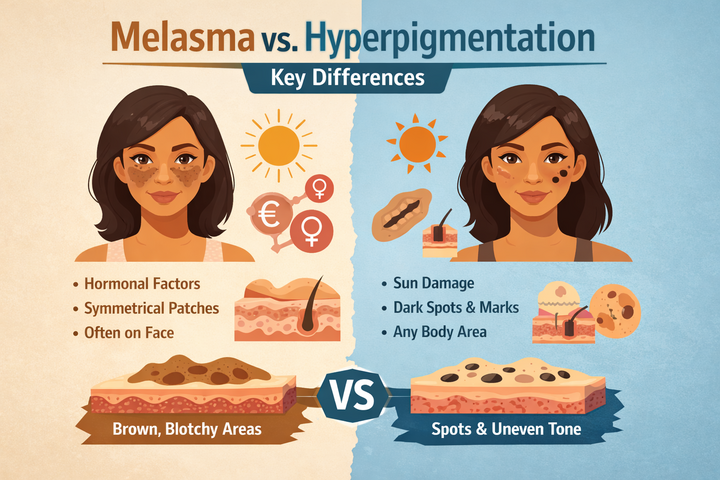
Melasma is a kind of pigmentation that shows up mostly on the face. Not tiny dots. More like patches. Brown or sometimes grey-brown. You will often see it on the cheeks, forehead, upper lip. And many times, it appears on both sides almost evenly. That pattern gives it away.
When people search for melasma on face, this is what they usually mean. It is strongly linked to hormonal pigmentation. Pregnancy, birth control pills, even hormonal imbalance can trigger it. Sunlight does not start it alone, but it definitely makes it darker.
So in simple words, melasma happens when certain areas of the skin start producing extra melanin because of hormones and sun together. It is one of the common skin pigmentation disorders, especially in women.
What Is Hyperpigmentation?
Hyperpigmentation is a bigger word. It just means darker patches or spots caused by excess melanin. That is all. Melasma falls under it, but hyperpigmentation is not limited to melasma.
There are different types of hyperpigmentation, for example:
- Dark marks left after acne
- Sun spots from long sun exposure
- Age spots
- Pigmentation after cuts or irritation
These spots are usually smaller. More random. They do not always form that even, mirrored pattern like melasma does.
The causes of hyperpigmentation can be many. Sun damage. Acne. Skin injury. Even harsh products. So when we talk about Melasma vs Hyperpigmentation, think of it this way. Melasma is a specific, hormone-linked condition. Hyperpigmentation is the general name for many kinds of dark spots on skin.
Treatment Options — What Works for Each
When it comes to Melasma vs Hyperpigmentation, treatment is not copy-paste. What works for one may not suit the other. That is where many people go wrong.
For Melasma
Melasma is slow. It does not disappear in a week. And if sun care is ignored, it darkens again.
Usually doctors suggest:
- Daily sunscreen: A dermatologist-recommended sunscreen SPF 50 is almost compulsory here. Even short sun exposure can deepen melasma on face.
- Prescription creams: A cream for dark spots and melasma may contain ingredients like hydroquinone, azelaic acid or tretinoin. These help reduce pigment gradually. Not instantly.
- Procedures, but carefully: Peels or lasers are sometimes used. But melasma can react if treated too aggressively. So it has to be done gently and under supervision.
Melasma needs consistency. If treatment stops midway, patches often return.
For Hyperpigmentation
Hyperpigmentation treatment depends on why the spot appeared. Acne marks behave differently from sun spots.
Common options include:
- Brightening ingredients: Vitamin C, niacinamide or retinoids can help fade dark spots slowly.
- Mild chemical peels: Useful in post inflammatory hyperpigmentation.
- Laser treatment: Considered when pigmentation is deep or long-standing.
Some types of hyperpigmentation lighten over time if sun exposure is reduced. Melasma usually does not fade that easily. That is a key part of the difference between melasma and hyperpigmentation.
When to See a Dermatologist
Sometimes it is hard to tell what kind of pigmentation you are dealing with. Patches look similar. The cause is not always obvious.
You should see a dermatologist if:
- The pigmentation keeps spreading
- The color looks uneven or very dark
- Home remedies are not helping after a few months
- You are unsure whether it is hormonal pigmentation or another type
Skin pigmentation disorders can look simple but behave differently. Getting the right diagnosis early saves time. And frustration too.
Conclusion
When people talk about Melasma vs Hyperpigmentation, it sounds like the same thing. Dark patches are dark patches. But they are not behaving the same inside the skin. The difference between melasma and hyperpigmentation usually comes down to the trigger. Melasma often links to hormonal pigmentation and shows up in patterns. Hyperpigmentation is more about skin reacting to acne, sun or injury.
That is why treatment cannot be random. A cream that helps one type may not help the other. Understanding the cause first makes hyperpigmentation treatment more effective and less frustrating. Skin takes time to respond. Slow changes are normal. Rushing rarely helps.
FAQs
1. How can I tell if it is melasma or just hyperpigmentation?
Look at the pattern. Melasma on face usually appears in larger, symmetrical patches and is linked to hormones. Regular hyperpigmentation is often small spots after acne or sun exposure.
2. Does melasma fade without treatment?
It can lighten slightly, especially if sun exposure is reduced. But most cases need proper care and consistent sunscreen.
3. What works better for dark spots, melasma cream or general hyperpigmentation treatment?
It depends on the cause. A cream for dark spots and melasma is designed for hormonal pigmentation. Other hyperpigmentation treatment options work better for acne marks or sun spots.