What Does a Fintech Software Development Company Do? A Complete Guide for 2026
Posted by Step2gen Technologies
Filed in Technology 185 views
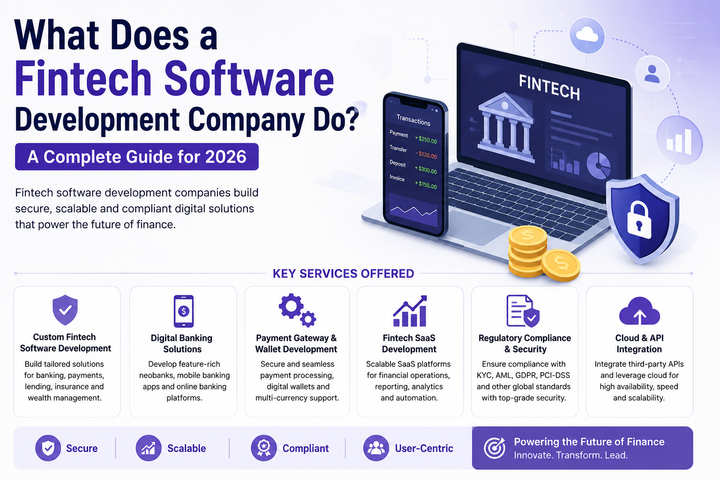
If you’ve never worked with one before, the phrase “fintech software development company” can seem a bit vague, like, does it mean they simply write code. Or, do they run the whole thing from the seed of the idea all the way to launch. Also, do they really understand banking rules, or is it mostly just software. These are fair questions, honestly, and the reply is: a good one does a lot more than most people assume.
At Step2gen Technologies, we keep getting asked “so what exactly do you do?” fairly often, usually from first-time fintech founders who are just trying to understand what kind of help they actually need. So, like, let’s put it in a clearer way, step by step, and sort out what this sort of company really does in 2026.
It Starts With Understanding the Business, Not Just the Code
Something about this usually catches a lot of new clients off guard. Before a single line of code gets written, a proper fintech development partner will spend real time, like actually discussing things, to understand the business side first. So not just “build it”, but more like, what problem are you dealing with? Who are the real users, and don’t say it vaguely. Also which markets are you launching into, and which regulations apply there, right?
This matters, like a lot in fintech specifically, because a lending app for small businesses in the UK really needs a completely different approach than, say, a digital wallet for gig workers in the Gulf. The compliance requirements aren’t just “slightly different”, they diverge, user expectations diverge too, and even the payment infrastructure that’s on hand in each region is not the same. A company that just jumps straight into building, with no groundwork like that, usually ends up having to redo major pieces later, at a much higher cost.
Product Strategy and Planning
After the business context is clear, the next phase is turning a rough idea into a real plan, not just vibes. That part usually means mapping out the core features, plus deciding what goes in for a first version and then what gets postponed for later iterations, you know. And you also create wireframes or prototypes so the founder can actually see it, and react to the product before full development begins.
This stage also includes making key technical decisions early, like deciding on which backend framework to use, whether to go with native mobile apps or choose a cross-platform solution, and which cloud provider matches the compliance needs of the target market. If you get those choices right when you’re planning, it ends up saving a lot of time and cost later on.
Custom Software Development
This is probably the part most people imagine when they say “fintech software development company” and yeah, it’s also the biggest chunk of everything. It’s what actually gets the product in motion, like backend systems that process transactions securely, front end interfaces that people use every day, and mobile apps for iOS and Android too.
At Step2gen, this usually means you’re kind of in the middle of .NET and Blazor, to get a secure backend plus web systems that don’t wobble, then Angular, especially for data-heavy dashboards like trading platforms or business banking portals. For mobile, it could be native or a cross-platform framework, depending on what the team wants. The exact tech picks can change from one project to the next, but the core intent stays pretty much the same, you know—build something secure, quick, and actually able to process real financial transactions without breaking when things get busy, or under pressure.
Compliance and Regulatory Integration
Here’s where fintech development kind of really differs from building a typical app, it’s not just the “usual” coding stuff you do. A fintech software development company needs deep familiarity with financial regulations, not simply generic software best practices.
This means, like building in KYC verification flows (Know Your Customer) and AML transaction monitoring, plus making sure you’re aligned with PCI-DSS when you handle card payments. Depending on the target market it can turn into UK FCA requirements, or in the US, state by state lending rules, and in the Gulf-region it may be more about Central Bank guidelines in the UAE, and the SAMA framework for Saudi Arabia.
A team without this specific experience might end up building something that feels sort of complete, but then it really flunks an actual compliance audit, which means pricey rework later. And that’s exactly why compliance know-how has to live at the core of the development process, not get tacked on as a last minute add-on right before launch.
Security Architecture
Financial software deals with real money plus actual personal details, things that normal apps usually do not touch. And this, well, it lifts the security bar a lot, like noticeably.
A good fintech development partner sort of builds encryption into everything, for data at rest and also for data in transit, plus does tokenization to shield sensitive information like card numbers. They also wire in multi factor authentication, so account access isn’t just one password, and they set up protected API connections to banks plus payment processors. And afterward, not just at launch, it usually means ongoing security tests and audits, because new vulnerabilities get found constantly, and what was secure last year can end up with gaps today.
API Integration and Third-Party Connections
Fintech products usually don’t run by themselves. They have to somehow connect with banks, payment gateways, credit bureaus, and also identity checks. A fintech software development company tends to deal with the messy integration side, like bringing in open banking connections through Plaid, handling payment processing via Stripe or Razorpay, and using different identity verification APIs so new users can be onboarded fast and securely.
Each of these integrations needs careful hand, because every outside connection point brings potential security risks, if it’s not handled properly. It’s detailed, careful work that really asks for experience, not just doing the same thing from a basic tutorial.
AI and Data-Driven Features
By 2026, AI will start to feel like a standard expectation inside fintech, not some luxury add-on I mean. You will see this across different areas, fraud detection systems that spot suspicious transactions in real time, credit scoring models that judge risk using more than just the old credit history, and also chatbots that respond to routine customer support questions instantly.
At Step2gen, this is kind of an area we’ve put a lot of weight into, since almost every fintech client chat now somehow turns into “can we add AI to this?” We find that building these capabilities the right way really means having clean, well-ordered data, plus careful testing, because a badly trained fraud model can either fail to catch real fraud or, worse, block legit transactions. And that kind of mistake ruins user trust really fast.
Cloud Infrastructure and Scalability
A fintech product that seems to work smoothly for, say a thousand users has to keep going just as well when it hits a hundred thousand. That is where cloud infrastructure planning sort of starts to matter a lot. A development partner puts systems in place on platforms like AWS or Microsoft Azure, and they use an architecture that can scale on its own, as the demand grows… so when traffic gets busy, or a sudden spike in usage.
This also brings in disaster recovery planning, so if something does go wrong, data stays protected, and the system can bounce back pretty quickly, which matters enormously, when the product touches people’s actual finances.
Testing and Quality Assurance
Fintech software really can't afford to go out there with bugs, because even small errors can turn into wrong transactions, failed payments, or those annoying security gaps. A proper development company tends to test in a pretty constant way through the whole build timeline not only at the very end. They check functionality and also security and performance under intense load, and they verify compliance requirements too.
This stage also usually brings in penetration testing , where the team actively aims to uncover and then use weaknesses in the system, before real attackers get even the chance to.
Ongoing Support and Maintenance
Launch day is not really the finish line, not even close. Fintech products need ongoing monitoring, regular updates, security patches, and then gradual feature improvements based on real user feedback. And yeah, rules change over time too, so compliance efforts don’t just stop when the product goes live.
A dependable fintech software development company in India, or really anywhere else, usually stays around even after launch, offering ongoing support instead of fading out the minute the first contract ends. This lasting bond matters a lot, because fintech products need continual attention to remain secure and competitive.
Why India Has Become a Major Hub for This Work
It is honestly worth talking straight about why so many banks, startups, and fintech companies across the US, the UK, and the Gulf region now end up choosing to work with a fintech software development company in India specifically. The mix of strong engineering talent, notable cost savings vs. hiring locally, and years of real accumulated know-how when it comes to international compliance requirements… that combo is what makes India feel like a solid option, not just the cheaper route.
At Step2gen Technologies, this is pretty much the value we aim to bring to each and every client, like we’re combining technical depth across .NET, Angular, Blazor, and AI, but also with real know-how for dealing with the compliance and security requests that end up making fintech development, kind of fundamentally different from building a normal app.
Bringing It All Together
So what does a fintech software development company actually do? I mean, it’s not just “writing code”, not even close. It starts with figuring out your business and the market in a kind of sane way, then choosing the right technical approach, then building software that’s secure and compliant. After that there’s the whole integration part with banks, card networks, payment rails, and those related payment systems. Plus you often add smarter features like fraud detection and risk monitoring, you know, the watchful kind of stuff. And then, yeah, even after launch they stay around, to keep things running smoothly.
If you’re a founder or a bank looking into this area for the first time, getting the full scope really helps you ask the right kinds of questions when picking a partner, and it also makes the expectations a bit more grounded about what a truly solid fintech development collaboration should look like in 2026.