An Argument for Handmade Knives
Posted by The Knife Connection
Filed in Business 276 views
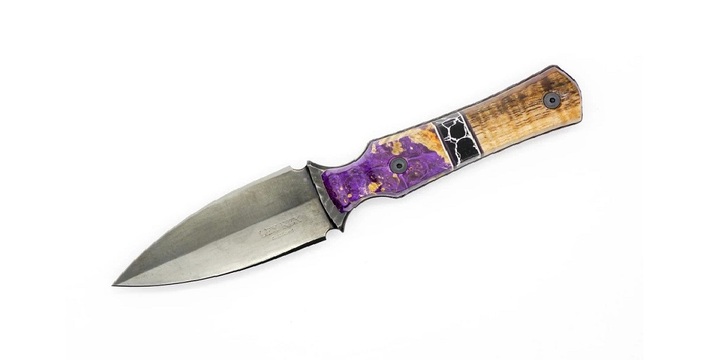
Not to mince words; there are many, many quality mass-produced knives on the market today. Some of the top national brands produce excellent knives that are either wholly or entirely machined in large quantities, even if they are fit and finished by hand.
That being said, there is still a time and place for handmade knives in any collection. This short post will cover some of the selling points, despite the fact that handmade knives are more expensive.
Fit and Finish
The best representation of the value produced in handmade knives, not just knives that are assembled by hand, but those that are made by hand from start to finish, is that they offer superior fit and finish.
Occasionally, you’ll be liable to come across mass-produced knives that have somewhat rougher fit and finish. Scales that aren’t flush to the tang, rough edges on the blade stock, and other irregularities are just a few of these.
Knives that are made by hand are likely to be held to a higher standard of aesthetic quality, which will result in a better fit and finish and therefore a more handsome knife that will hold its value well.
Heat Treatment
As important as aesthetic quality is, the heat treatment of a quality handmade knife is likely the biggest indicator of quality, after the steel alloy itself.
To be honest, while blade stocks can be heat treated or tempered in large batches, the best way to ensure a consistent heat treatment, with no harder or softer areas, is to quench the knife by hand, the old fashioned way. Some knives are still made like this.
It is the only way for an artisan to be completely certain that the blade stock was the proper temperature when the quench was applied, and thereby that the steel will be as hard, or as tempered as desired.
In other words, buying a handmade knife increases the likelihood that you’ll be getting a knife that offers the most consistent heat treatment, which impacts edge retention as well as temper, which is important in larger knives like machetes.
What Else to Look for
While fit, finish, and heat treatment are arguably the three most important things to evaluate in handmade knives, here are two more things to consider.
Quality materials
A handmade knife may offer objectively better quality across the board, but a knife made with a low-grade, low-carbon alloy and cheap plastic scales is still a cheap knife. Quality steel alloys and scale materials matter here. Don’t just see the term “handmade knife” and assume you’re getting something better. It can be but you still want to be aware of the other specifications.
A good record of customer satisfaction
Lastly, research the company or brand you’re looking at. There are many brands that make handmade knives, such as Bradford, L.T. Wright, Winkler, Wenger, and many others, many of which are vetted by classic happy customers.
These are just a few of the things to look for to consider quality in handmade knives (or any knives, for that matter) but it should give you a place to start.
Shop Handmade Knives at The Knife Connection
Want to add a handmade knife to your collection or swap out your EDC for something better? Visit The Knife Connection and check out what they sell. They represent some of the top brands in the industry, including many big brands as well as many handmade knives. Immerse yourself in their catalog and get in touch with them if you have any questions.
For more information about Bradford Knives and Karesuando Knives Please visit: The Knife Connection.