Which Fire Alarm Systems Are Best for Workplace Safety?
Posted by Hallie Lynch
Filed in Technology 814 views
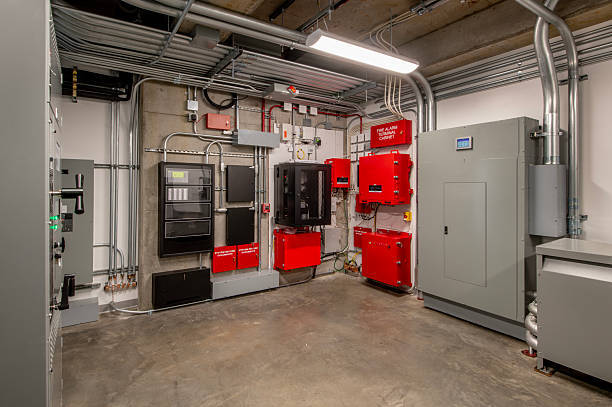
Choosing the best fire alarm system available has a major bearing on workplace safety, asset protection, and business continuity for companies. Under UK law, as stated in The Regulatory Reform (Fire Safety) Order 2005, a duty of care has been imposed upon employers and other property owners concerning sufficient fire detection and alarm systems. The Fire Alarm Systems UK, in a given setting, is not a standard product but rather "that which best suits a particular size and layout of a premises, as well as its occupancy, in a particular situation."
Traditional Fire Alarm Systems for Small and Simple Layouts
Conventional systems are a budget-friendly alternative for small working environments with relatively simple layouts, like small offices or shops. There are zones in a building, and these are linked to a master control panel. Upon activation of a detector or a call point, it sends a message to this panel about which zone it has been activated in, but not which sensor has been activated. This gives a rough idea of where the fire has broken out. Although it lacks the detail of addressable alert systems, it satisfies regulatory needs for simpler spaces.
Addressable Fire Alarm Systems for Complex Buildings
Where a larger or more complex environment, such as offices in a multi-level building, a hospital even a school, is involved, addressable systems are greatly preferable. In an addressable fire alarm, every detecting device and every call point has a distinct address, which is numerical. Upon activation, with a control panel, it becomes easy to identify the precise location of every device, such as "Room 205, North Wing." Such features make it easy to implement an emergency response. An addressable fire alarm system is a valuable investment in environments that are complicated, as it ensures effective management of fire safety.
Wireless Radio Fire Alarm Systems for Listed Buildings
Wireless systems are extremely useful for buildings where drilling for wiring is not feasible, not allowed, or where interiors are already done. These operate on secure radio frequencies, with wireless communications from battery-driven devices to a control panel. This installation takes less time and ensures that aesthetic values are not compromised. Advanced wireless systems are extremely reliable, with complex monitoring for ensuring the strength and integrity of signals. These systems provide all the benefits of a wired system with the flexibility to adjust to architectural restrictions.
Analogue Addressable Systems with Advanced Intelligence
The latest in detection technology, these offer a series of analogue sensors that are in constant communication with a control panel, transmitting not only alarm information but also environmental information such as dust conditions or changes in temperature. The control panel has software which can separate a true alert from a false alarm due to steam or dust, resulting in fewer unwanted notifications. This technology is particularly important in areas such as kitchens and workshops. They provide enhanced reliability and continuity of operation for high-risk and critical areas with early indication of a potential fault condition and even better false alarm management.
Regular Maintenance and Professional Commissioning
A top of the line system will not function effectively if it is not maintained. Being serviced on a regular basis, with checks by the user every week, as well as yearly and quadrennial visits from a BAFE-approved professional, represents best practice. Other checks consist of testing detectors, assessing battery performance, and examining control panel functionality. A professional start-up, following installation, represents a key part of this, with all equipment correctly positioned, calibrated, and a functional fire alarm system in place.
Considering False Alarm Management and Zoning
A good system should also be able to suppress false alarm occurrences, which foster a sense of complacency. This can be done by the use of proper sensor technology, such as using heat sensors as opposed to smoke sensors in kitchen areas, using delay timers on manual stations in high-traffic areas, as well as leveraging the intelligence of conventional systems. Proper zoning of detectors, which involves the grouping of detectors in a logical manner, ensures that investigations are limited and that a whole building evacuation is avoided.
Conclusion
A fire alarm installation that protects employees effectively will be finely tuned for that particular building. This means conventional systems for smaller buildings, but also addressable networks for larger installations, all of which are best determined by a fire risk analysis and a commitment to BS 5839-1. Perhaps most importantly, it must provide definition, voice evacuation integration, and a programme of proactive maintenance. Effectively, splurging on a quality, correct installation will ultimately be a sound splurge in human security and a vital building block of any respectable business.