Using an Electrostatic Fogger Can Support Mold Remediation
Posted by Micro Balance Health Products
Filed in Business 124 views
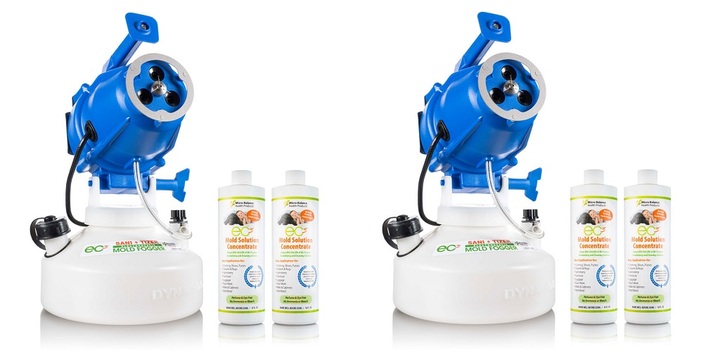
If you have problems with mold, you know that it's a series of steps to remove it. Using an electrostatic fogger as part of your mold remediation can be useful in a broader mold remediation plan, particularly when the goal is to clean and deodorize indoor spaces and maintain better air quality. Unlike conventional spraying methods, electrostatic equipment gives the solution droplets an electrical charge, helping them spread more evenly across surfaces. That can make routine treatment more thorough, but it should be viewed as a supporting step rather than a replacement for professional mold removal.
Mold remediation starts with finding and correcting the source of the problem. If a building has a persistent moisture leak, damp basement, roof problem, or hidden water damage, simply treating the surfaces will not solve the underlying issue. Moisture control and removal of contaminated materials are the foundation of lasting mold prevention. So where does fogging fit in?
What an Electrostatic Fogger Can Do
An electrostatic system creates a very fine mist and charges the individual droplets as they leave the machine. Because the droplets carry the same type of electrical charge, they spread apart rather than clumping together. They can also be attracted toward surfaces and airborne particles, allowing the treatment solution to reach areas that can be difficult to cover with an ordinary spray bottle.
That broader coverage can be useful when treating rooms, furnishings, and other belongings. A suitable mold-control solution can help freshen surfaces and reduce musty odors, while the fine mist allows the product to reach a larger area without leaving large amounts of liquid behind. This can be especially helpful in spaces where wiping every surface individually would be time-consuming.
Deodorizing is another reason some homeowners and property managers use fogging as part of their cleaning routine. Musty smells are often associated with damp environments and lingering mold-related contaminants. Fogging can temporarily improve the smell and overall feel of an indoor space, making the environment more comfortable while other remediation work is underway.
It can also be part of your ongoing maintenance. Once a mold problem has been professionally addressed, periodic treatment may help keep indoor spaces cleaner and reduce the buildup of unwanted particles. For people who are particularly sensitive to mold, maintaining a clean environment can be an important part of a larger household maintenance routine.
It's Only One Part of Mold Remediation
Still, expectations matter. Fogging does not magically remove every source of mold from a building. It should not be used to cover up extensive growth, replace damaged materials, or compensate for an unresolved moisture problem. If contaminated drywall, insulation, carpeting, or other porous materials need to be removed, those materials must be handled appropriately.
The same principle applies to air quality. Treating the air can provide temporary benefits, but it cannot make an unsafe environment permanently safe if mold continues to grow somewhere inside the structure. Professional inspection and remediation may be necessary when there is significant contamination or recurring growth.
For routine cleaning, electrostatic fogging offers a practical advantage: more uniform distribution of the chosen solution. The charged droplets can settle across surfaces and around objects with less pooling, helping make each application more consistent.
Used thoughtfully, an electrostatic fogger can therefore be a valuable addition to a mold-conscious cleaning and maintenance program. The best results come when fogging is combined with moisture control, proper remediation, good ventilation, and regular cleaning rather than treated as a standalone cure.
For more information about Igg Supplement and Mold Detox Supplements Please visit: Micro Balance Health Products.