How to Choose Sign Design Software: A Signage Seller’s Checklist
Posted by Pratik Shah
82 views
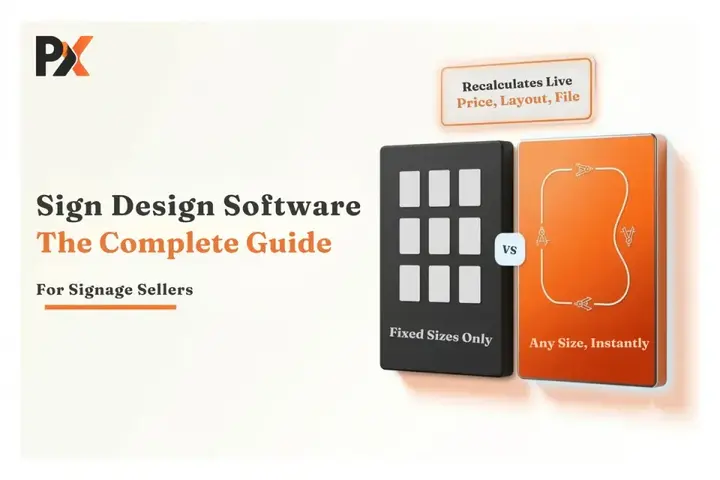
The signage industry has moved beyond simply producing designs for customers. Signage sellers increasingly need to offer online customization, accurate pricing, instant previews, artwork validation, and faster order processing. Choosing the right sign design software can help connect these activities into a more efficient workflow.
However, not every design platform is built for the requirements of professional signage businesses. This checklist highlights the key features to evaluate before choosing a solution.
1. Support for Different Sign Products: Start by checking whether the software supports the products you actually sell.
A flexible platform should work with products such as:
- Banners
- Yard signs
- Posters
- Wall graphics
- Vehicle graphics
- Floor graphics
- Retail signs
- Acrylic and metal signs
- Large-format prints
The ability to configure different sizes, materials, finishing options, and printing specifications is particularly important for businesses handling varied signage orders.
2. Easy Online Customization: Customers increasingly expect to create or customize products directly online.
A good product design tool should allow users to:
- Add text and images
- Upload logos or artwork
- Change colors
- Select fonts
- Resize design elements
- Use templates
- Personalize predefined designs
The interface should be simple enough for non-designers while still providing sufficient control for professional users.
3. Accurate Product Visualization: A design editor should show customers what their finished sign could look like before they place an order.
Real-time previews can reduce misunderstandings around:
- Dimensions
- Text placement
- Images
- Colors
- Layout
- Material selection
For certain products, 3D visualization can provide additional context, particularly when the final product has a physical shape or structure.
4. Print-Ready Artwork Generation: A major consideration is what happens after the customer completes a design.
The software should be capable of generating production-ready artwork while maintaining the required dimensions and resolution.
Look for features such as:
- Bleed and safe-area controls
- High-resolution image handling
- Vector support
- PDF or other print-ready output
- Resolution warnings
- Design validation
- Automated file preparation
These features can reduce the amount of manual prepress work required before production.
5. Wide-Format Workflow Support: Signage production often involves large files, custom dimensions, different substrates, and specialized finishing requirements.
A wide format signage industry solution should therefore support large-format workflows rather than treating signage as a standard small-format print product.
Consider whether the platform can handle custom dimensions, substrate selection, finishing options, production specifications, and large artwork files efficiently.
6. Dynamic Pricing and Quoting: Sign prices can change based on size, material, quantity, finishing, installation requirements, and other options.
Look for software that can calculate pricing dynamically as customers configure their products.
For example:
Size + Material + Quantity + Finishing = Final Price
Real-time pricing allows customers to understand the cost before checkout and reduces manual quotation work for sales teams.
7. E-Commerce and Order Integration: Design software becomes more useful when it connects directly with your online storefront.
The ideal workflow should allow:
Product Selection → Design → Preview → Pricing → Checkout → Production
Integration with eCommerce and order management systems can reduce duplicate data entry and make it easier to move customized orders into production.
8. Templates and Reusable Design Assets: Templates can speed up customization while maintaining brand and production standards.
Look for features that allow businesses to create:
- Pre-designed templates
- Brand-specific layouts
- Editable text areas
- Locked design elements
- Image placeholders
- Reusable graphics
This is especially useful for franchise signage, retail campaigns, events, and repeat customers.
9. Mobile-Friendly Experience: Customers may access an online signage store from smartphones, tablets, or desktops. A responsive design editor can make customization easier across different devices.
However, mobile compatibility should not come at the expense of essential design controls.
10. Integration and Scalability: Finally, consider how the software will fit into your existing technology ecosystem.
Check for integration options with:
- Web-to-print storefronts
- eCommerce platforms
- MIS/ERP systems
- Print production workflows
- Payment systems
- Shipping platforms
- Customer management tools
The platform should also be able to scale as your product catalog, customer base, and order volume grow.
Sign Design Software Checklist
Before making a decision, ask:
- Does it support my signage product range?
- Can customers customize products online?
- Does it provide accurate previews?
- Can it generate print-ready files?
- Does it support wide-format requirements?
- Can pricing update automatically?
- Does it integrate with my storefront?
- Can I create reusable templates?
- Is the interface easy for customers to use?
- Can it integrate with my existing production workflow?
- Will it scale with future business growth?
Final Thoughts
Choosing sign design software is not only about finding a good online editor. Signage sellers should consider the entire journey from product configuration and customization to pricing, checkout, artwork preparation, and production.
A solution that combines a flexible product design tool with eCommerce integration and the capabilities of a wide format signage industry solution can create a more connected workflow—making it easier for customers to order customized signage and for businesses to manage those orders efficiently.
Original Source: https://www.printxpand.com/blog/sign-design-software/