Contract Farming Programs: A New Opportunity for Every Agriculture Community
Posted by krishify Digital
Filed in Business 221 views
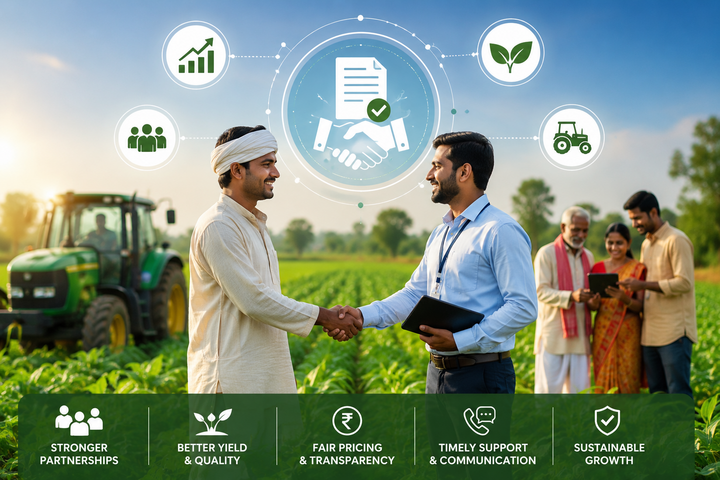
Agriculture is becoming more connected as farmers, buyers, agribusinesses, and agricultural organizations work together to improve productivity and sustainability. A strong Agriculture Community creates opportunities for knowledge sharing, better market access, and improved farming practices. One of the key factors behind this progress is meaningful farmer engagement, especially within Contract farming programs. When farmers remain informed, involved, and connected throughout the farming cycle, these programs become more transparent and beneficial for everyone.
Understanding Contract Farming
Contract farming is an agreement between farmers and buyers where both parties decide on production requirements, quality standards, pricing methods, and delivery schedules before cultivation begins. This approach reduces uncertainty for farmers while giving buyers a more reliable supply of agricultural produce.
However, the success of such agreements depends on continuous communication and mutual trust rather than contracts alone. Farmers need timely guidance, access to reliable information, and regular interaction with the organizations they work with.
Why Farmer Engagement Matters
Farmer engagement is more than regular communication. It involves providing timely guidance, listening to farmers' concerns, and ensuring they have the information needed to make better decisions throughout the crop cycle.
When farmers receive updates on weather conditions, pest management, cultivation practices, and harvesting techniques, they are better prepared to maintain crop quality. At the same time, organizations benefit from improved consistency and stronger working relationships.
Building Strong Agricultural Communities
A successful agricultural community is built on collaboration. Farmers learn from each other's experiences, exchange practical knowledge, and adopt better farming methods together.
Training sessions, knowledge sharing, and local cooperation help farmers become more confident while improving overall agricultural productivity. Strong community networks also encourage long-term participation in farming initiatives.
The Value of Digital Communication
Digital tools have made communication between farmers and agricultural organizations much easier. Mobile applications, advisory platforms, and digital records allow information to reach farmers quickly while making it easier to track farming activities.
Platforms like krishify support better coordination by helping organizations communicate efficiently with farmers throughout every stage of crop production.
Benefits for Farmers and Organizations
Effective communication creates advantages for everyone involved.
For farmers, it offers:
-
Better access to practical farming guidance.
-
Improved planning throughout the crop cycle.
-
Greater confidence in meeting production requirements.
-
Reduced uncertainty during cultivation.
For organizations, it provides:
-
Better crop quality.
-
More reliable production planning.
-
Stronger relationships with farmers.
-
Greater transparency across farming operations.
Conclusion
The future of agriculture depends on cooperation, trust, and continuous learning. When farmers remain actively involved and receive timely support, agricultural partnerships become stronger and more sustainable. Meaningful communication helps improve production quality, strengthens long-term relationships, and creates better outcomes for both farmers and organizations.