Why Hotels, Hospitals, and Dormitories Keep Choosing VTAC Units Over Central Systems
Posted by NorthStock Inc
151 views
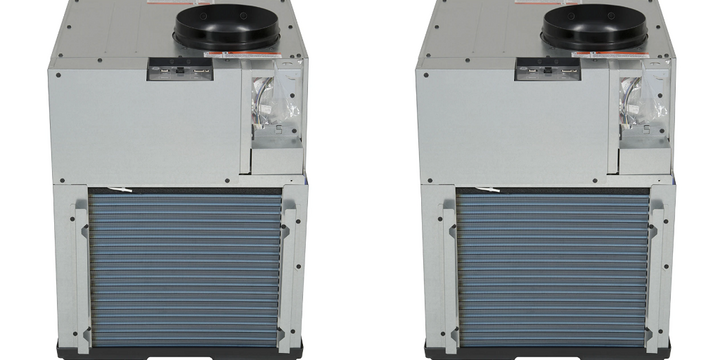
Most commercial buildings that manage individual room comfort have landed on the same answer: skip the ductwork. VTAC units, short for vertical terminal air conditioners, handle heating and cooling at the room level without tying back to a central air plant. Each unit mounts directly in the exterior wall in a vertical orientation, which distinguishes them from horizontal packaged terminal air conditioners and gives them a cleaner profile in rooms where wall space near the window is limited. Hotels have relied on this format for decades, and healthcare and dormitory operators use it for reasons that are just as practical.
VTAC Units Solve a Problem Hotels Know Well
A guest room in a mid-size hotel gets turned over once or twice a day, occupied by people with wildly different temperature preferences. A 150-room property running a central air system has to compromise: cool the whole floor or heat the whole floor. The guest in 412 wants it cold. The one in 415 doesn't. A central system can't satisfy both.
VTAC units let each room run independently, which solves that problem at the unit level. The vertical profile also gives them something horizontal units don't: the option to install in a closet or finished column near the entry rather than sitting low under the window in a plastic cabinet that most guests recognize immediately as a hotel giveaway. Properties going after a more upscale feel have used that distinction to their advantage, and vertical terminal air conditioners make it possible without a full HVAC overhaul or a renovation budget that eats into the project.
Maintenance is the other piece hotel operators focus on. Hotel HVAC units in a self-contained through-the-wall AC configuration let a technician pull and replace a unit without touching the adjacent rooms or taking any floor offline.
What VTAC Units Actually Do for Healthcare Facilities
The room-level isolation that hotels value for guest comfort matters in a completely different way in healthcare. A shared duct system moves air between spaces. VTAC units don't. Air stays within the room it's assigned to, and that matters significantly in environments where cross-contamination can escalate into a clinical problem. In a hospital ward or a long-term care facility, each room conditions its own air, and a malfunction in one unit doesn't compromise the climate next door.
Long-term care facilities also deal with maintenance timing constraints that most buildings don't. Pulling climate control from a patient room, even briefly, has real consequences for care, not just comfort. Because VTAC units function independently at the room level, maintenance staff can address a failing system during the day without disrupting the rest of the wing.
Commercial HVAC solutions built around central systems create a single point of failure. A zoned approach with individual units removes that risk.
VTAC Units, Installation, and the Energy Argument
VTAC installation requires a vertical sleeve in the exterior wall and standard electrical connections. There's no duct chasing, no mechanical room, no central plant to commission. In a renovation context, that simplicity matters: retrofitting a 1970s hotel wing or converting an older building means working inside finished walls and occupied spaces, and skipping new ductwork significantly reduces the scope.
Energy-efficient HVAC performance improves when conditioning follows occupancy rather than running on a fixed schedule for the whole floor. An unoccupied room in January draws nothing. Dormitory air conditioning works the same way: a room that's empty over winter break runs nothing until someone returns. Across your 100-room property, those gaps in occupancy add up to real energy savings when each unit runs on its own thermostat rather than a central timer.
NorthStock has been supplying HVAC pros with commercial VTAC units and vertical terminal air conditioners since 2003, with free ground shipping to the lower 48 and over 350,000 products to choose from.
For more information about Modine Unit Heaters and Industrial Air Curtains Please visit: NorthStock Inc.